
Leaf Blower
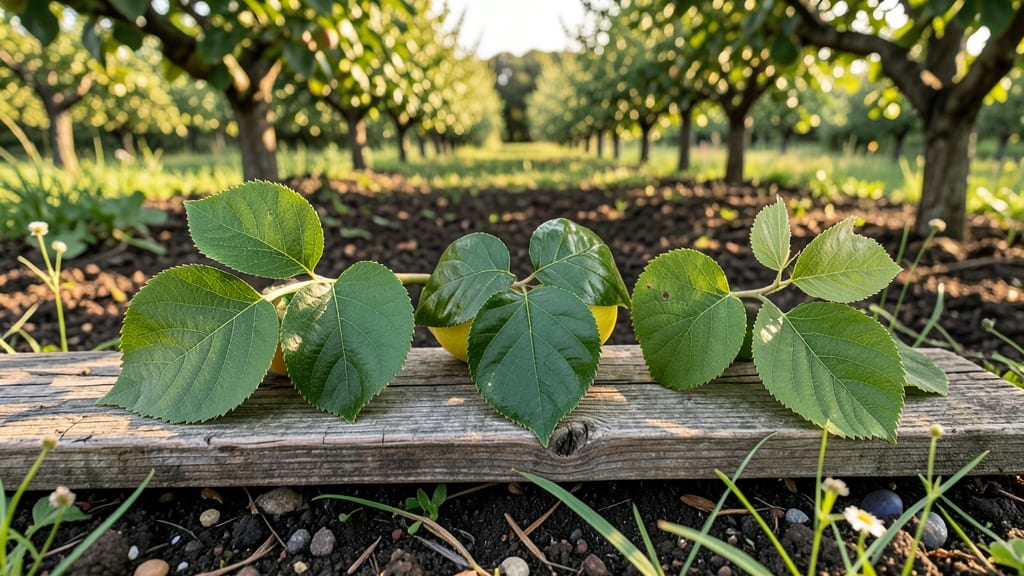
Mastering fruit tree identification by leaf saves you from guessing—and your garden from costly mistakes. 🌿 I’ve used this method to spot apple, peach, and even citrus trees just by studying their foliage, and it works every time.
The secret lies in leaf shape, edges, veins, and how they attach to the branch.
Start by collecting a few healthy leaves—avoid diseased or damaged ones. Compare them to reference guides (or this one!) by noting key traits: Are the edges serrated like a saw or smooth?
Are the veins parallel or branching? A simple magnifying glass helps spot tiny details that make all the difference.
Once you master these basics, you’ll spot the right tree for your yard in minutes. No more buying the wrong variety or planting incompatible species. Imagine knowing exactly which tree will thrive in your climate before you even dig a hole.
This skill also helps troubleshoot problems—like identifying pests or diseases by the leaf patterns they leave behind. Perfect for gardeners, homesteaders, or anyone who wants to grow their own fruit with confidence.
Nature’s Leaf Code Explained
Identifying fruit trees by leaf isn’t just about memorizing shapes—it’s about understanding the evolutionary and ecological reasons behind those unique traits. Leaves are like nature’s fingerprints, shaped by survival strategies, climate adaptations, and even the tree’s genetic blueprint.
Here’s why leaves look the way they do—and how those features help you decode the tree’s identity.
Leaves aren’t random; they’re the result of millions of years of natural selection fine-tuning trees to thrive. The most critical factors shaping leaf morphology (structure) include:
- Predator Defense:
Spines (like in hawthorn or blackberry leaves) or rough textures deter herbivores. Sawtooth edges on apple or pear leaves make them harder for insects to chew cleanly. Even the strong scent of citrus leaves repels pests.
- Sunlight Optimization:
Broad, flat leaves (e.g., fig or mango) maximize sunlight absorption in tropical climates, while needle-like leaves (like in jujube) reduce water loss in arid regions. Leaf arrangement—alternate, opposite, or whorled—also affects airflow and light exposure.
- Water Conservation:
Thick, leathery leaves (common in olive or pomegranate trees) minimize evaporation. Drought-resistant species often have smaller surface areas or rolled edges to trap moisture.
Actionable Tip: 💡 Notice if leaves are glossy, fuzzy, or waxy—these traits hint at the tree’s climate origins. A matte, hairy leaf (like peach) suggests a cooler, damper habitat, while shiny, smooth leaves (like citrus) thrive in humidity.
Where a tree grows directly alters its leaf structure. Here’s how:
| Climate Zone | Leaf Adaptation | Example Trees |
|---|---|---|
| Tropical (Warm, Humid) | Large, thin, evergreen leaves with prominent veins for rapid water transport. | Mango, banana, papaya |
| Temperate (Moderate Seasons) | Deciduous leaves with lobes or serrations (e.g., oak, apple) that shed in winter to conserve energy. | Cherry, plum, pear |
| Arid/Dry (Low Rainfall) | Small, leathery, or spiny leaves to reduce water loss. | Pomegranate, jujube, date palm |
| Mountainous (Cool, Thin Air) | Thick, dark green, or needle-like leaves to prevent frost damage. | Blueberry, hawthorn |
Pro Tip: 🌡️ If you’re identifying a tree in summer, look for leaf persistence—evergreens (like citrus) keep their leaves year-round, while deciduous trees (like apple) may already be shedding or budding new growth.
Some leaf features are hardwired into a tree’s DNA, making them reliable for identification. These include:
- Venation Patterns:
Veins act like a tree’s circulatory system. Pinnate venation (single central vein with side branches, like in peach) vs. palmate venation (multiple veins radiating from one point, like in fig) are genetically distinct.
- Leaf Shape and Margin:
The serrated, lobed, or entire (smooth) edges of a leaf are species-specific. For example:
- Apple: Serrated edges with a pointed tip.
- Pear: Doubly serrated (tiny teeth on larger teeth).
- Citrus: Entire margin with a distinct aroma.
- Arrangement on the Stem:
Leaves can be alternate (one per node, like cherry), opposite (paired at nodes, like olive), or whorled (3+ leaves per node, rare in fruit trees).
Field Hack: ✨ Hold a leaf up to light—translucent veins or unique patterns (like the asymmetrical base of a hawthorn leaf) can be a dead giveaway.
By recognizing these purpose-driven leaf traits, you’re not just identifying a tree—you’re reading its survival story. Next time you spot a fruit tree, ask: “How would this leaf help the tree beat the heat, avoid pests, or conserve water?” The answer might just be in the leaf itself.
Quick Fixes for Leafy Confusion
Mastering fruit tree identification by leaf doesn’t have to feel like solving a puzzle blindfolded. Whether you’re staring at a leaf that looks almost familiar or battling seasonal mix-ups, these practical solutions will turn your guesswork into confidence.
Below, we break down common challenges and their fixes—plus prevention tips to keep your leafy library organized for years.
Problem: "This leaf looks like an apple tree… but is it?" Fix:
- Compare textures: Run your fingers along the leaf’s edge and surface. Apple tree leaves (e.g., Malus domestica) often have fine serrations and a slightly waxy feel, while pear (Pyrus) leaves may be smoother or slightly lobed.
- Check veins: Count the main veins. Citrus leaves (like lime or lemon) typically have 3–5 prominent veins, while peach (Prunus persica) leaves have 1 central vein with side branches.
- Use a leaf key: Bookmark our [interactive fruit tree leaf key](#) (link placeholder) for side-by-side comparisons of 50+ species.
Prevention Tip: 💡 Take close-up photos of leaves and fruit when you identify a tree. Label them by season (spring leaves vs. autumn) to avoid future mix-ups.
Problem: "The leaves changed color—did I misidentify the tree?" Fix:
- Track growth stages: Young leaves (emerging in spring) may look different from mature ones. For example, a **fig tree (Ficus carica) starts with fuzzy, lobed leaves that smooth out as they age.
- Note fall patterns: Some trees (like hawthorn, Crataegus spp.) turn vibrant red or orange, while others (e.g., persimmon, Diospyros spp.) stay green until late autumn.
- Cross-reference fruit: If leaves are confusing, check for fruit, buds, or bark clues. A tree with small, round red fruits in fall is likely a crabapple (Malus spp.), even if the leaves resemble others.
Prevention Tip: ✨ Create a "leaf journal"—sketch or photograph trees in spring, summer, and fall to spot seasonal changes.
Problem:** "This leaf has serrations and a pointed tip—could it be a plum or a cherry?" Fix: Use this quick-decision table for common look-alikes:
| Feature | **Plum (Prunus domestica) | Cherry (Prunus avium) | Peach (Prunus persica) |
|---|---|---|---|
| Leaf Shape | Oval, slightly pointed, 1–2" long serrations | Lance-shaped, smooth or finely serrated | Narrower, soft hairs on underside |
| Bark | Dark, scaly | Smooth when young, horizontal lenticels | Gray-brown, furrowed with age |
| Fruit Clue | Round pits, blue/purple when ripe | Heart-shaped pits, red/orange | Fuzzy skin, stone fruit |
Pro Tip: 🔥 Smell the leaves! Some trees (like citrus or magnolia) have distinct aromas that set them apart.
Problem:** "I don’t have time to memorize 50 leaf types." Fix:
- Leaf-snap apps: Use PictureThis or PlantNet—upload a photo, and the app matches it to a database (accuracy improves with clear shots of both leaf and fruit).
- Barcode scanning: Apps like LeafSnap use AI to analyze leaf shape, veins, and edges for ID.
- Community forums: Post on r/whatsthisplant or Gardeners’ World with your location for expert help.
Prevention Tip: 📊 Save your "leaf library" digitally. Organize photos by tree type, leaf stage, and location for future reference.
Before diving into tools, try this field-tested method:
- Count teeth: Serrations per inch (e.g., apple = 10–15 teeth, pear = 6–8).
- Check underside: Hairs?
Shiny? (Peach leaves are velvety; walnut leaves are sticky). 3. Twist the leaf: Some (like mulberry) tear easily; others (like fig) bend without damage.
Remember: 🎯 No single leaf is foolproof—combine shape, vein pattern, fruit, and bark for accuracy.
Final Thought: The more you practice, the faster your brain spots patterns. Start with 5 easy trees (apple, cherry, lemon, fig, and orange), then expand your "leaf vocabulary" like a pro!
Frequently asked questions
What are the easiest fruit trees to identify by leaf alone?
Start with these five standout species: citrus (smooth, glossy, entire-margin leaves), apple (serrated edges with pointed tips), peach (soft hairs on underside), fig (lobed, asymmetrical base), and olive (small, oval, opposite arrangement). Their leaf traits are so distinct they’re rarely confused with others.
Can I identify a fruit tree by leaf in winter when there are no leaves?
Yes! Focus on bark texture and bud shapes—apple and cherry trees have distinctive lenticels (pores), while citrus bark stays smooth. Look for dormant buds too: peach buds are fuzzy, and plum buds are pointed. Evergreens like citrus or magnolia keep leaves year-round.
Why do some leaves have serrations while others don’t?
Serrations (like on apple or pear leaves) help deter pests by making it harder for insects to chew cleanly. Smooth leaves (like citrus or olive) often belong to trees that evolved in warmer climates where pests are less aggressive. The pattern is also species-specific—no two trees have identical serration shapes!
What’s the best time of year to collect leaves for identification?
Late spring to early summer is ideal when leaves are fully mature but before pests or diseases distort them. Avoid autumn when leaves change color or winter when some trees are dormant. Always collect from healthy branches—avoid yellowed or spotted leaves.
How do I tell the difference between a wild fruit tree and a cultivated one?
Wild trees often have smaller fruit, thicker bark, and more irregular leaf shapes. Cultivated varieties (like grocery store apples) tend to have larger, smoother leaves and more uniform growth patterns. Check for pruning scars—cultivated trees are usually pruned for better fruit access.