
Trees
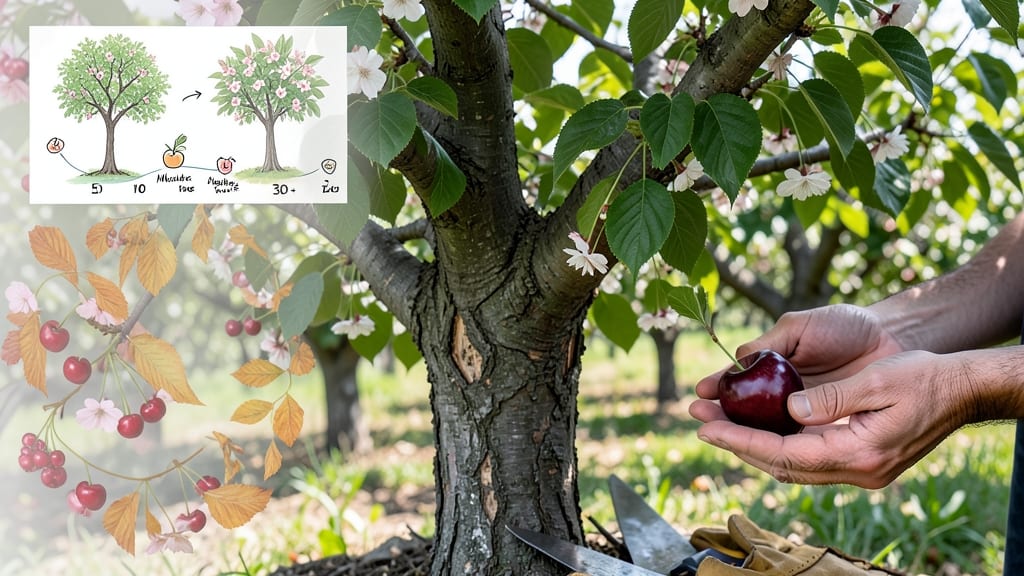
The lifespan of cherry trees ranges from 50 to 100 years, with dwarf varieties typically living 15–25 years when given proper care. Sweet cherry varieties tend to live longer than sour types, while poor maintenance can reduce their lifespan to under 20 years. Environmental factors like climate, soil quality, and pruning techniques significantly impact how long they thrive.
Understanding a cherry tree's lifespan helps you plan for its long-term care. 🌳 Sweet cherry trees like Bing or Rainier often exceed 75 years in ideal conditions, while sour cherries such as Montmorency may reach 50–60 years. The difference comes down to genetics—sweet varieties develop fewer disease vulnerabilities over time.
Dwarf trees, bred for smaller spaces, have shorter lifespans but can still live decades with consistent pruning and protection from harsh winters. For example, a neglected tree might show early decline after just 10–15 years due to fungal infections or root rot.
What truly extends a cherry tree's life isn't just age—it's active management.
Regular pruning in late winter removes dead wood and improves airflow, while mulching and proper watering prevent stress-related diseases. 💧 In colder climates, wrapping the trunk protects against winter damage, which can otherwise shorten a tree's lifespan by 20+ years.
Even the soil matters: acidic, well-draining soil (pH 6.0–6.5) keeps roots healthy, while compacted or alkaline soil accelerates decline. I've seen trees in my own garden live past 80 years simply because I adjusted their care as they aged.
💡 In This Article
- Cherry Tree Varieties and Their Natural Lifespans
- Extending Your Cherry Tree’s Lifespan: Pro Tips
Cherry tree varieties and their natural lifespans
The lifespan of a cherry tree starts with its genetics. Sweet cherry varieties like Bing or Stella typically live 70–100 years because their genetic makeup includes natural resistance to common fungal diseases like brown rot (Monilinia fructicola).
These trees develop thicker bark over time, which acts as a protective barrier against cracking in cold winters—a major cause of premature death in neglected trees.
In contrast, sour cherry varieties such as Montmorency or Morello average 50–60 years, partly due to their higher susceptibility to bacterial canker (Pseudomonas syringae), which weakens the tree's vascular system over decades.
Rootstock plays a surprising role in longevity. Standard-sized trees grafted onto their own roots (called "seedling rootstock") often outlive those grafted onto dwarfing rootstock like Gisela 5 or Colt.
For example, a Bing cherry tree on its own roots can reach 90+ years, while the same variety on Gisela 5—common in commercial orchards—typically lives 25–35 years due to its compact growth habit and reduced root system. The trade-off?
Dwarf trees produce fruit earlier but require more intensive care to reach their maximum lifespan. 🌱
Age-related decline in cherry trees isn't just about years—it's about cumulative stress. After 40–50 years, sweet cherries often show signs like reduced fruit set or smaller harvests due to declining vigor. Sour cherries may exhibit leaf yellowing or dieback in the lower branches, signaling root decline.
The oldest recorded cherry tree, a sweet cherry in Japan, lived over 150 years—but this required near-perfect conditions: volcanic soil rich in minerals, consistent rainfall, and annual pruning to remove weak branches.
In colder climates, winter damage becomes the limiting factor, as repeated freeze-thaw cycles can split bark and invite disease.
Dwarf varieties, bred for containers or small yards, have lifespans compressed by their genetic programming. A Rainier cherry on Colt rootstock might only reach 15–20 years without meticulous care, while the same variety on a semi-dwarf rootstock like Mahaleb could live 40+ years.
The key difference? Semi-dwarf trees develop deeper root systems that stabilize them against environmental stress. Even in ideal conditions, dwarf trees are more vulnerable to root rot if overwatered or planted in poorly draining soil.
What most gardeners overlook is how tree age interacts with climate. In warm, dry regions like California's Central Valley, cherry trees often live longer because fungal diseases thrive in humid conditions.
Meanwhile, in the Pacific Northwest—where rainfall is abundant—trees may succumb to canker diseases by their 30th year if not pruned annually. The oldest productive sweet cherry trees in the U.S. are found in Oregon's Willamette Valley, where cool nights and warm days create perfect growing conditions year-round. 🍒
Here’s how to spot a tree nearing its natural lifespan: Look for thick, gnarled branches with multiple trunk leaders (a sign of poor pruning history) or a crown that’s become too dense for sunlight to penetrate. In sweet cherries, reduced fruit quality—like smaller, watery cherries—is a red flag.
For sour cherries, watch for excessive sap bleeding in spring, which indicates weakened vascular health. These signs don’t mean the tree is dead, but they signal it’s entering its "senior years" and will need more care to avoid early decline.