
Flowers
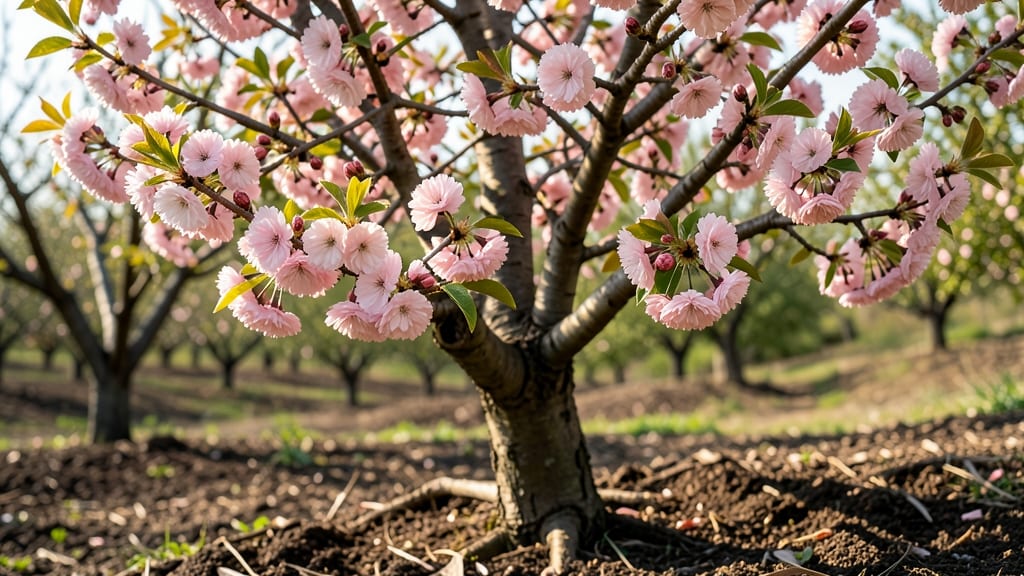
Fruit tree flowers identification is like reading nature’s recipe for next year’s harvest—each bloom tells a story. 🌸 I’ve spent years watching apple blossoms turn into fruit, and peach flowers that promise juicy summer treats, but not all blooms lead to edible rewards. This guide cuts through the confusion with simple visual clues: petal shapes, colors, and even how they cluster on the branches.
The key is timing and placement—cherry blossoms arrive in spring’s first warm weeks, while citrus trees bloom sporadically year-round in mild climates. A single white flower with five petals might be an apple, but if it’s clustered in dense sprays, it’s likely a pear.
The shape of the center (tubular or flat) and whether the blooms dangle or stand upright narrows it down further.
What you’ll get is confidence in the garden: knowing which flowers to protect from frost, which branches to prune for better fruit set, and which trees to leave alone if you’re not growing fruit.
The payoff comes when you spot a neighbor’s tree blooming and instantly recognize it as a fig or plum—no guesswork, just instant knowledge.
Perfect for backyard growers, urban gardeners with limited space, or anyone who wants to turn spring blooms into summer harvests. Let’s get those flowers identified!
Behind The Scenes Of Blooming
Fruit tree flowers may seem like a simple burst of color, but their appearance is the result of a complex interplay of biology, environment, and timing. Understanding why these flowers bloom—and sometimes fail to—can help gardeners and orchard keepers predict, encourage, or troubleshoot their fruit trees with confidence.
Let’s break down the key factors that influence when and how fruit tree flowers make their grand entrance.
Every fruit tree species has an internal biological clock—its genetic programming—that dictates when it will flower. This timing is deeply rooted in evolution and varies widely:
- Early bloomers: Trees like Prunus persica (peach) or Prunus armeniaca (apricot) often flower in late winter or early spring, capitalizing on warm spells to jumpstart pollination before summer heat arrives.
- Late bloomers: Stone fruits like cherries (Prunus avium) or pears (Pyrus communis) may wait until mid-to-late spring, aligning with peak pollinator activity.
- Dormancy adaptations: Some trees, like Malus domestica (apple), require a period of cold exposure (chilling hours) to "wake up" their floral buds. Without enough cold (below 45°F/7°C for 500–1,500 hours, depending on the cultivar), buds may fail to open entirely.
Actionable tip: If your tree isn’t flowering on schedule, check its hardiness zone compatibility. Some cultivars are bred for specific climates—planting a "tropical" mango (Mangifera indica) in a cold zone, for example, will likely result in no flowers at all!
Fruit trees are highly responsive to environmental cues, particularly temperature and daylight. These factors act like a "switch" for flowering:
| Factor | How It Works | What Goes Wrong |
|---|---|---|
| 🌤️ Daylength (Photoperiod) | Many fruit trees are short-day plants, meaning they flower when daylight shortens (e.g., citrus in late winter). Others, like Actinidia deliciosa (kiwi), need long days to trigger buds. | Artificial lighting (e.g., streetlights) can disrupt natural cycles, causing off-season blooming or bud abortion. |
| ❄️ Temperature Shocks | Sudden cold snaps (<32°F/0°C) can shock buds into opening prematurely, risking frost damage. Warm spells in winter may trick trees into blooming too early. | Frost kills exposed flowers, leading to zero fruit set. Citrus trees, for example, may drop blooms entirely after a late freeze. |
| ☀️ Heat Stress | Prolonged heat (>90°F/32°C) during bloom can sterilize pollen or cause flowers to wilt before pollinators arrive. | Trees like Prunus salicina (plum) may produce empty or deformed fruit if pollination fails due to heat. |
Pro tip: Use frost cloths or smart irrigation to protect early bloomers. For heat-sensitive trees, mulching (straw or wood chips) helps regulate soil temperature.
A fruit tree’s ability to flower depends on its overall vitality. Poor health—whether from nutrient deficiencies, pests, or disease—can stifle blooming entirely. Here’s what’s at stake:
- Nitrogen (N) Imbalance:
- ✅ Too much N: Leads to lush foliage but no flowers (the tree prioritizes leaves over reproduction). Common in young trees or over-fertilized soil.
- ❌ Too little N: Causes weak, sparse blooms or bud drop.
- Phosphorus (P) Deficiency:
Phosphorus is critical for energy transfer in flowering. Trees lacking P may produce small, underdeveloped blooms or fail to set fruit. Test soil pH—ideal levels are 6.0–7.0 for most fruit trees.
- Water Stress:
Both drought and overwatering can disrupt flowering. Drought triggers bud dormancy, while waterlogged roots suffocate roots, starving the tree of nutrients.
- Pest/Disease Damage:
Insects like aphids or borers sap energy, while diseases (e.g., fire blight in apples) can kill floral buds directly.
✨ Quick fix: Apply a balanced fertilizer (e.g., 10-10-10) in early spring, paired with compost to improve soil structure. For pests, introduce beneficial insects (ladybugs, lacewings) or use neem oil.
Even if flowers bloom beautifully, pollination is the next hurdle. Many fruit trees rely on external pollinators—bees, butterflies, or even wind—to transfer pollen. Missing this step means no fruit.
- Bee-Dependent Trees:
Apples, cherries, and peaches often need cross-pollination from another compatible tree. If your single apple tree isn’t fruiting, plant a second variety (e.g., Honeycrisp + Fuji) within 50–100 feet.
- Wind-Pollinated Trees:
Trees like almonds (Prunus dulcis) or pears release massive clouds of pollen. If your area lacks wind (>3 mph), pollination fails.
- Pollinator Decline:
Pesticide use, habitat loss, or climate change can reduce pollinator populations. A lack of bees means flowers may wither without setting fruit.
💡 Actionable solution: Plant pollinator-friendly flowers (e.g., lavender, borage) near your fruit trees. Avoid spraying pesticides during bloom, and consider hand-pollination with a small brush if bees are scarce.
By understanding these underlying causes, you can diagnose why your fruit tree’s flowers are behaving a certain way—and take steps to correct the issue before it’s too late. Whether it’s adjusting
Quick Fixes for Fruit Tree Flower Woes
When your fruit tree’s flowers aren’t thriving—or worse, aren’t appearing at all—don’t panic! Most issues have simple, actionable solutions. Below, we’ve mapped common problems to their fixes, plus prevention tips to keep your tree blooming beautifully year after year.
Cause: Young tree, improper pruning, or lack of sunlight Solution:
- 🌿 Wait it out (if young): Some fruit trees (like apples or pears) take 3–5 years to bloom. Focus on nurturing the tree until maturity.
- ✂️ Prune strategically: Cut back overgrown branches in late winter to encourage new growth. Avoid heavy pruning in spring—it can delay flowering.
- ☀️ Move or supplement light: If your tree is in shade, gradually acclimate it to sun or relocate it to a sunnier spot. Use reflective surfaces (like white walls) to bounce light onto the tree.
💡 Prevention Tip: Plant trees in full sun (6+ hours/day) and avoid excessive nitrogen fertilizer—it promotes leafy growth over flowers.
Cause: Stress from drought, pests, or temperature swings Solution:
- 💧 Water deeply (but not excessively): Drought stress causes premature drop. Water 1–2 inches per week, especially during bloom.
- 🐞 Pest control: Check for aphids, mites, or borers (they suck sap, weakening flowers). Spray with neem oil or insecticidal soap if needed.
- 🌡️ Protect from frost: If late frosts threaten, cover flowers with frost cloth at night. Avoid overhead watering before cold snaps—wet flowers freeze easier.
🔥 Pro Tip: Mulch around the base with wood chips to retain moisture and regulate soil temperature.
Cause: Lack of pollinators, self-incompatible varieties, or poor timing Solution:
- 🐝 Hand-pollinate: Use a soft paintbrush to transfer pollen from flower to flower on self-pollinating trees (like peaches or plums).
- 🌼 Plant companion flowers: Attract bees with lavender, marigolds, or basil nearby.
- 📅 Check timing: Some trees (like cherries) need two varieties for cross-pollination. Plant a second compatible tree if yours is a single variety.
✨ Bonus: If your tree is self-incompatible (e.g., some apples), research compatible pollinator varieties for your region.
Cause: Powdery mildew, black spot, or fire blight Solution:
- 🍄 Fungicide treatment: Spray with baking soda mix (1 tsp baking soda + 1 quart water + a drop of dish soap) every 7–10 days during bloom.
- 🌧️ Improve airflow: Thin out dense branches to reduce humidity (fungi love damp conditions).
- 🧹 Clean up debris: Remove fallen leaves/blossoms to prevent spores from overwintering.
🎯 Prevention: Space trees 8–12 feet apart and water at the base (not overhead) to keep foliage dry.
Cause: Temperature stress (too hot/cold for blooming season) Solution:
- 🔥 For heat stress: Provide afternoon shade with a lightweight cloth or plant heat-tolerant varieties (like figs or persimmons).
- ❄️ For cold damage: Mulch heavily (4–6 inches) in winter and avoid late pruning—new growth is more frost-sensitive.
💡 Quick Fix: If buds are blackened by frost, prune them off after the last frost date to encourage new growth.
Need a quick reference? Here’s a snapshot of common issues and their solutions:
| Symptom | Likely Cause | Fix It Now | Prevent Next Year |
|---|---|---|---|
| No flowers | Young tree or shade | Wait/relocate to sun | Plant in full sun, avoid heavy N |
| Flowers drop early | Drought or pests | Water deeply + neem oil spray | Mulch + regular pest checks |
| Flowers but no fruit | Poor pollination | Hand-pollinate or add companion flowers | Plant a second compatible variety |
| White powder on leaves | Powdery mildew | Baking soda spray | Space trees + water at base |
| Blackened buds | Frost damage | Prune dead buds post-frost | Mulch thicker in winter |
Final Thought: Most fruit tree flower problems are fixable with patience and the right care. Start with the most obvious issue (like water or pests), then layer in preventive measures. Before you know it, your tree will be bursting with blooms—and eventually, fruit! 🍎🍐🍑
Frequently asked questions
How can I tell if a fruit tree flower will produce fruit?
Look for key clues: self-pollinating trees (like peaches) have sturdy, upright blooms, while wind-pollinated types (like pears) release massive pollen clouds. If flowers are white or pale pink with 5 petals, they’re likely fruit-bearing. Avoid bright red or yellow blooms—those often belong to ornamental trees.
Why do some fruit tree flowers smell stronger than others?
Strong fragrances like citrus blossoms or cherry flowers attract pollinators from farther away. Trees in low-pollinator areas (like urban gardens) evolve stronger scents to compensate. Weak-smelling blooms often rely on wind pollination (like almonds) or are from young trees still developing their reproductive strategies.
Can I identify fruit trees by their flowers alone?
Not perfectly—but you can narrow it down! Apple flowers cluster in sprays, while peach blooms grow singly. Citrus flowers are white with 4 petals, and fig flowers appear as tiny purple spikes. For 100% certainty, check leaf shape or fruit later in the season.
What should I do if my fruit tree flowers but never produces fruit?
Check for pollination issues—plant a second compatible variety within 50 feet (like Honeycrisp + Fuji apples). If bees are scarce, hand-pollinate with a paintbrush. Also verify your tree isn’t too young (some take 3-5 years) or suffering from nutrient deficiencies (test soil pH and add phosphorus).
Are there any toxic fruit tree flowers I should avoid?
Yes! Cherry laurel and yew trees have highly toxic flowers and berries. Oleander** flowers are deadly if ingested. Always confirm identification before consuming anything from your garden—especially if you have pets or children. When in doubt, research the tree’s scientific name (e.g., Prunus laurocerasus).