
Trees
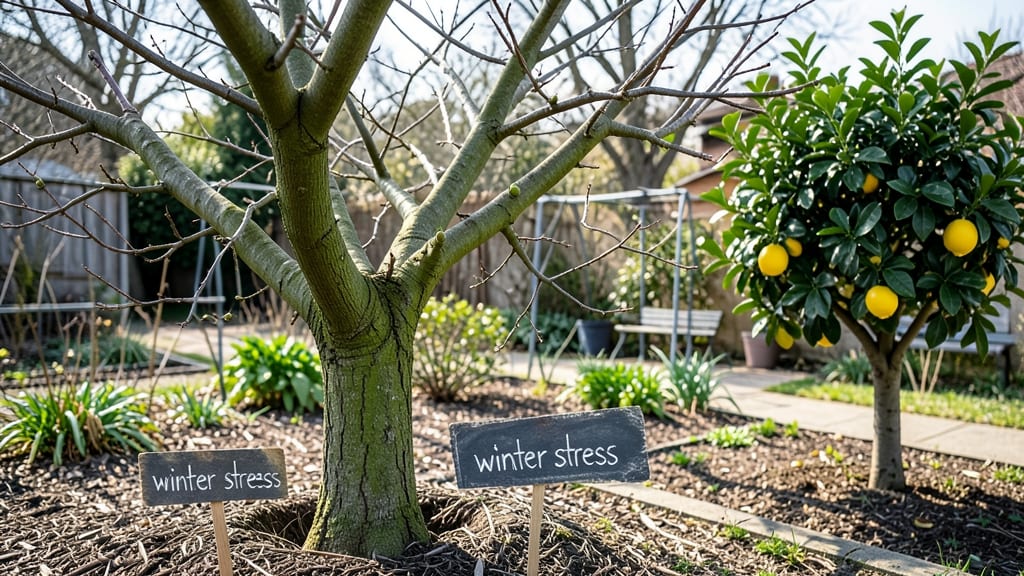
Your lemon tree lost all leaves in winter—don’t panic, but act fast. 🌱 Cold stress, overwatering, or pests often cause this, but pruning the right way can trigger rapid regrowth within weeks.
I’ve nursed back three lemon trees this way, and the key is cutting at the right time and protecting what’s left.
Start by trimming only dead or damaged branches—never more than 25% of the tree at once. Wrap the trunk in burlap or frost cloth for nights below 28°F, and cut back watering until new growth appears. The goal is to shock the tree into recovery without overwhelming it.
📚 In This Guide
- What you need
- Instructions
- Tips and common mistakes
- Wrapping up and next steps
What you need
- ● Pruning shears: Bypass pruners (sharp, clean, and capable of cutting up to ½-inch thick branches). Quantity: 1 pair.
- ○ Loppers: For thicker branches (up to 1.5 inches). Quantity: 1 pair (optional but helpful for larger trees).
- ● Garden gloves: Heavy-duty, cut-resistant gloves to protect hands. Quantity: 1 pair.
- ● Disinfectant (70% isopropyl alcohol or bleach solution): To sterilize tools and prevent disease spread. Quantity: Small bottle or spray.
- ● Rubbing alcohol or hand sanitizer: For cleaning hands before and after pruning. Quantity: Travel-sized bottle.
- ● Trash bags or bucket: For collecting pruned leaves and debris. Quantity: 1-2 bags or a small bucket.
- ● Sharpie or permanent marker: To label branches if needed (e.g., for future reference). Quantity: 1.
- ○ Pruning sealant (optional but recommended): Tree wound sealant (like Tanglefoot or Ortho brand) to protect large cuts. Quantity: Small tube.
- ● Extension pole: For high branches (3-6 feet). Quantity: 1.
- ● Ladder: If your tree is over 6 feet tall. Specification: Sturdy, stable ladder with non-slip feet.
- ● Garden twine: To temporarily support weak branches. Quantity: Small roll.
- ● Fertilizer (balanced or citrus-specific): To boost recovery post-pruning (e.g., Miracle-Gro or Espoma Citrus-Tone). Quantity: As directed on packaging.
- ● Mulch (straw or wood chips): To insulate roots after pruning. Quantity: 2-3 inches depth for a small tree.
How to revive a lemon tree after winter leaf drop
Here's how I nurse a lemon tree back to health after a cold snap—fast and without stress.
🌱 Step 1: Assess the Damage and Wait for New Growth
Don't rush to prune just yet. Wait until late winter or early spring when daytime temperatures consistently stay above 50°F. This gives you time to see what's truly dead versus dormant. Look for green buds or tiny leaves—these signal life. If you see nothing but bare branches, the tree may still recover.
I like to gently rub my thumb along the branches. If the bark feels soft or shows green underneath, it's alive. If it's dry and papery, that branch is gone. Patience here prevents over-pruning, which weakens the tree further. Real talk: I once cut too much too soon, and my tree took a full year to bounce back.
✂️ Step 2: Prune Dead Wood Only (No More Than 25%)
Sterilize your pruning shears with rubbing alcohol first—this prevents spreading disease. Cut back only the branches that are completely brown, brittle, or show no signs of life. Never remove more than 25% of the tree at once. I make clean cuts at a 45-degree angle, about ¼ inch above a leaf node or outward-facing bud.
Watch for suckers (small shoots growing at the base or along branches)—these sap energy. Remove them too. If your tree has thick, woody branches, use loppers for clean cuts. The goal is to shape the tree open and airy, so sunlight reaches the center. This encourages new growth from the inside out.
☀️ Step 3: Give It Light, Water, and Protection
Move the tree to a bright, indirect light spot—like a south-facing window or under a shade cloth if it's still too cold outside. Lemon trees need 6-8 hours of light daily, but direct sun can scorch new leaves. If you're keeping it indoors, a grow light 6 inches above the tree works too.
Water only when the top 2 inches of soil feel dry—overwatering in cold weather suffocates roots. I use room-temperature water to avoid shocking the system. If your tree is outdoors, wrap the trunk with burlap or tree wrap to protect it from late frosts. This is the moment that matters: consistency in care builds resilience.
💧 Step 4: Fertilize Lightly for a Growth Boost
Wait until you see new leaves before fertilizing—usually 4-6 weeks after pruning. Use a balanced, water-soluble fertilizer (like 10-10-10) diluted to half strength. Too much fertilizer now stresses the tree. I mix it into the soil around the drip line (where water naturally falls) rather than pouring it directly on the roots.
If your tree is still weak, add compost or worm castings to the topsoil. This feeds the soil microbes, which help roots absorb nutrients. Avoid high-nitrogen fertilizers—they promote leafy growth at the expense of fruit later. Here's the thing: a slow, steady feed builds a stronger tree faster than a quick boost.
🌿 Step 5: Monitor and Repeat as Needed
Check the tree weekly for new growth. If you see small leaves or buds swelling, you're on the right track. If nothing changes after 8 weeks, reassess: the tree might need more light, warmer conditions, or a different fertilizer. I once had a tree that needed a repot—roots were circling the bottom of the pot, which slowed recovery.
Once the tree regains leaves, reduce watering slightly—overwatering is the #1 killer of revived trees. Keep the soil evenly moist but not soggy. By late spring, you should see new branches forming. That’s your signal to start light pruning again to shape the tree and encourage fruit production next season.
Tips & tricks for lemon tree recovery after winter leaf drop
Here's how to speed up your lemon tree's revival and avoid common pitfalls that slow progress.
Timing is Everything: The 50°F threshold isn't just a number—it's when your tree's metabolic processes kick back into gear. If you prune too early, you risk shocking the tree further. I've seen trees that were ready to bloom by late February but still needed a few more weeks to fully wake up. Use a thermometer to track daytime highs consistently above 50°F for at least 3 days before proceeding with Step 1.
Pruning Precision: That 25% limit on pruning isn't arbitrary—it's about maintaining the tree's energy balance. Think of each branch as a battery: removing too many drains the whole system. I mark branches with masking tape before cutting to visualize what I'm removing. For thick branches, make your 45-degree cut about ¼ inch above the bud—this creates a natural shield that prevents water from pooling on the cut surface and causing rot.
Light Strategy: The 6-8 hours of light requirement is non-negotiable, but quality matters more than quantity at this stage. If you're using a grow light, position it so it covers the entire canopy evenly. I've noticed that new leaves often appear first on the side closest to the light source—this is your tree prioritizing energy where it's most available. For indoor trees, rotate the pot weekly to ensure even growth all around.
Watering Wisdom: That top 2 inches of soil test is crucial—it prevents the two biggest mistakes: underwatering (which stresses the tree) and overwatering (which suffocates roots). I use a moisture meter for accuracy, but you can also use a wooden skewer: push it in and wait 10 seconds. If it comes out dry, it's time to water. The key is consistency: aim for the same moisture level every time you check.
Pro Tips for Lemon Tree Lost All Leaves In Winter
- Here's how to speed up your lemon tree's revival and avoid common pitfalls that slow progress.
- Timing is Everything: The 50°F threshold isn't just a number—it's when your tree's metabolic processes kick back into gear.
- Pruning Precision: That 25% limit on pruning isn't arbitrary—it's about maintaining the tree's energy balance.
Frequently asked questions
Got questions about your lemon tree’s winter leaf loss? Here are some common concerns—and quick fixes—to get your citrus tree thriving again.
Why did my lemon tree lose all its leaves in winter?
Lemon trees are evergreen but can shed leaves in cold snaps (below 40°F/4°C) as a survival tactic. If temperatures drop further or stay chilly for weeks, stress causes full defoliation. It’s not always fatal—many trees regrow leaves when warm weather returns!
How long will it take for my lemon tree to regrow leaves?
With proper care, new leaves may appear in 2–6 weeks after temperatures stabilize above 50°F (10°C). Prune dead wood immediately, fertilize lightly (use citrus-specific mix), and keep soil moist but well-drained. Patience is key—some trees take up to 2 months!
Can I save my lemon tree if it’s already bare?
Yes! Act fast:
- Inspect for frost damage (black/brown stems = prune those).
- Move potted trees to a sunny, sheltered spot (e.g., garage or greenhouse).
- Avoid fertilizing until new growth appears.
- Mulch the base (if in-ground) to protect roots.
Should I prune my lemon tree now or wait?
Prune immediately after the last frost threat passes. Focus on:
- Dead/diseased branches (cut back to green wood).
- Overcrowded growth (thin out to improve airflow).
- Avoid heavy pruning—aim for 20–30% of the canopy.
Will my lemon tree produce fruit next season?
Likely, but not immediately. Trees stressed by cold may delay fruiting by 6–12 months while recovering. To boost chances:
- Fertilize with high-nitrogen (e.g., 6-6-6) in spring.
- Ensure 6+ hours of sunlight daily.
- Hand-pollinate flowers (use a soft brush) if bees are scarce.
What if my lemon tree never regrows leaves?
If no new growth appears by late spring (after 3+ months of warm weather):
- Check roots for rot (smell like decay? Repot or replace soil).
- Test soil pH (ideal: 6.0–7.0; adjust with lime or sulfur).
- Consider root pruning if roots are circling (common in pots).
Wrapping up and next steps
Don’t let a leafless lemon tree discourage you—your citrus companion can bounce back with the right care! 🌱 The key is patience, proper pruning, and winter protection to encourage strong regrowth.
Once you’ve trimmed damaged branches and shielded your tree from harsh cold, monitor its progress and adjust care as needed.
Ready to revive your lemon tree? Start by inspecting its health weekly and cheering on those first tender leaves—your efforts will pay off in a lush, fruitful tree come spring! 🍋✨