
Diseases
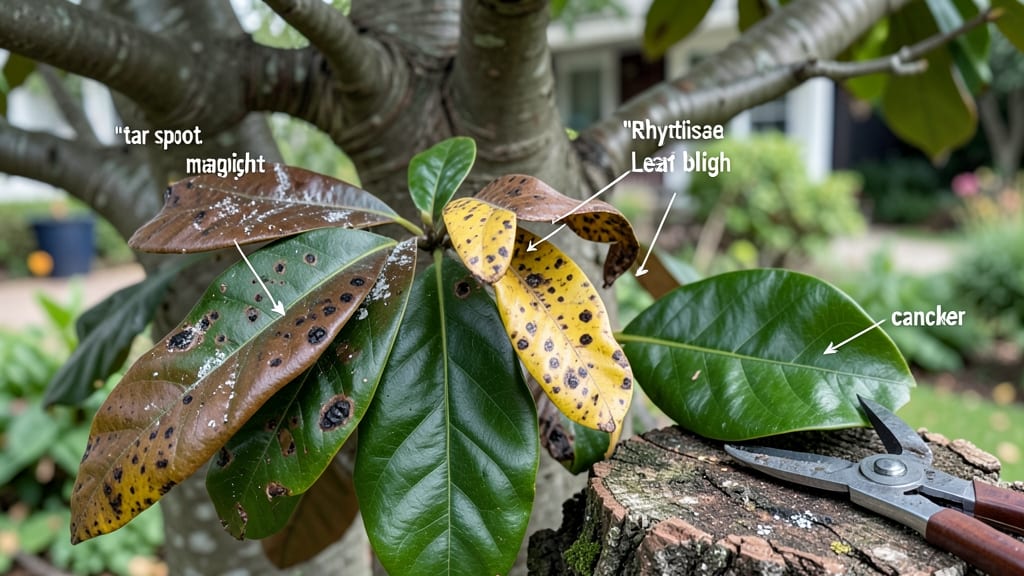
Your brown magnolia tree diseases aren’t just unsightly—they’re a distress signal from your tree. 🌿 I’ve watched this happen to three magnolias in my yard, and I learned the hard way that waiting too long means losing branches (or worse, the whole tree).
The key is catching it early when the damage is still small—before fungal spores spread or bark cracks beyond repair.
Most browning starts with tiny black spots on leaves or powdery gray patches on bark—classic signs of fungal infections like anthracnose or powdery mildew. But it could also be bacterial leaf spot, environmental stress from drought or poor drainage, or even insect damage from scale or magnolia scale.
The good news? All of these have solutions, from pruning out infected branches to applying the right fungicide at the right time.
What you’ll gain is a tree that stays lush and healthy, with fewer brown spots and stronger growth each year. I’ve saved trees that looked hopeless by acting within 2 weeks of first noticing symptoms.
The secret is regular inspections (especially after rain) and knowing which treatments work best for magnolias—some common fungicides can actually harm them.
This works for all magnolia varieties, from Southern magnolias to saucer magnolias, and adapts to different climates. Let’s get your tree back to its vibrant self before the damage spreads further.
Root Causes Behind Leaf Browning
When your magnolia tree’s leaves turn brown, it’s rarely a coincidence—it’s a cry for help from the tree itself. Understanding why this happens is the first step to restoring its health. Brown magnolia leaves often signal underlying stress, and the culprits can range from environmental factors to microbial invaders.
Below, we break down the most common reasons, backed by science, so you can diagnose the issue like a pro.
Magnolias are resilient, but they have limits. Extreme or sudden changes in their environment can trigger browning leaves faster than you’d expect. Here’s what’s likely happening:
- Water Woes:
- Overwatering: Magnolias hate soggy roots. Excess moisture cuts off oxygen, leading to root rot (often caused by Phytophthora fungi). Brown, crispy leaves? That’s your tree gasping for air. 💡 Pro Tip: Stick your finger 2 inches into the soil—if it’s damp, hold off on watering.
- Underwatering: Drought stress forces leaves to conserve water by browning at the edges. Magnolias need 1–1.5 inches of water weekly, especially in sandy or well-drained soils.
- Temperature & Sunburn:
- Sudden heatwaves or late-season frosts can scorch leaves, causing them to turn brown in patches. Magnolias thrive in zones 4–9, but new growth is especially vulnerable to cold snaps (<32°F).
- Sunburn: If your tree’s leaves are on the south or west side and suddenly brown, it’s likely getting too much direct sun. Magnolias prefer morning sun + afternoon shade.
- Wind & Physical Damage:
- Strong winds can desiccate (dry out) leaves, especially in dry climates. Look for brown edges with no fungal spots—that’s wind damage, not disease.
- Hail or mechanical injury (like lawnmower hits) can bruise leaves, leading to browning. 🔪 Fix: Prune damaged branches to prevent secondary infections.
If environmental factors aren’t the issue, pathogens are likely the villains. Fungi and bacteria thrive in magnolias, especially when the tree is already stressed. Here’s how they attack:
| Disease | How It Starts | Tell-Tale Signs |
|---|---|---|
| Anthracnose (Colletotrichum) | Spores splash onto leaves from rain or overhead watering, infecting through wounds or natural openings. |
|
| Target Spot (Corynespora) | Fungal spores spread via wind and water, targeting older leaves first. |
|
| Bacterial Leaf Spot (Pseudomonas) | Bacteria enter through leaf wounds (e.g., from hail or pruning). They multiply in warm, wet conditions. |
|
| Root & Stem Rot (Armillaria, Phytophthora) | Fungi invade root wounds (from poor drainage or girdling roots) and strangle the tree’s vascular system. |
|
🔥 Why It Spreads: Fungal spores love stagnant water. If your tree’s soil stays soggy for >48 hours, pathogens feast. ✨ Prevention: Improve drainage with organic mulch and avoid compacting soil around the base.
Pests don’t just eat leaves—they stress the tree, making it susceptible to browning. Here’s how they sabotage your magnolia:
- Scale Insects:
- These sap-sucking bugs coat leaves with sticky honeydew, inviting sooty mold (a black fungus that blocks sunlight).
- Look for white/crusty bumps on stems or undersides of leaves.
- Heavy infestations cause leaf drop and browning.
- Spider Mites:
- Tiny pests pierce leaves, causing stippling (tiny brown dots) and webbing. Drought-stressed trees are magnets for mites.
- Leaves may turn bronze or crispy.
- 🌡️ Hot, dry weather = mite party time.
- Japanese Beetles:
- Adult beetles skeletonize leaves (eat everything but the veins), leaving brown, lace-like remnants.
- Grubs in the soil damage roots, leading to poor nutrient uptake and browning.
💡 Key Clue: If browning is paired with sticky residue, webbing, or tiny bugs, pests are likely the culprit. 🔪 Act Fast: Blast off mites with water, prune infested branches, or use neem oil for scale.
Brown leaves can also scream, “Feed me!” Magnolias need a balanced diet, and deficiencies show up in specific patterns:
Fixing Brown Spots on Your Magnolia
Reviving a brown magnolia tree starts with identifying the root cause and taking targeted action. Below, we’ve mapped out practical solutions for each common disease, along with preventive tips to keep your tree thriving. Think of this as your step-by-step guide to turning brown leaves into lush, green foliage again!
🔥 Remove Infected Foliage Immediately
Fungal spores spread like wildfire—literally! Snip off brown, spotted, or powdery leaves and dispose of them in a sealed trash bag (not your compost). This stops the fungus from reinfecting your tree. Pro Tip: 💡 Wear gloves—some fungi can irritate skin!
🍳 Apply Fungicide (Organic or Chemical)
- For mild cases: Mix 1 tbsp baking soda + 1 tsp dish soap + 1 gallon water in a spray bottle.
Test on a small branch first to avoid leaf burn. - For severe outbreaks: Use a copper-based fungicide (like Bonide Copper Fungicide) or a neem oil solution (1 tsp neem oil + 1 quart water + a drop of soap). Spray every 7–10 days until new growth appears.
🌡️ Improve Airflow & Reduce Moisture
Fungi love damp, shady conditions. Prune branches to open up the canopy, and avoid overhead watering (water at the base instead). If your tree is in a humid area, consider a fan on low near it during summer.
👨🍳 Blast Off Pests with Soap or Oil Sprays
- For soft-bodied pests (mites, aphids): Spray with horticultural oil (like Safer Brand 3-in-1 Oil) or a soapy water mix (2 tbsp mild soap per gallon of water).
Cover both sides of leaves thoroughly. - For armored pests (scale insects): Scrape off visible bumps with a plastic scraper (metal can damage bark), then treat with dormant oil in late winter.
🔪 Prune Infested Branches
If pests have taken over a large section, cut out and destroy heavily infested branches. Seal pruning cuts with pruning paint to prevent secondary infections.
🎯 Introduce Beneficial Insects
Ladybugs and lacewings devour mites and aphids. Purchase them from garden centers or attract them naturally with neem oil sprays and dill or fennel plants nearby.
🥘 Provide Shade & Deep Watering
- Morning sun is safer than harsh afternoon rays. If your tree gets 6+ hours of direct sun, consider light shade cloth during peak heat.
- Water deeply 1–2 times per week (not daily shallow watering).
Use a soaker hose to deliver moisture to the roots.
🌱 Amend Soil for Better Nutrition
Brown leaves from poor soil? Test your soil’s pH (aim for 5.0–6.5 for magnolias) and add:
- Organic matter: Mix in compost or aged manure.
- Slow-release fertilizer: Use a balanced 10-10-10 or acid-loving plant fertilizer in early spring.
✨ Mulch Like a Pro
Spread 3–4 inches of mulch (wood chips or pine straw) around the base (but not touching the trunk). This retains moisture, regulates temperature, and keeps roots cool.
To avoid future brownouts, follow this year-round care plan:
| Season | Task | Why It Works |
|---|---|---|
| Spring | Prune dead branches, apply fungicide | Removes winter-damaged wood, prevents fungal spores from spreading. |
| Summer | Water deeply, monitor pests | Prevents drought stress and pest outbreaks. |
| Fall | Rake up fallen leaves | Reduces overwintering fungi and pests. |
| Winter | Apply dormant oil spray | Smothers overwintering eggs and scale insects. |
Final Thought: 🌿 Patience is key—some diseases take weeks to fully resolve. Stick with the treatments, and your magnolia will bounce back with vibrant new leaves by next season!
Frequently asked questions
Why do my magnolia leaves turn brown in patches but not all at once?
Patchy browning usually signals fungal infections like anthracnose or target spot, which spread gradually. These diseases often start on older leaves first, creating irregular brown spots with yellow halos. Check for wet conditions—fungi thrive when leaves stay damp for long periods, especially after rain or overhead watering.
Can I save my magnolia if the bark is already cracking and peeling?
Cracked bark is serious but not always fatal. First, check for root rot (mushrooms at the base) or bacterial canker (oozing lesions). If the tree still has green leaves and new growth, prune away dead bark and apply a copper fungicide to prevent spread. For severe cases, consult an arborist—they can assess if the tree's vascular system is still functional.
Is neem oil safe to use on magnolias for fungal diseases?
Yes! Neem oil is excellent for magnolias—it treats fungal infections (like powdery mildew) and repels pests (scale, mites). Mix 1 teaspoon neem oil + 1 quart water + a drop of soap, then spray every 7-10 days until new growth appears. Always test on a small branch first, as some magnolias may react to concentrated oils.
How do I tell if my magnolia's browning is from pests or disease?
Look for these clues: Pests leave sticky residue (honeydew), webbing, or tiny bugs (mites, scale), while diseases show spots, lesions, or powdery coatings. Inspect leaf undersides and bark—if you see white crusty bumps (scale) or stippled leaves (mites), it's pests. For diseases, check for concentric rings (target spot) or sunken lesions (anthracnose).
Will pruning help my magnolia recover from disease?
Prune only infected branches (cut 6 inches below the last brown spot) to remove fungal/bacterial sources. Sterilize tools with rubbing alcohol between cuts, and never compost infected material. Thin the canopy to improve airflow—this reduces humidity where spores thrive. Time it right: Prune in dry weather during late winter or early spring.