
Pests and Diseases
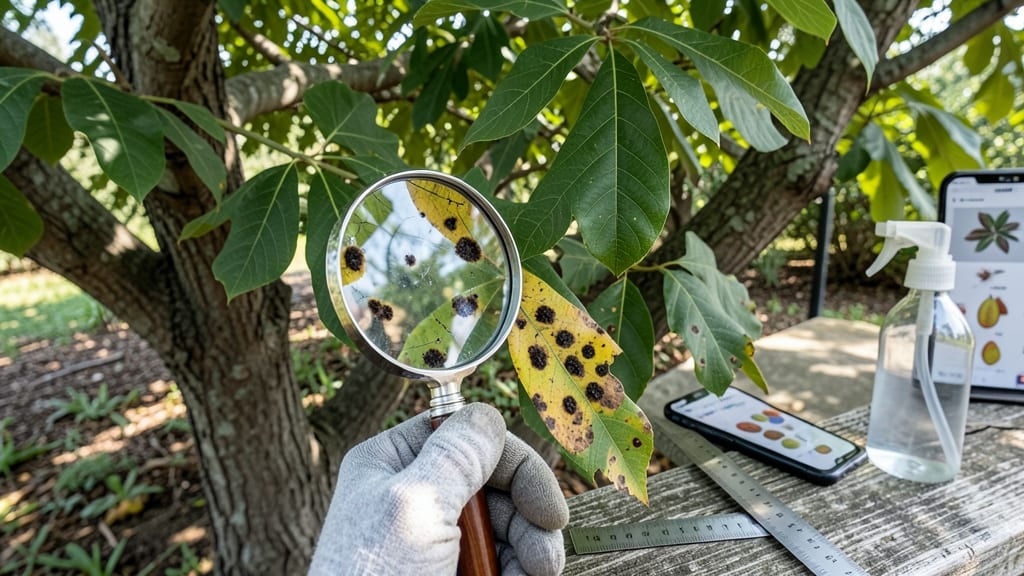
Black spots on pecan tree leaves are typically caused by fungal diseases like anthracnose or scab, thriving in warm, humid conditions. Prune infected branches, apply copper fungicide, and improve airflow to prevent spread and restore leaf health organically.
These dark blemishes often appear as raised or sunken patches, depending on the specific fungus at play.
Anthracnose, for example, creates dark, sunken spots that can merge into larger lesions, while scab diseases produce rough, crusty patches. 🌱 The key to controlling these issues lies in early intervention—removing infected foliage before spores spread and using preventive sprays during peak fungal activity seasons.
I’ve found that maintaining proper spacing between trees and avoiding overhead irrigation can drastically reduce humidity levels around the leaves, making them less hospitable to fungal growth.
For organic control, copper fungicides are particularly effective because they disrupt fungal cell membranes without harming beneficial insects. Neem oil is another great option, as it contains natural compounds that inhibit spore germination.
Timing matters too—apply treatments in early spring before new leaves emerge or in late fall after harvest to catch spores before they take hold.
💡 In This Article
- Identifying Fungal Diseases Causing Black Spots on Pecan Leaves
- Organic Treatment Methods for Pecan Leaf Spot Diseases
Identifying fungal diseases causing black spots on pecan leaves
The black spots you're seeing on pecan leaves are most likely caused by two common fungal pathogens: Gloeodes pomigena (the culprit behind anthracnose) or Elsinoë species (responsible for scab). These fungi thrive in warm, humid conditions, with temperatures between 75-85°F and high moisture levels creating the perfect breeding ground.
Anthracnose typically appears as dark, sunken lesions that can expand to 1/4-inch wide, often with a yellow halo around the edges, while scab presents as rough, crusty patches that may crack open as they mature.
The infection process begins when fungal spores land on leaves and germinate in the presence of free water—like dew or heavy morning mist.
Within 5-7 days, the fungus penetrates the leaf tissue, disrupting photosynthesis and causing the characteristic black spots. 🌿 What's particularly concerning is how quickly these diseases spread: a single infected leaf can release thousands of spores that contaminate neighboring foliage.
The key difference between anthracnose and scab lies in their growth patterns—anthracnose spreads more aggressively in wet conditions, while scab thrives in slightly drier environments with frequent temperature fluctuations.
Diagnosing the specific disease is crucial because it determines your treatment approach. Anthracnose often appears first on lower leaves and progresses upward, while scab can develop on any leaf surface but tends to create more pronounced crusty textures.
You can test for these diseases by collecting a leaf sample, placing it in a plastic bag with a damp paper towel, and observing for fungal growth within 3-5 days. If you notice black, fuzzy growth, that's a strong indicator of fungal infection.
Environmental factors play a massive role in disease severity. Pecan trees planted too closely together create poor airflow, trapping moisture and accelerating fungal growth.
Overhead irrigation systems also contribute by wetting leaves for extended periods. 🌧️ The ideal spacing between pecan trees should be 40-50 feet to allow proper air circulation, while drip irrigation systems can minimize leaf moisture.
Additionally, fungal spores overwinter in fallen leaves and bark debris, so thorough cleanup in late fall is essential to prevent next year's infections.
Another critical factor is leaf wetness duration. Research shows that fungal spores require at least 9-12 hours of leaf wetness to infect pecan leaves. This is why early morning watering (before 9 AM) allows leaves to dry more quickly during the day.
The combination of warm temperatures and prolonged moisture creates the perfect storm for fungal outbreaks, which is why preventive measures during these conditions are particularly important.
What most pecan growers don't realize is how soil health impacts leaf spot diseases. Compacted or nutrient-deficient soil reduces tree vigor, making leaves more susceptible to infection.
Conducting a soil test to check pH levels (ideal range is 6.0-7.0) and organic matter content can reveal underlying issues that may be contributing to your fungal problems. Healthy, well-nourished trees can better resist fungal attacks through natural defense mechanisms.