
Pests and Diseases
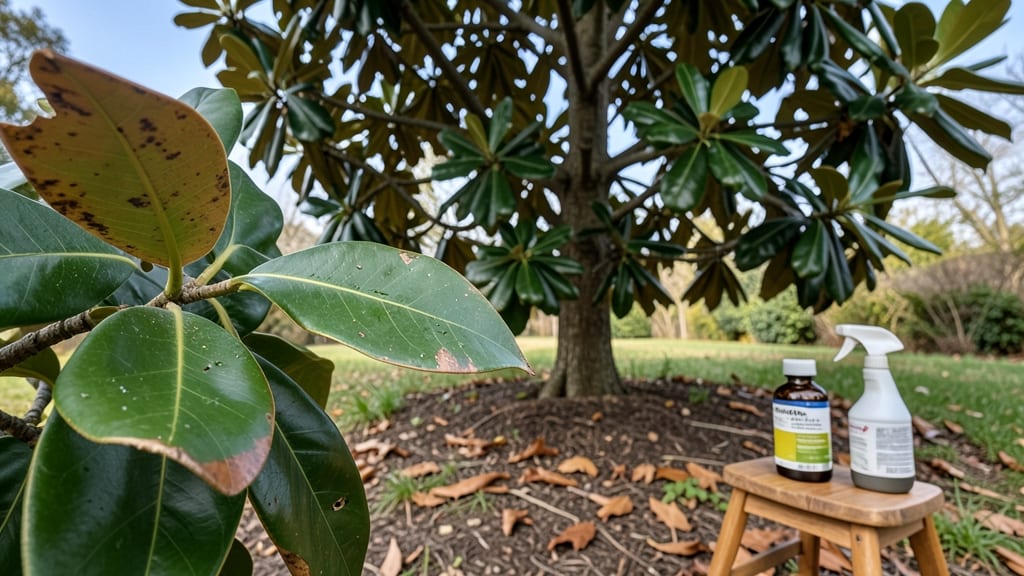
When your magnolia tree’s leaves turn brown and fall off dramatically, it’s usually a sign that root rot or fungal infection is sapping its strength. 🌿 I’ve seen this happen after heavy rains or when copper fungicide gets skipped, and the good news is you can turn things around with the right approach.
The key is acting fast before the roots give out completely.
Root rot and fungal diseases like powdery mildew thrive in wet conditions, suffocating roots and clogging leaves with brown spots. Overwatering, poor drainage, or compacted soil make it worse—my own magnolia nearly died after a summer of soggy soil.
The first step is checking the roots: healthy ones smell earthy, not rotten.
Copper fungicide is your best defense—it stops fungal spread while you improve drainage. Mix it with a soil drench and prune affected branches back to healthy growth. Within 2-3 weeks, you’ll see new leaves pushing through if the roots are still salvageable.
The smell of fresh copper solution is strong, but it’s the difference between recovery and loss.
If the trunk feels soft or roots are mushy, it’s time for an arborist. Otherwise, mulch properly, water at the base (not overhead), and monitor for repeat issues. Your magnolia can bounce back—just give it the right care now.
Why it happens
When your magnolia tree’s leaves start turning brown and falling off, it’s often a distress signal from the tree itself. Understanding the root causes—literally and figuratively—can help you take swift, targeted action.
Below, we break down the most common reasons why this happens, from environmental stressors to hidden pests and diseases.
🌡️ Environmental Stressors: Too Much or Too Little
Magnolia trees are hardy but sensitive to extreme conditions. Temperature fluctuations, whether sudden freezes, scorching heat, or even windburn, can cause leaf edges to brown and crisp. Why? Cold snaps disrupt cellular function, while heat stress leads to oxidative damage—think of it like your tree getting sunburned. Drought stress is another culprit: when roots can’t absorb enough water, leaves curl, yellow, then brown as the tree prioritizes survival over foliage.
Actionable fix: Mulch around the base (2–4 inches deep) to retain moisture, and water deeply once a week during dry spells. If your area experiences late frosts, consider frost cloth for young trees.
🍄 Fungal Infections: The Silent Invaders
Fungi like Phytophthora (root rot) or Anthracnose thrive in damp, poorly drained soil, attacking magnolias by blocking nutrient uptake. Root rot is particularly insidious: it starts underground, cutting off water and nutrient flow, which manifests as wilting, browning, and leaf drop. Anthracnose, on the other hand, targets leaves directly, causing dark, sunken spots that expand until the leaf falls.
How to spot it:
- Mushrooms or mold at the base of the tree 🍄
- Soft, mushy roots when dug up 🪴
- Brown spots with yellow halos on leaves 🍂
Actionable fix: Improve drainage with raised beds or sand amendments, and apply copper fungicide (like the one mentioned in this article) to prevent spread. For severe cases, prune infected branches 1 inch below the damage and sterilize tools with rubbing alcohol.
🐜 Pest Infestations: Tiny Thieves Draining Your Tree
Magnolias are magnets for pests like scale insects, spider mites, and borers.
These critters suck sap or burrow into bark, weakening the tree and causing leaves to yellow, brown, and drop prematurely. Scale insects, for example, excrete honeydew—a sticky substance that fosters sooty mold, further stressing the tree.
Signs of pests:
- Sticky residue on leaves or bark 🍯
- Visible webbing (mites) or tiny bumps (scale) 🕷️
- Holes in leaves or sawdust-like frass (borers) 🪱
Actionable fix: Blast pests off with a strong stream of water, or use neem oil or insecticidal soap for mites and scale. For borers, inject systemic insecticide into the trunk or hire a pro for deep infestations.
🌱 Nutrient Deficiencies: Starving Your Tree
Magnolias need a balanced diet of nitrogen (N), phosphorus (P), and potassium (K), plus micronutrients like iron and magnesium. A deficiency in iron (chlorosis) causes yellowing between leaf veins, followed by browning. Potassium deficiency leads to weak stems and brown leaf edges, while magnesium deficiency creates interveinal browning.
How to diagnose:
Symptom
Likely Deficiency
Fix
Yellow leaves with green veins
Iron or magnesium
Apply chelated iron or Epsom salt (magnesium sulfate)
Brown edges on older leaves
Potassium
Use a balanced fertilizer (10-10-10) in early spring
Overall stunted growth
Nitrogen
Add compost or blood meal to the soil
Pro tip: Test your soil’s pH (magnolias prefer 4.5–6.5). If it’s too alkaline, nutrients like iron become unavailable—amend with sulfur or peat moss.
🌪️ Physical Damage: When Nature Takes a Toll
Hail, heavy winds, or even lawnmower trauma can tear leaves, exposing them to pathogens or causing them to wither. Volcanic ash or pollution (common in urban areas) can also coat leaves, blocking sunlight and leading to browning.
Even improper pruning—cutting too close to branches or removing too much foliage at once—can shock the tree.
Actionable fix:
- Protect young trees with tree wraps during storm season ⚡
- Adjust mower height to avoid scalping roots 🌿
- Wash leaves with water to remove debris or pollution 🚿
- Prune in late winter (dormant season) to minimize stress
Fixing Brown, Dropping Magnolia Leaves
When your magnolia’s leaves start turning brown and falling off, acting fast can save your tree. Below are targeted solutions for the most common causes—from fungal infections to environmental stress—along with preventive tips to keep your magnolia thriving. Let’s get your tree back to its lush, healthy glory!
If your magnolia’s leaves are browning and dropping due to root rot or fungal diseases (like Phytophthora or Fusarium), copper fungicide is your best defense—but proper care is key.
🔥 Step 1: Improve Drainage Immediately Poor drainage suffocates roots, leading to rot. Act now: - Test your soil: Dig a small hole (6–8 inches deep) near the tree.
If water pools after 30 minutes, drainage is poor. - Amend the soil: Mix in compost, perlite, or coarse sand to loosen heavy clay.
For severe cases, consider raising the tree’s root zone with a mound of amended soil. - Avoid overwatering: Let the top 2–3 inches of soil dry out between waterings. Use a soaker hose to deliver water slowly at the base.
🍳 Step 2: Apply Copper Fungicide Correctly Copper fungicides (like copper sulfate or copper hydroxide) help control fungal pathogens. Follow these steps: - Choose the right product: Opt for a fixed copper fungicide (less toxic to plants than copper sulfate). - Apply at the right time: Treat early in the season (spring) or when you first notice symptoms.
Reapply every 2–4 weeks during wet conditions. - Cover all surfaces: Spray foliage, stems, and soil around the base. Use a hose-end sprayer for even coverage. - Safety first: Wear gloves and a mask—copper can irritate skin and lungs.
Avoid spraying on windy days.
👨🍳 Step 3: Prune Damaged Areas
- Remove infected leaves/branches: Cut back browned, mushy, or blackened stems with sterilized pruners (wipe with rubbing alcohol between cuts).
- Dispose properly: Bag and trash (don’t compost) infected debris to prevent spread.
- Thin the canopy: If the tree is overly dense, prune to improve airflow, reducing humidity and fungal growth.
⏰ Step 4: Monitor & Repeat as Needed - Check roots: If root rot is severe, you may need to dig up and inspect roots.
Healthy roots are firm and white; rotten roots are mushy and dark. - Reapply treatments: If symptoms persist, re-treat with copper fungicide and consider a soil drench with hydrogen peroxide (3%) to disinfect.
If brown leaves are due to extreme heat, cold damage, or drought, your magnolia needs quick relief and long-term care.
💡 Provide Shade & Water Deeply
- Shade cloth: In scorching summers, drape 30–50% shade cloth over the tree to reduce stress.
- Deep watering: Water slowly and deeply (1–2 inches per week) at the drip line, not just the base.
Use a moisture meter to check soil levels. - Mulch properly: Apply 2–4 inches of organic mulch (wood chips or pine straw) away from the trunk to retain moisture and regulate soil temperature.
🎯 Protect from Frost & Wind Burn
- Winter prep: Before the first frost, wrap the tree in burlap or use anti-desiccant sprays to prevent leaf scorch.
- Windbreaks: If your magnolia is exposed, plant windbreak shrubs (like boxwoods) or use temporary screens in harsh winds.
Once your magnolia recovers, keep it healthy with these proactive steps:
| Issue | Prevention Tip |
|---|---|
| Poor drainage | Plant on a slight mound or amend soil with sand/compost before planting. |
| Fungal infections | Rotate fungicides yearly to prevent resistance. |
| Overwatering | Install a drip irrigation system with a timer for consistent moisture. |
| Nutrient deficiency | Test soil (pH 5.0–6.5 is ideal) and fertilize in early spring with iron sulfate (for chlorosis) or balanced slow-release fertilizer. |
| Pests (scale, spider mites) | Spray neem oil in early spring to deter pests before they take hold. |
If your magnolia’s roots are severely rotted, the tree may need root pruning or a transplant. For large or valuable trees, consult an arborist to assess structural damage and recommend safe removal or treatment.
Your magnolia can bounce back! With the right care, it’ll reward you with glossy green leaves and stunning blooms for years to come. 🌿💚
Frequently asked questions
Why do magnolia leaves turn brown in patches instead of all at once?
Patchy browning usually signals a fungal infection like anthracnose or environmental stress from uneven watering. Check for dark spots with yellow halos—this is classic anthracnose. If only edges brown, it may be low humidity or salt buildup from poor irrigation. Test soil moisture at multiple points around the tree.
Can I save a magnolia with completely bare branches?
It depends! If the tree still has green leaves on lower branches or fresh growth in spring, it may recover. For completely bare branches, check the roots first—healthy roots mean hope. Apply copper fungicide and improve drainage immediately. If no new buds form by late spring, consult an arborist about root health.
How often should I apply copper fungicide for prevention?
For prevention, apply copper fungicide every 4-6 weeks during the growing season (spring to fall). If your area has high humidity or frequent rain, increase to every 2-3 weeks. Always alternate between copper hydroxide and copper sulfate to prevent resistance. Stop treatments 4-6 weeks before first frost.
Are brown magnolia leaves contagious to other plants?
Fungal diseases like anthracnose or root rot can spread to nearby plants if spores travel via wind or water. Remove all infected leaves immediately and sterilize tools between cuts. Avoid composting diseased foliage—bag and trash it instead. Keep mulch 3-4 inches away from the trunk to reduce soil-borne pathogen spread.
What's the difference between brown leaves from drought vs. root rot?
Drought causes uniform browning starting at leaf edges, while root rot shows yellowing between veins first, then browns completely. For drought: leaves feel dry/crispy; for rot: roots smell foul and are mushy. Dig a small test hole—if water pools after 30 minutes, drainage is the issue; if soil stays dry, it's thirst.