
Companion Plants
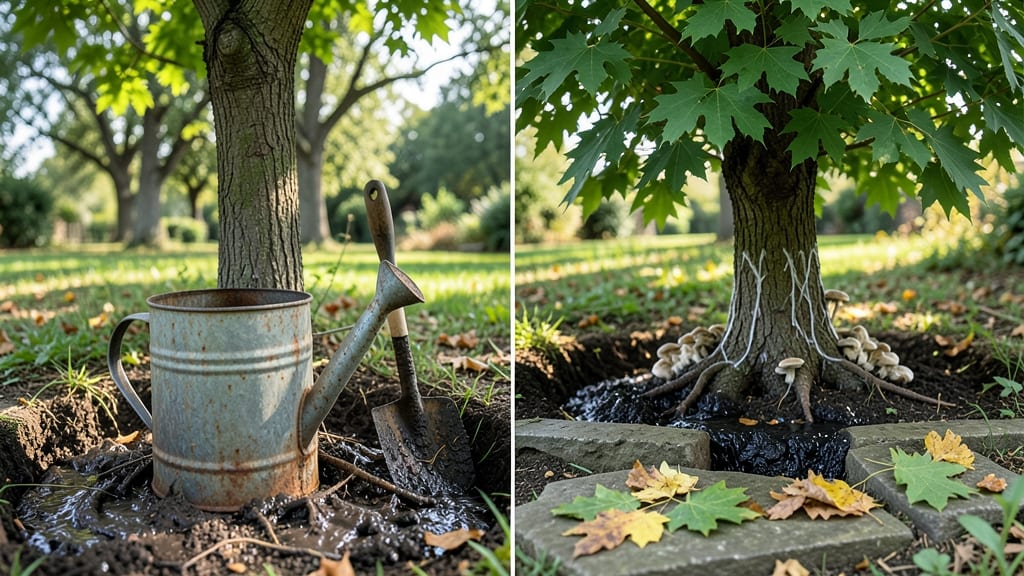
Will an overwatered tree recover? It depends—early intervention can save it, but severe cases often lead to permanent root rot and irreversible damage. Watch for yellowing leaves, wilting, and fungal growth, then act fast by cutting back watering, improving drainage, and pruning affected areas to assess its chances.
Overwatered trees face two critical threats: suffocated roots and fungal infections. When soil stays soggy, oxygen can't reach roots, causing them to rot and starve for nutrients. 🌱 The first sign is often yellowing leaves or drooping branches—your tree's SOS signal.
I've seen container-grown trees recover within weeks when I adjust watering and add perlite to improve drainage, but mature trees with deep-rooted rot rarely bounce back. The key is acting before mold appears or the bark feels spongy to the touch.
For best results, combine soil aeration with a 30-60-60 watering rule: wait until the top 3 inches of soil are dry, then water deeply but only when needed. Most trees prefer this "drought then drink" cycle over constant moisture.
If your tree is in a pot, check the drainage holes—clogged holes trap water faster than you'd think.
💡 In This Article
- How Overwatering Damages Tree Roots and Leaves
- Step-by-Step Tree Recovery Plan After Overwatering
How overwatering damages tree roots and leaves
When soil stays saturated for too long, it creates anaerobic conditions where roots suffocate. Oxygen levels drop below 5% (healthy soil maintains 10-20% oxygen), forcing roots to switch from aerobic respiration to inefficient fermentation.
This process produces toxic byproducts like ethanol, which damages cell membranes and blocks nutrient uptake. 🌱 The first visible sign is often yellowing leaves—chlorosis—that starts at the lower branches because those leaves rely on older, already-stressed roots.
Root rot progresses in stages: first, the fine root hairs die off (within 3-5 daysPhytophthora thrive in waterlogged soil, creating black, mushy roots that smell foul.
Unlike drought stress which causes wilting, overwatered trees often appear limp yet remain turgid—this "false turgor" is a red flag. The bark may develop dark streaks or ooze sap as the infection spreads upward through the vascular system.
Leaves respond differently based on the tree species. Deciduous trees like maples show yellowing between veins (interveinal chlorosis) because excess water disrupts iron uptake. Evergreens like pines develop brown needles that stay attached—needles won't drop until the roots are 70% compromised.
The key difference between wilting from drought and overwatering? Drought causes leaves to feel dry and crispy, while overwatered leaves stay soft and droopy with a rubbery texture when pinched.
Soil chemistry shifts dramatically too. Excess water leaches away nitrogen and phosphorus, leaving only water-soluble salts that burn root tips. The pH often drops below 6.0 (ideal is 6.0-7.0), creating an acidic environment where beneficial microbes can't survive.
This microbial collapse removes the natural protection against pathogens, making the tree even more vulnerable to secondary infections like Armillaria (honey fungus).
Consider this comparison: a 3-inch diameter maple tree needs about 1 gallon of water per week in summer, but heavy clay soil can hold 10 gallons of water per cubic foot. That's why the same amount of watering causes rot in clay versus healthy drainage in sandy loam.
The solution starts with understanding your soil's water retention capacity—something most gardeners overestimate by 30-50%. 💧