
Companion Plants
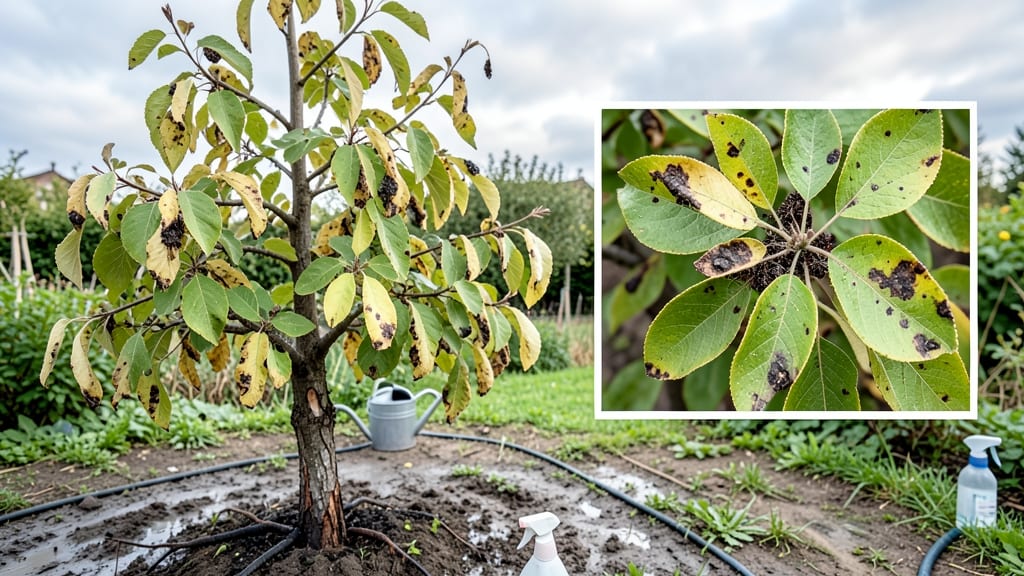
An overwatered apple tree looks like a drowning plant—leaves yellowing first around the edges, then spreading inward while the bark develops unsightly cracks. 🌳 I’ve seen my own trees go from lush and productive to pitiful in just a few weeks when summer rains mixed with my overenthusiastic watering.
The roots suffocate, starving the tree of oxygen, and the symptoms are impossible to miss if you know what to watch for.
Yellowing leaves that stay soft and spongy (not crisp like underwatered foliage) are the first red flag. Then comes the leaf drop—sometimes all at once—and a foul, musty smell at the base of the trunk.
The bark may split or peel as roots struggle to breathe, and fungal growth like mushrooms or mold appears near the soil line. It’s not just sad—it’s a warning sign your tree is in distress.
Fixing it starts with cutting back on water. Let the top 2–3 inches of soil dry out completely between waterings, and improve drainage by amending the soil with compost or sand.
Prune any dead branches, and consider a root aeration if the soil stays compacted. With patience, your tree can bounce back—though severe cases may need years to recover fully.
This isn’t just about saving a tree; it’s about learning the subtle cues that tell you when your apple tree is begging for help. The key is consistency—neither too much nor too little, but just enough to keep those roots happy and healthy.
Trust me, your tree will thank you with better fruit next season.
Why it happens
Overwatering an apple tree might seem harmless—after all, more water equals healthier plants, right? 🌧️❌ But when roots drown in excess moisture, they suffocate, leading to a cascade of problems. Let’s break down the key reasons why apple trees end up drowning in their own watering routine.
Apple trees thrive in well-draining soil, but if your garden’s soil is clay-heavy, compacted, or lacks organic matter, water pools around the roots instead of seeping away. Without oxygen, roots rot—a process called anaerobic respiration—which releases toxic byproducts like ethanol and lactic acid.
These chemicals burn root cells, stunting nutrient uptake and causing wilting leaves.
🔹 Actionable fix: Test your soil’s drainage by digging a 12-inch hole, filling it with water, and timing how long it takes to drain. If it’s slower than 6 hours, amend with:
- Coarse sand or perlite (20-30%)
- Compost or aged manure (30-40%)
- Peat moss or coconut coir (for moisture retention)
Apple trees need 1–1.5 inches of water per week (including rainfall), but many gardeners water daily or assume "a little extra" won’t hurt. In reality, frequent shallow watering encourages roots to stay near the surface, where they’re more vulnerable to drying out and drowning.
Overwatering also displaces oxygen in the soil, creating a waterlogged environment that fungi like Phytophthora love.
🔹 Pro tip: Water deeply but infrequently—aim for 1–2 times per week (adjust for heat/drought). Use the "finger test": Stick your finger 2–3 inches into the soil. If it’s damp, wait.
Mother Nature can be too generous. If your area gets consistent heavy rain (e.g., 2+ inches in 24 hours) and you’re still watering, roots drown. Even worse? Automatic sprinklers or drip systems running on a timer without soil checks can turn your yard into a swamp.
Apple trees in low-lying areas or with poor slope drainage are especially at risk.
🔹 Solution:
- Install a rain gauge to track precipitation.
- Adjust irrigation manually after heavy rain.
- Create swales or berms to divert excess water away from the tree.
Mulch is a gardener’s best friend—unless you pile it too thickly or use the wrong type.
A 4–6 inch layer of organic mulch (like wood chips or straw) helps regulate soil temperature and moisture, but mulch that’s 8+ inches deep can smother roots and trap excess water, mimicking a waterlogged bog. Worse yet, plastic or landscape fabric under mulch blocks drainage entirely.
🔹 Fix it:
- Keep mulch 3–4 inches deep and 2–3 inches away from the trunk.
- Use chop-and-drop mulch (grass clippings, leaves) for lighter coverage.
- Avoid mulching wet soil—wait until it’s slightly dry.
Newly planted apple trees have delicate root systems that need time to establish. If the root ball isn’t properly loosened before planting or the hole is too small, roots can’t spread outward to access oxygen and water efficiently.
Combined with excessive watering, this creates a perfect storm for root rot.
🔹 Planting best practices:
- Dig a hole twice as wide as the root ball but no deeper.
- Loosen the root ball with your fingers before planting.
- Water lightly after planting, then deeply every 3–4 days for the first month.
Reviving Your Apple Tree: Step-by-Step Fixes
Overwatering can turn your thriving apple tree into a sad, struggling plant—but don’t worry! With the right adjustments, you can nurse it back to health. Below are practical, actionable solutions tailored to the most common signs of overwatering, along with prevention tips to keep your tree happy long-term.
If your apple tree’s leaves are turning yellow or falling prematurely, it’s likely drowning in excess moisture. Here’s how to correct it:
1. Adjust Your Watering Schedule
🔥 Stop watering immediately—let the soil dry out completely before adding more water. 🍳 Water deeply but infrequently: Apple trees prefer 1–1.5 inches of water per week (including rainfall).
Use a moisture meter or the finger test (insert your finger 2–3 inches into the soil; if it’s damp, wait). 👨🍳 Water at the base only: Avoid wetting the leaves or bark to prevent fungal diseases like apple scab.
2. Improve Soil Drainage
🔪 Aerate compacted soil: Use a garden fork to loosen the top 6–12 inches of soil around the tree’s drip line (the area directly under the canopy). ⏰ Add organic matter: Mix in compost or well-rotted manure to improve drainage and soil structure.
3. Prune Affected Leaves (If Necessary)
✂️ Remove severely yellowed or mushy leaves to redirect the tree’s energy to healthier growth. 💡 Pro Tip: If more than 20% of the foliage is affected, consider a light pruning session to reduce stress.
If your tree’s roots are soft, discolored, or smelly, root rot may have set in. Act fast!
1. Trim Damaged Roots
🔪 Carefully expose the roots (gently dig around the base) and cut away any black, mushy, or foul-smelling roots with sterilized pruners. 🌡️ Disinfect tools with rubbing alcohol to prevent spreading disease.
2.
Replant with Well-Draining Soil 🏗️ Remove the tree from its current spot (if root rot is severe) and repot or replant in a raised bed with sandy loam or a 50/50 mix of soil and perlite. 💡 Pro Tip: If replanting isn’t an option, create a small mound of soil around the base to encourage better drainage.
3. Apply Fungicide (If Needed)
🛡️ Use a copper-based or phosphite fungicide (like Serenade Garden or Copper Soap) to treat root rot and prevent fungal spread. ✨ Prevention Tip: Avoid overhead watering—always water at the base.
Overwatering weakens the tree’s structure, leading to bark damage. Here’s how to stabilize it:
1. Reduce Moisture Stress
💧 Cut back on watering and mulch properly (2–4 inches of wood chips or straw, keeping it 6 inches away from the trunk). 🌡️ Monitor soil moisture—apple trees hate soggy roots!
2. Protect the Tree from Extreme Conditions
🛡️ Shade the tree from harsh afternoon sun if it’s in a hot climate. 🌡️ Avoid fertilizing until the tree shows signs of recovery (overwatering + fertilizer = double stress).
3.
Seal Minor Cracks (If Necessary) 🎨 For small cracks, apply tree wound sealant (like Tanglefoot Tree Wound Pruning Seal) to prevent pests or disease entry. ⚠️ Warning: Only seal small, clean cuts—large or peeling bark is a sign of deeper issues (like boron deficiency or disease).
Once your apple tree is on the mend, keep these habits to avoid repeating the problem:
✅ Check soil before watering—stick your finger in!
If it’s damp, wait. ✅ Invest in a drip irrigation system for slow, deep watering (no waste, no runoff). ✅ Plant in a slightly elevated spot if your yard tends to pool water. ✅ Choose the right location—apple trees need well-draining soil and full sun (6+ hours/day). ✅ Mulch correctly—never pile mulch against the trunk (this traps moisture and invites rot).
💡 Final Thought: Recovery takes time, but with consistent care, your apple tree will bounce back stronger. Patience is key—avoid overcorrecting by underwatering after fixing the issue!
(Need more help? Check out our [Apple Tree Care Guide] for long-term maintenance tips!)
Frequently asked questions about overwatered apple trees
How can I tell if my apple tree's yellow leaves are from overwatering vs. underwatering?
Overwatered leaves stay soft and mushy while underwatered leaves feel crispy or dry. Look for yellowing that starts at the edges (overwatering) versus brown tips (underwatering). Also check the soil—overwatered soil smells musty, while dry soil pulls away from the pot.
Why does my apple tree have mushrooms growing at the base?
Those mushrooms are a clear sign of overwatering—they thrive in damp, oxygen-poor soil where roots can't breathe. The fungi decompose dead organic matter but indicate root rot may be developing. Remove the mushrooms and improve drainage immediately to prevent further damage.
Can I save an apple tree with cracked bark from overwatering?
Small cracks can be sealed with tree wound paste, but severe splitting means the tree is struggling to maintain structure. Focus on reducing water and improving soil aeration. If cracks are deep and peeling, the tree may need professional assessment for boron deficiency or disease.
How long does it take for an apple tree to recover from overwatering?
Mild cases show improvement in 2-4 weeks with proper care, but severe root rot can take 6 months to 2 years to fully recover. Be patient—new growth will appear slowly as roots regenerate. Avoid fertilizing during recovery to reduce stress on the tree.