
Pruning
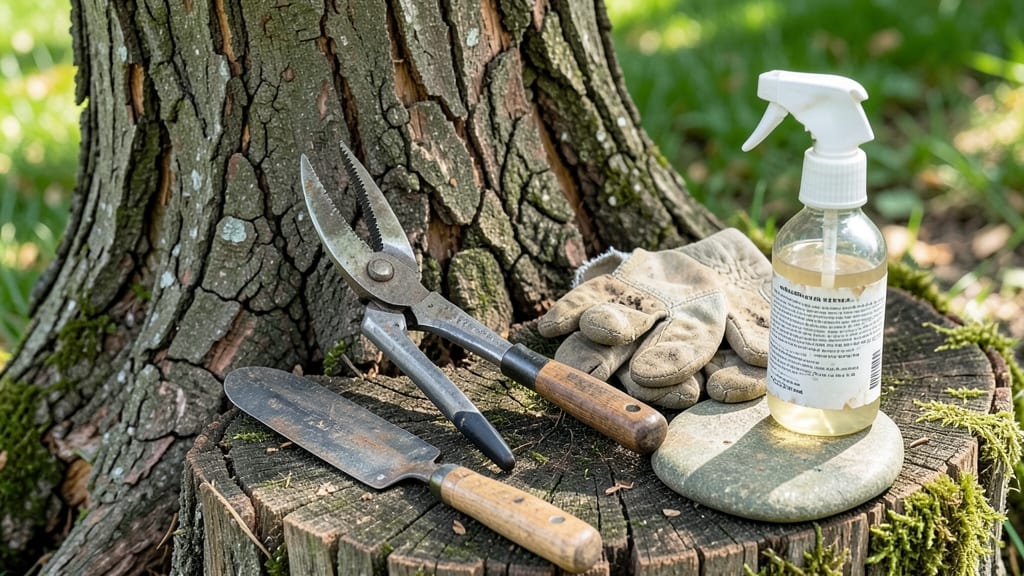
Fixing tree bark damage starts with the right tools and timing. 🌳 I’ve seen split bark, deep gouges, and sun-scalded patches ruin otherwise healthy trees—but with the correct approach, most wounds heal naturally (or you can help them along).
The key is acting quickly before pests or disease move in, and knowing which fixes work for which type of damage.
Most bark problems come from physical trauma (lawnmowers, string trimmers, or even wildlife), disease (like anthracnose), or environmental stress (sunburn or frost cracks). The good news? Trees are tougher than they look—many minor wounds seal themselves within a season.
But if the damage exposes inner layers or oozes sap for weeks, you’ll need to clean, prune, and protect it properly.
Your goal is to stop further harm and encourage the tree’s natural healing. For clean cuts, a thin layer of pruning sealant can shield the wound, while deep gouges may need a paste made from beeswax and linseed oil.
The right technique turns a potential hazard into a minor setback—one your tree can recover from in just a few growing seasons.
When in doubt, consult an arborist for damage above head height or on valuable species. Small fixes you can tackle yourself now save big headaches (and big bills) later. Let’s get that bark back to healthy.
Root Causes of Tree Bark Damage
Tree bark isn’t just a tough outer layer—it’s a vital shield protecting your tree from disease, pests, and environmental stressors. When damage occurs, it’s usually a sign that one (or more) of these underlying factors has compromised its integrity.
Understanding why bark gets damaged is the first step to preventing further harm and restoring your tree’s health. Let’s break down the most common culprits, backed by science and real-world observations.
Bark is sensitive to rapid changes in temperature, especially when cold snaps follow warm spells. During winter, trees enter dormancy, but if temperatures swing wildly—like a sudden freeze after a mild day—the bark can crack or split.
This happens because the outer layers contract faster than the inner layers, creating stress fractures.
🔬 Why it matters: Deep cracks expose the cambium layer (the tree’s growth engine) to pathogens like fungi and bacteria. Without this protective barrier, infections like hypoxylon canker or cytospora can take hold, leading to oozing sap, dieback, or even tree death.
💡 Pro tip: Wrap young or vulnerable trees with tree guard (burlap or specialized bark wrap) during extreme winter conditions to reduce stress. Avoid plastic wraps—they trap moisture and promote rot.
Insects and rodents don’t just nibble on leaves—they target bark for food, shelter, or nesting. Some of the most destructive offenders include:
- Bark beetles (e.g., Dendroctonus species): These tiny pests tunnel under the bark, disrupting nutrient flow. Infested trees often show sap oozing (a sign of stress) or frass (sawdust-like debris) at the base.
- Squirrels and rabbits: They gnaw on young trees or saplings, stripping bark in patches. This is especially common in urban or suburban areas with easy access to softwoods like pine or willow.
- Carpenter ants: While they don’t eat bark, their colonies create extensive galleries that weaken structural integrity, making trees more susceptible to wind damage.
🔬 Why it matters: Pests introduce entry points for fungal infections. For example, bark beetles often carry Ophiostoma fungi, which clogs the tree’s vascular system and causes blue stain disease.
💡 Pro tip: Inspect your tree’s base for chew marks, holes, or sawdust piles in early spring. Use tree collars (metal or plastic guards) to deter rodents, and apply borate-based treatments for beetle infestations.
Not all bark damage comes from nature—human error is a leading cause. Improper pruning, lawnmower strikes, or even leaning a ladder against the trunk can strip bark or create deep wounds. Here’s how it happens:
- Pruning cuts too close to the trunk: When you cut a branch flush with the trunk (or at an angle that leaves a stub), you remove the tree’s natural callus layer, which is critical for sealing wounds.
- Lawnmower or weed whacker damage: The base of young trees is often mulched too close to the trunk, leading to girdling (a ring of damaged tissue that strangles the tree).
- String or wire injuries: Tightly wrapped strings (e.g., from tied-down trees) or fences can indent or groove the bark over time, restricting growth.
🔬 Why it matters: A wound larger than 1/3 the trunk’s diameter can’t heal properly, leaving the tree vulnerable to decay fungi like Armillaria (honey fungus). Even small cuts can invite pests like bark borers.
💡 Pro tip: Always follow the three-cut pruning method to avoid bark tears, and keep mulch 2–4 inches away from the trunk. If you accidentally damage bark, seal minor wounds with pruning sealant (though research shows not sealing is often better for large wounds—let the tree heal naturally!).
Once bark is compromised—even by a small scratch—pathogens move in fast. Fungi and bacteria thrive in moist conditions, using damaged bark as a gateway to the tree’s vascular system. Common offenders include:
| Pathogen | Signs of Damage | Tree Vulnerabilities |
|---|---|---|
| Nectria canker (fungus) | Reddish-orange spores on oozing cracks; sunken, dead patches | Young, stressed, or wounded trees (e.g., after storms or pruning) |
| Phytophthora root rot (water mold) | Dark, water-soaked bark at the base; wilting leaves despite moist soil | Trees in poorly drained soil or overwatered landscapes |
| Bacterial leaf scorch (Xylella fastidiosa) | Yellowing leaves, oozing bark lesions, no visible spores | Grapevines, oaks, and elms (spreads via sap-feeding insects) |
🔬 Why it matters: These pathogens block nutrient transport, leading to dieback (branches or entire sections of the tree dying). Some, like Armillaria, can kill trees in 1–2 years if unchecked.
💡 Pro tip: Prevent moisture buildup by improving drainage and avoiding overhead watering. If you spot oozing sap or fungal fruiting bodies, prune infected branches 12+ inches below the damage and sterilize tools with 70% isopropyl alcohol.
Trees don’t live in a vacuum—they’re constantly battling wind, pollution, and drought. While these don’t directly cause bark damage, they weaken the tree’s defenses, making it more susceptible to other threats:
- Wind and ice: Chronic exposure abrasions bark (especially on rough-barked trees like oak or beech) and can split limbs, leaving raw wounds.
- Air pollution (e.g., ozone, sulfur dioxide): Urban trees often develop thin, brittle bark that’s easier to crack or peel.
- Drought stress: Prolonged dry spells cause xylem cavitation (air bubbles in water-conducting cells), which weakens structural integrity and makes bark more prone to splitting.
🔬 Why it matters: A
Practical fixes for damaged tree bark
Now that you understand the common causes of tree bark damage, let’s roll up our sleeves and tackle the fixes! The right approach depends on the root problem—whether it’s mechanical injury, disease, pests, or environmental stress.
Below are step-by-step solutions tailored to each issue, plus prevention tips to keep your trees thriving long-term.
Fix: Clean and protect the wound to prevent infection and encourage healing.
- 🔪 Trim Carefully
- Use sharp, sterilized pruning shears to make clean cuts at a 45-degree angle, just outside the branch collar (the swollen area where the branch meets the trunk).
- Avoid leaving stubs—this invites decay.
- 🧹 Clean the Wound
- Gently scrape away any loose or damaged bark with a sterilized knife or brush.
- Wipe the area with rubbing alcohol (70% isopropyl) to kill bacteria.
- 🛡️ Seal the Damage (For Large Wounds)
- Apply a tree wound dressing (like Tanglefoot Tree Wound Pruning Sealer) to protect against pests and moisture.
- Skip this for small wounds—they’ll heal faster without sealing.
- 🌱 Encourage Natural Healing
- Let the tree’s natural callus tissue form over time. Avoid covering wounds with thick layers of paint or tar, as these can trap moisture and harm the tree.
💡 Prevention Tips:
- Use protective wraps on young trees when mowing or trimming nearby.
- Train pets and kids to avoid climbing or rubbing against tree trunks.
- Install tree guards (plastic or metal sleeves) around trunks to shield against lawn equipment.
Fix: Remove pests and restore tree health to stop further damage.
- 🕵️ Identify the Culprit
- Boring insects (like bark beetles) leave tiny holes and sawdust-like frass.
- Sap-suckers (aphids, scale) create sticky residue (honeydew) and yellowing leaves.
- 🚿 Blast Off Pests
- For boring insects: Use a high-pressure water spray or manual removal of infested bark.
- For sap-suckers: Apply neem oil spray (mix 2 tbsp neem oil + 1 tsp mild soap + 1 quart water) and spray thoroughly.
- 🌿 Strengthen Tree Defenses
- Fertilize with a balanced, slow-release fertilizer (like 10-10-10) to boost immunity.
- Water deeply during dry spells to keep the tree hydrated.
- 🪲 Call in Backup (If Needed)
- For severe infestations, consult a certified arborist for systemic insecticides (like imidacloprid).
💡 Prevention Tips:
- Inspect trees regularly (spring and fall) for early signs of pests.
- Remove fallen leaves/debris where pests hide.
- Encourage natural predators (ladybugs, birds) by planting pollinator-friendly shrubs.
Fix: Improve airflow, remove infected areas, and treat with natural antifungals.
- 🗑️ Prune Infected Bark
- Cut out cankers (dead, sunken areas) with sterilized tools, extending 6–12 inches beyond the visible damage.
- Dispose of infected branches far from the tree (don’t compost them!).
- 🌬️ Boost Air Circulation
- Thin out dense foliage to reduce humidity around the trunk.
- Space mulch 3–4 inches away from the trunk to prevent moisture buildup.
- 🍄 Apply Natural Fungicides
- Spray with a baking soda solution (1 tbsp baking soda + 1 quart water + a few drops of soap) every 2 weeks.
- Try copper fungicide spray (follow label instructions) for stubborn infections.
- 💧 Adjust Watering Habits
- Water deeply but less frequently to avoid soggy soil.
- Avoid overhead watering—use drip irrigation instead.
💡 Prevention Tips:
- Avoid wounding trees during wet weather (fungi thrive in moisture).
- Sterilize pruning tools with bleach (1 part bleach to 9 parts water) between cuts.
- Plant resistant species (e.g., oaks over willows for wet climates).
Fix: Shield the tree and promote recovery with gentle care.
- 🌳 Provide Shade for Sunburn
- Install lightweight shade cloth (30–50% coverage) on the south or west side of the tree.
- Mulch heavily (2–4 inches deep) with wood chips to insulate roots.
- 🧊 Protect Against Frost Cracks
- Wrap young trees in tree wrap (remove in spring) to prevent temperature shocks.
- Avoid winter pruning—wait until late spring to trim.
- 💧 Hydrate Deeply
- Water slowly and deeply (1–2 inches per week) to help the tree recover.
- Mulch volcanoes are a no-no—keep mulch even and away from the trunk.
💡 Prevention Tips:
- Choose native or drought-resistant trees for hot climates.
- Avoid late-summer fertilizing—it encourages new growth vulnerable to frost.
- Group trees together to create microclimates that reduce temperature swings.
No matter the cause, these year-round habits keep bark strong and resilient:
- Prune correctly (only remove dead, diseased, or crossing branches).
- Monitor for stress signs (wilting, discolored leaves, oozing sap).
- Test soil pH (ideal range: 6.0–7.0) and amend if needed.
- Avoid "volcano mulching"—mulch should be 3–4 inches deep, not piled high.
🎯 Pro Tip: When in doubt, observe first—some damage (like epicormic shoots) is the tree’s way of healing! If you’re unsure, snap a photo and consult a local arborist for a second opinion.
Your tree’s bark may be tough, but with the right care, it’ll bounce back stronger than ever.
Frequently asked questions about tree bark damage
How do I know if my tree’s bark damage is serious enough to worry about?
Watch for these red flags: oozing sap that lasts more than 2-3 weeks, deep cracks exposing inner wood, or fungal growth (mushrooms, black streaks). If the wound is larger than 1/3 of the trunk’s diameter or affects the cambium layer, it’s critical to act quickly. Minor scrapes usually heal naturally.
Can I use regular paint or tar to seal tree wounds?
No—this is a common mistake that actually harms trees! Paint and tar trap moisture, suffocate the wound, and prevent natural healing. Instead, use a commercial tree wound sealant (like Tanglefoot) only for large wounds, or let small injuries heal on their own with the tree’s natural callus tissue.
What’s the best way to protect young trees from lawnmower damage?
Install tree guards (plastic or metal sleeves) around the trunk before mowing season. For extra protection, create a 3-foot buffer zone of mulch (2-4 inches deep) around the base. Always mow away from the tree, and consider string trimmers with guards for tight spaces.
How long does it take for tree bark to heal?
Small wounds (under 1 inch wide) typically heal within 1-2 growing seasons, while larger injuries may take 3-5 years or longer. The key factors are tree species, health, and environmental conditions. Keep the area clean and avoid disturbing new callus tissue as it forms.
When should I call an arborist instead of trying to fix it myself?
Consult a professional if you see: large cankers, oozing sap with foul odor, mushrooms growing at the base, or damage higher than 6 feet off the ground. Also seek help if your tree is valuable (like a heritage oak) or shows signs of systemic disease (yellowing leaves, dieback).