
Diseases
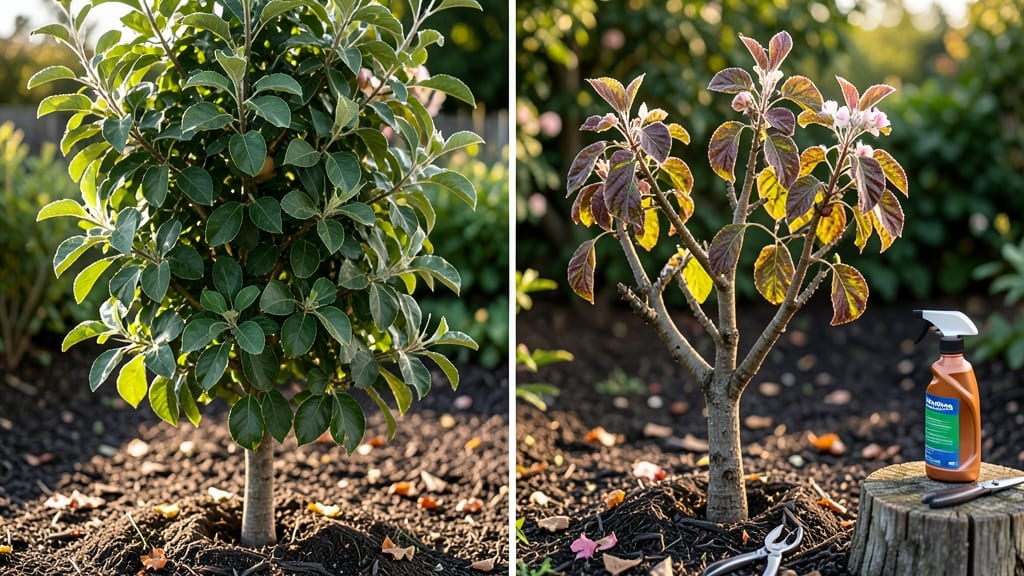
Your apple tree’s leaves curling like a sad paper airplane? 🍏 That’s leaf curl disease, and it’s more common than you think—especially after wet springs. I’ve seen this ugly fungus twist healthy foliage into brittle messes, but there’s hope: organic treatments work if you catch it early and act fast.
The culprit is a fungus called Venturia inaequalis, which hitches a ride on last year’s infected leaves and spores. Warm, rainy springs give it the perfect party invitation. The good news?
Pruning out last season’s debris and applying copper fungicide at bud break can stop it before it starts. I’ve used this combo for three years now, and my trees stay strong.
You’ll spot the problem by late spring when leaves pucker, yellow, and drop prematurely. The key is acting fast—once the fungus settles in, it’s a losing battle.
Organic sprays like neem oil or baking soda mixtures can help, but timing is everything. Think of it like a race against the rain.
Prevention is your best bet: clean up fallen leaves in fall, thin branches for airflow, and spray preventatively in early spring. If your tree looks hopeless, don’t give up—sometimes a fresh start with a resistant variety is the answer. Let’s get those apples back to thriving!
Root Causes Of Leaf Curl
Leaf curl in apple trees isn’t just a random quirk of nature—it’s a clear signal that something’s amiss. Understanding the why behind this disease helps you take precise action before it spreads. Below, we break down the key culprits, from microscopic invaders to environmental stressors, with science-backed explanations.
---
Leaf curl is most famously triggered by apple scab (Venturia inaequalis) and apple powdery mildew (Podosphaera leucotricha), but other fungi like Marssonina coronaria (fruit rot) can also cause similar symptoms. Here’s how they hijack your tree:
- Spores Spread Like Wildfire 🌪️ Fungal spores hitch rides on wind, rain, or even garden tools, landing on young leaves and buds. Once they germinate (thanks to moisture and warmth), they penetrate leaf tissue, disrupting normal growth.
The tree’s response? Overproduction of cells to "wall off" the infection, leading to those thickened, curled leaves.
- Perfect Storm Conditions ⚡ Fungi thrive when: - Moisture levels are high (think frequent rain or overhead watering). - Temperatures hover between 50–75°F (10–24°C)—ideal for spore germination. - Poor airflow traps humidity around leaves (e.g., dense foliage or crowded trees).
- Overwintering Strategy ❄️ Many leaf curl fungi survive winter in fallen leaves, mummified fruit, or cankers on branches. When spring arrives, they wake up and start the cycle again—making prevention a year-round game.
---
Not all leaf curl is fungal. Environmental factors can mimic disease symptoms or weaken trees, making them more susceptible to infections:
- Extreme Temperature Swings 🌡️ Sudden cold snaps followed by warm spells confuse apple trees, causing buds to open prematurely. This exposes tender new growth to fungal spores before the tree’s defenses are fully active.
- Water Stress (Too Much or Too Little) 💧 - Overwatering: Soggy soil leads to root rot and poor nutrient uptake, weakening the tree’s immune response. - Drought: Stressed trees produce thin, weak leaves that fungi can easily infect.
- Poor Soil Health 🌱 Compacted, nutrient-deficient soil limits the tree’s ability to absorb calcium, potassium, and boron—key nutrients for cell wall strength. Without these, leaves become vulnerable to fungal penetration.
---
Pests like apple aphids, mites, or leafhoppers don’t cause leaf curl directly, but their feeding habits create entry points for fungi:
- Sap-Sucking Weakness 🍎→💉 Pests pierce leaves to feed, injecting toxins and leaving tiny wounds. These openings let fungal spores slip in, accelerating curl development.
- Honeydew & Sooty Mold 🍯 Aphids excrete honeydew, a sticky residue that attracts sooty mold (Capnodium spp.). While not the primary cause of curl, this fungal layer blocks sunlight, stressing leaves further and making them prime targets for Venturia inaequalis.
--- Sometimes, well-meaning gardening habits accelerate leaf curl:
- Overhead Irrigation 💦 Watering leaves (instead of the soil) splashes spores onto fresh growth, like a fungal "paintball fight."
- Late Pruning ⏳ Trimming trees after bud break (March–May) opens wounds when fungal spores are already airborne—inviting infections.
- Ignoring Sanitation 🧹 Leaving infected leaves, fruit, or debris in the orchard acts as a fungal buffet for next season. One missed cleanup = a repeat performance.
--- Not all curled leaves mean fungal infection. Rule out these lookalikes: - Nutrient Deficiencies (e.g., magnesium or zinc lack → interveinal chlorosis + curl). - Herbicide Drift 🚫🌿 (chemical damage mimics disease). - Viruses (e.g., Apple mosaic virus) cause curling and mosaic patterns.
Pro Tip: 💡 Scrape a tiny section of curled tissue—if you see black fungal fruiting bodies (like tiny mushrooms), it’s Venturia inaequalis. No spores? Check for pests or environmental stress first.
Fixing Leaf Curl in Apple Trees
Leaf curl diseases can be frustrating, but with the right approach, you can restore your apple tree’s health and prevent future outbreaks. Below are targeted solutions for each cause, along with preventive tips to keep your tree thriving.
Whether it’s fungal infections, environmental stress, or pests, these steps will help you reverse the damage and protect your harvest.
---
Fix: Fungal leaf curl thrives in damp conditions, so drying out the tree and applying organic fungicides are key.
#### Step-by-Step Treatment: 🔥 Prune Infected Leaves & Branches - Remove all curled, spotted, or discolored leaves and small branches (up to 12 inches below the damage). - Sterilize pruners with rubbing alcohol or a 10% bleach solution to prevent spreading spores. - Dispose of debris in a sealed bag—do not compost infected plant material.
🍳 Apply Organic Fungicides - Baking soda spray (1 tbsp baking soda + 1 tsp horticultural oil + 1 gallon water) – spray under leaves where spores hide. - Neem oil (1% solution) – effective against powdery mildew and Venturia.
Spray early morning or evening to avoid burning leaves. - Copper fungicide (like Copper Soap) – best for severe scab infections. Follow label instructions for safety.
👨🍳 Improve Airflow & Reduce Moisture - Thin out dense branches to increase sunlight penetration. - Water at the base (avoid overhead sprinkling) and water early in the day so leaves dry by evening. - Mulch with straw or wood chips (3-4 inches deep) to regulate soil moisture.
⏰ Timing Matters: Preventative Sprays - Apply fungicides before bud break (late winter/early spring) and every 7-14 days during rainy seasons. - Reapply after heavy rain (fungicides wash off easily).
--- Fix: Adjust care practices to strengthen the tree’s resilience and correct growing conditions.
#### Quick Adjustments: 💡 Protect from Extreme Temperatures - Cold damage? Wrap the trunk in tree guard (burlap or specialized wrap) in late fall/winter. - Heat stress? Provide afternoon shade (use shade cloth if needed) and deep watering (1-2 inches per week).
🌱 Boost Soil Health - Test soil pH (ideal: 6.0-6.5 for apple trees). Amend with sulfur (to lower pH) or lime (to raise pH) if needed. - Add compost or well-rotted manure in early spring to improve nutrient uptake. - Avoid over-fertilizing with nitrogen—it weakens trees and attracts pests.
🎯 Mulch Properly - Use organic mulch (straw, wood chips) but keep it 3-4 inches away from the trunk to prevent rot. - Reapply mulch annually to maintain moisture and temperature regulation.
--- Fix: Pests weaken trees, making them susceptible to leaf curl. Eliminate infestations and strengthen natural defenses.
#### Pest Control Methods: ✨ Blast Off Pests with Water - Use a strong hose spray (1,500 PSI) to knock off aphids and mites from leaves and branches. - Do this early morning for best results.
🔪 Introduce Beneficial Insects - Ladybugs, lacewings, and predatory mites eat aphids and scale insects. Buy them from garden centers or plant companion flowers (like dill, marigolds, or yarrow) to attract them naturally.
💪 Use Insecticidal Soap or Horticultural Oil - Insecticidal soap (1 tsp per quart of water) – spray directly on pests (avoid flowers if bees are present). - Horticultural oil (like Neem oil) – smothers pests and their eggs.
Apply when temps are above 40°F and before buds open.
--- - Sanitize tools before and after pruning (bleach or alcohol). - Remove fallen leaves from the base of the tree (they harbor fungal spores). - Plant resistant varieties (e.g., ‘Liberty,’ ‘Enterprise,’ or ‘Akane’ apples). - Monitor trees weekly for early signs of curl or spots—catch it early! - Avoid overhead irrigation—use drip systems instead.
--- By following these cause-specific fixes, your apple tree should recover within 1-2 growing seasons. Stay consistent with preventive care, and your tree will bounce back stronger than ever—ready for a bountiful harvest! 🍏🌿
Frequently asked questions
What’s the difference between leaf curl and apple scab?
Leaf curl is the symptom—thickened, puckered leaves—while apple scab (Venturia inaequalis) is the fungal cause. Scab shows as olive-brown spots with yellow halos on leaves and fruit, often appearing before curling occurs. Both diseases thrive in wet conditions, but scab also causes premature fruit drop and reduces harvest quality.
Can I still harvest fruit from a tree with leaf curl?
Yes, but with caution! If the curl is mild and you’ve treated the tree, the fruit may still be safe to eat. However, severe infections can lead to bitter-tasting apples or even spoilage. Always wash fruit thoroughly and remove any with visible fungal spots. For next season, focus on preventative sprays to protect your harvest.
How often should I spray fungicide for leaf curl?
Start with preventative sprays before bud break (late winter) and repeat every 7-14 days during wet seasons. Organic options like neem oil or copper fungicide work well, but reapply after heavy rain. For chemical treatments, follow label instructions—overuse can harm beneficial insects or cause resistance.
Will pruning alone fix leaf curl?
Pruning helps by removing infected leaves and improving airflow, but it’s not a standalone cure. Always combine pruning with fungicide treatments and sanitation—remove all debris—to break the disease cycle. Focus on thinning dense branches to reduce humidity and prevent future outbreaks.
Are there leaf curl-resistant apple tree varieties?
Consider disease-resistant varieties like ‘Liberty,’ ‘Enterprise,’ or ‘Akane’—they’re bred to tolerate scab and leaf curl better. If replanting, choose dwarf varieties for easier management and better airflow. Even resistant trees benefit from preventative care—never skip sprays—even if symptoms don’t appear.