
Trees
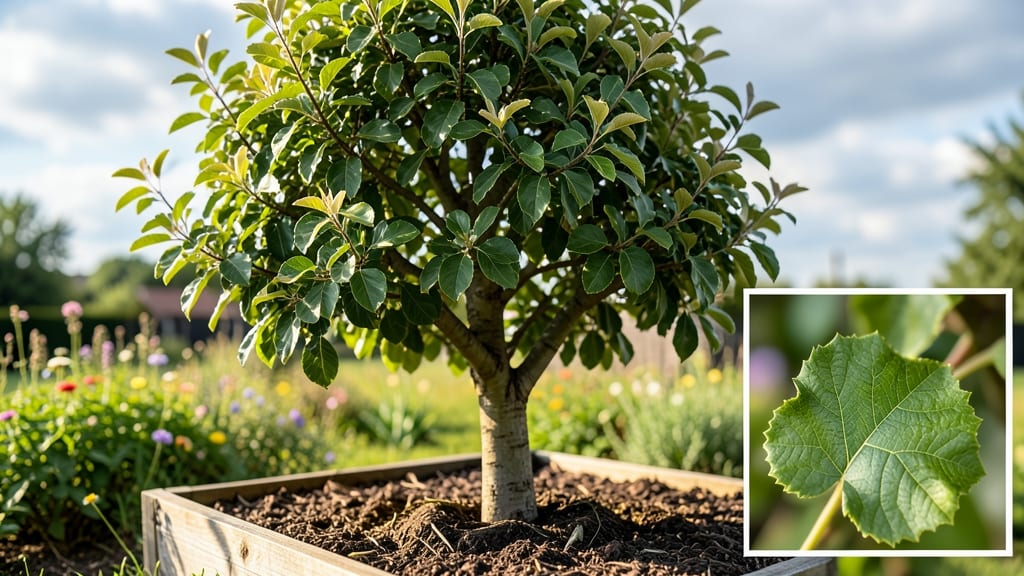
Pear tree leaves look like elongated ovals with a shiny dark green top surface and paler underside, featuring jagged edges and a tapered point. They attach singly along branches in alternating patterns, typically spanning 2 to 4 inches with a slightly waxy finish.
These distinctive leaves help identify pear trees in your yard or orchard. 🌿 Unlike apple leaves, which are more rounded, pear leaves have that signature serrated edge and glossy sheen that makes them stand out.
The alternating arrangement—where each leaf grows from a different spot along the branch—sets them apart from maple or cherry trees too. In spring, the leaves emerge reddish before turning their classic green, giving you another visual clue if you're trying to spot young trees.
What's interesting is how the leaf's texture changes with age—they start smooth but develop a subtle roughness over time. This subtle detail, combined with the leaf's size and shape, makes pear trees one of the easier fruit trees to identify visually.
For gardeners, this means you can often confirm a tree's identity just by looking at its foliage before any fruit appears.
💡 In This Article
- Key Visual Traits of Pear Tree Leaves
- How to Identify Pear Trees Using Leaf Patterns
Key visual traits of pear tree leaves
Pear tree leaves have a distinctive oval shape that's slightly elongated, resembling an egg with a pointed tip. The edges feature serrated teeth—small, sharp notches that run along the entire perimeter—giving them a saw-like appearance when viewed closely.
This differs from apple leaves, which have more rounded teeth, or cherry leaves, which often have smoother edges.
The leaf's length typically falls between 2 to 4 inches, while the width ranges from 1.5 to 2.5 inches, creating a proportion that's wider at the base and tapers gracefully to a fine point.
The color contrast between leaf surfaces is striking: the top side boasts a deep, glossy green that reflects light like polished jade, while the underside is a pale, matte green with visible veins that create a subtle network pattern.
This two-toned effect is a hallmark of pear leaves and helps distinguish them from other fruit trees. The waxy texture comes from a natural coating called a cuticle, which helps the leaf retain moisture and resist pests—a survival adaptation that gives them that slightly slick feel when touched. 🌿
One of the most telling features is the alternate arrangement of leaves along the branch. Unlike maple trees (which have opposite leaves) or some cherry varieties (which can have clustered growth), pear leaves grow one at each node, alternating sides as they ascend the branch.
This pattern creates a staggered, fan-like appearance that's immediately recognizable. In spring, young leaves emerge with a reddish-purple hue that gradually fades to green over 2-3 weeks, providing another seasonal clue for identification.
The leaf stem (petiole) is another detail worth noting—it's typically 1/4 to 1/2 inch long and connects the leaf to the branch at a slight angle.
This stem is hollow and contains vascular bundles that transport water and nutrients, which is why it often appears slightly lighter in color than the leaf itself.
When crushed, the stem releases a faint almond-like scent, a subtle but distinctive trait that sets pear leaves apart from many other tree species.
Seasonal changes bring subtle variations: in summer, the leaves reach their peak glossiness, while autumn brings a yellowing before they drop. This color shift happens because chlorophyll breaks down, revealing other pigments like carotenoids.
The timing of leaf drop also differs—pear leaves often linger into late fall, sometimes persisting until the first hard frost, unlike apple leaves which may drop earlier. These seasonal patterns are crucial for gardeners trying to identify young trees before fruit appears.
For a quick visual comparison, imagine holding a pear leaf next to an apple leaf: the pear's edges are more jagged, its shape more elongated, and its surface shinier.
The alternating pattern is another dead giveaway—if you trace your finger along a branch and see leaves growing in a single-file, alternating fashion, you're likely looking at a pear tree. This combination of traits makes pear leaves one of the most distinctive in orchard settings. 🌳