
Pruning
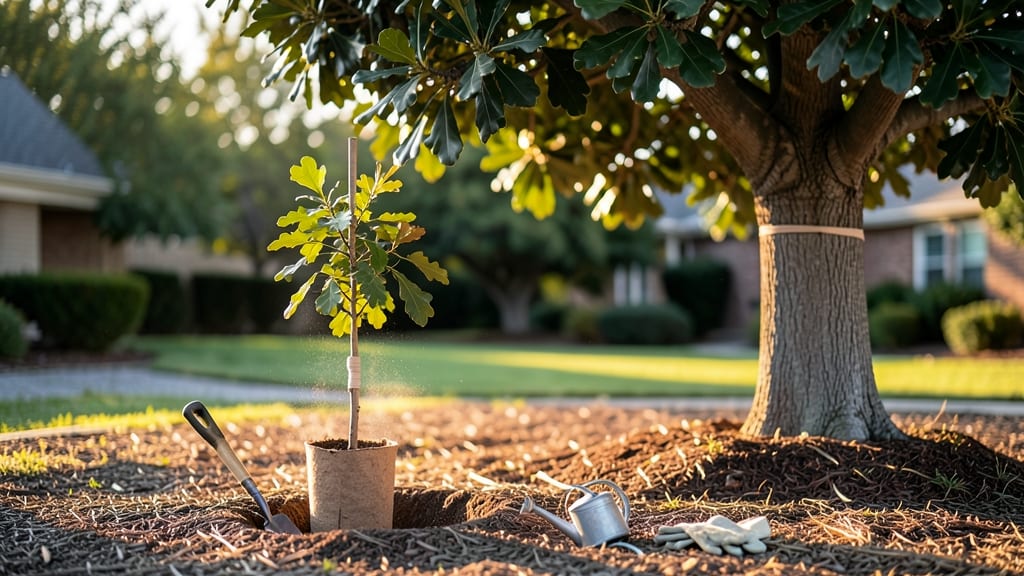
Planting trees in Sonoma County means choosing species that handle our dry summers and damp winters—like coast live oak or valley oak, which thrive where others struggle. 🌳 I’ve learned the hard way that skipping soil prep or timing can turn a $100 tree into a $100 lesson in frustration.
The right species, planted correctly, will outlast anything else in your landscape.
Start with soil testing—Sonoma’s clay-heavy soil needs amendments like compost or sand to improve drainage. Dig a hole twice as wide as the root ball but no deeper, then mix native soil with organic matter before placing the tree.
Water deeply right after planting to eliminate air pockets, and mulch heavily (3-4 inches) to retain moisture and block weeds.
You’ll see new growth within weeks if you time planting right: fall (October-November) or early spring (February-March) gives roots time to establish before extreme heat or drought. Native species like California sycamore or western redbud need less water once established, saving you time and money while supporting local ecosystems.
Local nurseries like Sonoma Garden Supply or Native Sons Nursery carry climate-proven stock, and programs like Sonoma County Water Agency’s Tree Rebates can offset costs. The key is patience—trees planted right now will reward you for decades, not just seasons.
📚 In This Guide
- What you need
- Instructions
- Tips and common mistakes
- Wrapping up and next steps
What you need
- ● Tree(s): 1–5 climate-adapted species (e.g., Quercus agrifolia, Arbutus menziesii, or Umbellularia californica). Choose 1–3 gallon containers or bare-root saplings for mature trees; 1-quart pots for smaller varieties.
- ● Shovel: 1 medium-sized digging spade (18–24" blade) or tree planting auger (for larger holes, 12–18" diameter).
- ● Soil amendments: 5–10 gallons of compost (per tree) for native soil improvement.
- ○ 1–2 bags (40–60 lbs) of mycorrhizal fungi (boosts root growth; optional but recommended for Sonoma’s clay-heavy soils).
- ● Mulch: 2–3 cubic feet of wood chips or straw (3–4" layer, kept 6" away from trunk). Avoid dyed mulch!
- ● Watering supplies: 1 hose with adjustable nozzle or drip irrigation kit (for deep watering).
- ● 5–10 gallons of water per tree (initial soak).
- ○ Stakes & ties (optional but helpful): 2 wooden stakes (4–6 ft tall) + 2–3 tree ties (for windy sites or young trees).
- ● Site assessment: Check blank">Sonoma County’s flood zone maps or critical habitat areas—some species/restorations may require permits.
- ● Best planting window: November–March (avoid summer heat!).
- ○ Soil test: Optional but wise—Sonoma’s soils vary; test pH (ideal: 6.0–7.5) via blank">UC Master Gardeners ($15–$20).
- ● 🌡️ Drought-tolerant species: Prioritize Ceanothus or Toyon if water conservation is a goal.
- ● ✨ Wildfire resilience: Use gravel mulch (instead of wood chips) in high-risk zones.
- ● 🔥 Local nurseries: Support native plant specialists like Sonoma Coast Nursery for region-specific stock.
Step-by-Step guide to planting trees in Sonoma County
Sonoma County’s unique microclimates demand the right approach—here’s how to plant trees that thrive year after year.
🌱 Step 1: Choose the Right Tree for Your Site
Sonoma County’s coastal fog, inland heat, and summer drought mean not all trees succeed. Native species like coast live oak (Quercus agrifolia) or California sycamore (Platanus racemosa) handle our conditions best. For drier inland areas, try toyon (Heteromeles arbutifolia) or manzanita (Arctostaphylos)—they’re drought-tolerant once established.
Check your USDA Zone (Sonoma spans Zones 8-10) and soil type—coastal areas have sandy loam, while inland spots may be clay-heavy. I always dig a test hole to assess drainage: if water pools after 30 minutes, amend with compost or gravel to prevent root rot.
🪴 Step 2: Dig the Hole at the Right Size and Depth
Dig a hole twice as wide as the root ball but no deeper—planting too deep suffocates roots. Sonoma’s loose soil makes digging easier, but I use a shovel and wheelbarrow to remove excess dirt. The hole should fit the root ball snugly; never force it in.
Loosen the edges of the root ball with your fingers before placing it in the hole. If the tree came balled, score the sides of the root ball with a knife to encourage root spread. This is critical—compacted roots struggle in our seasonal rains and dry spells.
☀️ Step 3: Position and Backfill for Stability
Place the tree so the top of the root ball sits 1-2 inches above ground level—this prevents settling and rot. In coastal areas, face the tree’s north side toward the sun to reduce afternoon heat stress. Inland plantings should avoid full afternoon sun for heat-sensitive species.
Backfill with the original soil (no amendments) and tamp gently in layers with your hands. Create a water basin around the base by mounding soil outward—this directs water to roots. Water deeply until the soil soaks 12 inches down, then let it dry slightly before mulching.
💧 Step 4: Mulch and Water for Long-Term Success
Spread 3-4 inches of wood chips or straw mulch in a 3-foot diameter circle, keeping it 6 inches away from the trunk to prevent rot. Sonoma’s summer drought means mulch is non-negotiable—it retains moisture and regulates soil temperature. I avoid dyed mulch; it can harm roots.
Water twice weekly for the first month, then taper to once weekly once leaves appear. New trees need 10-15 gallons per watering—check soil moisture by sticking your finger 3 inches down. If it’s dry, water again. Overwatering here leads to root rot, especially in clay-heavy inland soils.
✂️ Step 5: Prune and Protect for First-Year Growth
Remove only dead, crossing, or low-hanging branches—never top or shear young trees. Sonoma’s windy coastal areas mean pruning wounds heal slower, so use sterilized pruners and seal larger cuts with pruning paste. This step prevents disease and encourages strong structure.
Stake only if necessary—most native species establish well without support. If you do stake, use two stakes and a flexible tie to avoid girdling the trunk. Monitor for pests like aphids or scale, common in our mild winters. A hose spray usually clears them without chemicals.
Tips & tricks for perfect tree planting in Sonoma County
Here’s what I’ve learned from years of planting trees in Sonoma’s tricky climate—these tricks make all the difference between a struggling sapling and a thriving garden centerpiece.
Site Selection Matters: Pay close attention to microclimates when choosing your planting spot. Coastal areas get morning fog that burns off by noon, so position trees to avoid afternoon sun stress. Inland spots need afternoon shade protection—look for existing trees or structures that provide relief. I’ve seen coast live oaks thrive in foggy areas while wilting inland when planted in full sun.
Root Ball Prep is Critical: In Step 2, when you’re loosening the root ball edges, take an extra minute to score the sides with a knife if it’s balled. This encourages roots to spread outward instead of circling, which is especially important in Sonoma’s seasonal rains. I’ve seen trees with unscored root balls struggle for years because the roots never established properly.
Watering Wisdom: That 30-minute drainage test in Step 1 is your best friend. If water pools after 30 minutes, you’ve got drainage issues—amend with compost or gravel immediately. For the first month’s watering schedule, I set a reminder on my phone for those twice-weekly sessions. New trees can’t tell you they’re thirsty, so consistency is key. Remember, 10-15 gallons isn’t just a suggestion—it’s what your tree needs to drink!
Mulch Like a Pro: Don’t skimp on the 3-4 inches of mulch in Step 4. This isn’t just decoration—it’s your tree’s lifeline during our dry summers. I always use untreated wood chips because dyed mulch can actually harm roots over time. That 6-inch gap from the trunk prevents rot while keeping moisture right where it belongs. And yes, the 3-foot diameter circle is non-negotiable for proper coverage.
Pro Tips for Tree Planting Sonoma County Ca
- Here’s what I’ve learned from years of planting trees in Sonoma’s tricky climate—these tricks make all the difference...
- Site Selection Matters: Pay close attention to microclimates when choosing your planting spot. Coastal areas get morn...
- Root Ball Prep is Critical: In Step 2, when you’re loosening the root ball edges, take an extra minute to score the s...
Frequently asked questions
Got questions about planting trees in Sonoma County? You’re not alone—here are some of the most common ones we hear, along with straightforward answers to help you get started with confidence!
What are the best trees to plant in Sonoma County’s climate?
Sonoma County’s Mediterranean climate thrives with climate-adapted species like Coast Live Oak, Toyon, or California Sycamore. These trees are drought-tolerant, pest-resistant, and support local wildlife. Check our guide for top picks based on your soil and sunlight needs!
When is the best time to plant a tree in Sonoma County?
Plant in early fall (September–October) or late winter (January–February) when soil is moist but not frozen. Avoid summer heatwaves—young roots need time to establish before dry spells. Pro tip: Mulch heavily to retain moisture!
How much does it cost to plant a tree in Sonoma County?
Costs vary: $50–$200 for a small sapling (DIY) or $300–$1,000+ for a mature tree (professional planting). Factor in soil amendments, mulch, and permits if planting near property lines. Local nurseries often offer discounts for native species!
What should I avoid when planting trees in Sonoma County?
- Planting too deep—root flare should sit above ground to prevent rot.
- Ignoring soil prep—amend clay or sandy soil with compost for better drainage.
- Skipping watering schedules—deep water 2–3x/week for the first year.
- Choosing invasive species like Eucalyptus—opt for natives instead!
Can I plant a tree myself, or should I hire a professional?
Small saplings (6–10 ft tall) are DIY-friendly with basic tools. For large trees, slopes, or utility lines, hire an arborist ($150–$500). Sonoma County offers free planting workshops—great for beginners!
What if my tree isn’t growing after planting?
Check these first:
- Water stress—soggy or dry soil can kill roots.
- Pests—aphids or root borers may need treatment.
- Temperature shock—young trees need protection from frost.
Wrapping up and next steps
Planting climate-adapted trees in Sonoma County isn’t just about greening your space—it’s an investment in resilience, beauty, and a healthier planet. 🌱 From drought-tolerant oaks to vibrant manzanitas, the right species can thrive while supporting local ecosystems and reducing your water footprint.
Whether you’re a seasoned gardener or just starting, every tree makes a difference!
Ready to take action? Start small: research a species that fits your yard’s conditions, gather your tools, and plant with confidence. Need help? Check out local Sonoma County resources or join a community planting event—because together, we can grow a greener future, one tree at a time! 🌳✨