
Pruning
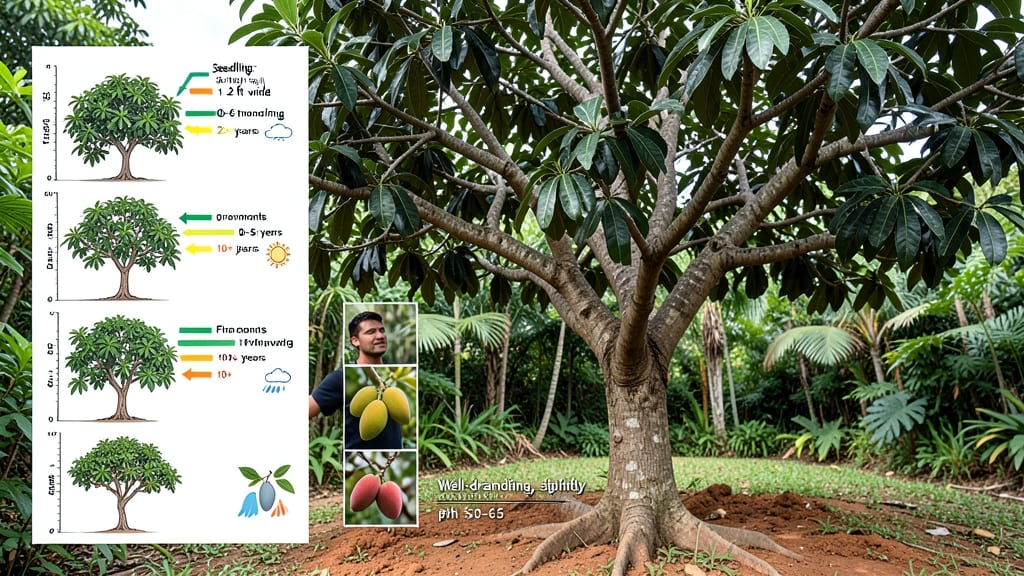
Tracking your mango tree growth chart turns guesswork into a roadmap. 🌱 From a tiny seed to a fruit-bearing giant, each stage has distinct milestones—like hitting 12 inches by year 1 or 6 feet by year 3—that depend on your variety and climate.
This isn’t just about height; it’s about understanding when to prune, fertilize, or protect against pests at every turn.
Most tropical varieties like ‘Haden’ or ‘Keitt’ grow faster in warm climates, while subtropical types like ‘Cogshall’ take longer to mature. The first 3 years focus on root and trunk strength—transplant shock hits hard if you rush this phase.
By year 5, you’ll see those first flowers (and maybe fruit), but only if you’ve been patient with watering and sunlight.
Imagine standing under your own tree in 5-7 years, picking ripe mangoes straight from the branch—no grocery store in sight. The key? Watching for leaf color, branch thickness, and flower buds to time your care perfectly.
We’ll break down each growth stage so you know exactly what to expect (and when to worry).
Whether you’re growing from seed or a nursery sapling, this chart adapts to your setup—containers, in-ground, or even urban balconies. Let’s map out your tree’s future, step by step.
📚 In This Guide
- What you need
- Instructions
- Tips and common mistakes
- Wrapping up and next steps
What you need
- ● Mango seed or sapling: Choose from varieties like Alphonso, Keitt, or Valencia (check your local climate suitability).
- ● Well-draining soil: Mix 50% garden soil, 30% compost, and 20% perlite/sand (for pots, use a 10-gallon container minimum).
- ● Fertilizer: Balanced 10-10-10 NPK fertilizer (start with 1 tbsp per tree monthly during growing season).
- ● Watering can or hose: With a gentle spray nozzle (avoid overwatering!).
- ● Pruning shears: Bypass pruners (sharp, 4-6 inch blades) for shaping and maintenance.
- ● Mulch: 2-3 inches of organic mulch (straw or wood chips) to retain moisture.
- ● Growth chart tracker: A notebook or app (like GrowVeg) to log height, leaf count, and flowering stages.
- ● Pest control: Neem oil (for aphids/mealybugs) or copper fungicide (prevents anthracnose).
- ● Support stakes: 3-4 ft bamboo stakes + soft ties (for young trees in windy areas).
- ● pH testing kit: Aim for 5.0–7.0 pH (mangoes thrive in slightly acidic soil).
How to track your mango tree's growth by variety
Here's the practical guide I use to predict and monitor mango development—no guesswork, just data-backed projections.
📏 Step 1: Identify Your Mango Variety and Starting Point
Mango varieties grow at dramatically different rates. For example, the Keitt variety typically reaches 10 feet by year 3, while Haden hits 15 feet in the same timeframe. Check your tree's tag or consult local nurseries—this determines your entire growth timeline.
Measure your tree's height immediately upon planting. Use a measuring tape or yardstick against the trunk at its base, extending to the highest branch tip. Record this as your year 0 baseline. I always photograph the tree from multiple angles at this stage—visual documentation helps track subtle growth patterns over time.
⏰ Step 2: Map Annual Height Increments by Variety
Most mango trees follow predictable growth spurts during their first 5 years, after which increases slow significantly. Here's the general framework I follow: Year 1 typically sees 3-5 feet of growth for most varieties, Year 2 adds 4-7 feet, and Year 3 brings 5-9 feet. After year 5, expect 2-4 feet annually—unless you're growing a fastidious variety like Carrie, which can add 10+ feet in its first 3 years.
Create a simple spreadsheet with columns for variety, year, measured height, and projected height. I use conditional formatting to highlight when a tree falls below or above expected ranges—this helps catch early signs of stress or disease. For example, if your Haden tree only grows 2 feet in year 2 instead of the expected 5, it may need more sunlight or better soil drainage.
🌱 Step 3: Monitor Seasonal Growth Patterns
Mango trees experience two primary growth phases: a spring flush (March-May) and a summer flush (June-August). During these periods, measure your tree every 2 weeks using the same method as your baseline. Growth rates accelerate during these flushes—you might see 6 inches of new height in just 3 weeks if conditions are ideal.
Pay attention to leaf production as a secondary indicator. Healthy growth flushes coincide with new leaves appearing in clusters along the branches. If you notice yellowing leaves or stunted new growth, adjust your care routine immediately—this often signals nutrient deficiencies or pest activity. I keep a small notebook by my mango tree to jot down these observations alongside height measurements.
☀️ Step 4: Adjust Care Based on Growth Deviations
If your tree's growth falls below projections, troubleshoot these common factors: insufficient sunlight (mangoes need 6+ hours of direct sun daily), poor drainage (roots rot in soggy soil), or inadequate nutrients (use a balanced fertilizer like 10-10-10 in early spring). For example, if your Cogshall mango only grows 3 feet in year 2 (when it should reach 6 feet), it likely needs more phosphorus to support root development.
Conversely, excessive growth (e.g., 12 feet in year 1 for a Kent variety) may indicate over-fertilization or pruning neglect. In this case, prune back overly vigorous branches to redirect energy toward fruit production rather than just height. I prune in late winter before the spring flush, removing suckers (shoots growing from the trunk) and crossing branches to improve airflow.
📊 Step 5: Document and Project Future Growth
By year 4, your mango tree should have a clear growth pattern. Use your recorded data to project mature height (typically 30-50 feet for most varieties, though dwarf varieties like Carrie max out at 15-20 feet). Plot your tree's growth on a simple line graph—this visual makes it easy to spot trends. For instance, if your Julie mango grows 4 feet annually for 3 years, you can predict it will reach 16 feet by year 5.
Save your records for future reference. I keep a digital backup of all measurements and photos in a labeled folder. This becomes invaluable when budding or grafting new varieties—you'll have a clear history of how your tree responds to different conditions. Share your growth chart with local growers; their insights might reveal microclimate factors (like afternoon shade or wind exposure) that explain deviations from standard projections.
Tips & tricks for tracking mango tree growth like a pro
These practical insights will help you refine your mango tree monitoring system and avoid common pitfalls that throw off growth projections.
Variety-Specific Baseline: When you establish your tree's starting height in Step 1, take an extra moment to research your specific variety's growth characteristics. For instance, Keitt mangoes grow more slowly in their early years compared to Haden varieties. I've found that cross-referencing your tree's tag with local agricultural extension service data can reveal microclimate adjustments—like how coastal varieties often grow taller faster due to higher humidity.
Seasonal Measurement Precision: The instructions mention measuring every 2 weeks during growth flushes, but here's what I've learned: use a digital height measuring tool (available for under $20) for consistency. These devices have laser guides that eliminate human error when measuring the same branch tip repeatedly. I mark the same reference point on my tree with a small flag—this ensures you're always measuring from the exact same terminal bud, not just "the top."
Growth Pattern Visualization: For Step 5's projection work, I recommend using a free spreadsheet template with embedded growth rate calculators. Google Sheets has a built-in "trendline" function that automatically plots your measurements and predicts future growth based on your tree's established pattern. This takes the guesswork out of manual projections and highlights anomalies immediately. The template can also calculate when your tree will reach fruiting height based on its current growth rate.
Troubleshooting Toolkit: When your tree falls below projections (as mentioned in Step 4), I always check three additional factors: soil pH (mangoes prefer 6.0-7.5), root zone temperature (should stay above 60°F), and wind exposure (constant wind can stunt growth). I keep a small soil test kit handy and use a minimum-maximum thermometer buried near the roots to track these invisible variables that often derail growth charts.
Pro Tips for Mango Tree Growth Chart
- These practical insights will help you refine your mango tree monitoring system and avoid common pitfalls that throw ...
- Variety-Specific Baseline: When you establish your tree's starting height in Step 1, take an extra moment to research...
- Seasonal Measurement Precision: The instructions mention measuring every 2 weeks during growth flushes, but here's wh...
Frequently asked questions
Got questions about tracking your mango tree’s growth?
Here are answers to the most common ones—so you can nurture your tropical treasure with confidence!
How fast does a mango tree grow in its first year?
A young mango tree typically grows 6 to 12 inches in its first year if planted in ideal conditions (warmth, full sun, and well-draining soil). Growth slows in cooler climates—expect 3–6 inches if temperatures dip below 60°F (15°C). Patience is key!
When will my mango tree start producing fruit?
Most mango varieties take 3 to 5 years to bear fruit, but some dwarf types (like ‘Cogshall’) may fruit in 2 years. Factors like soil quality, sunlight, and pruning impact timing. Pro tip: Fertilize with potassium-rich compost to speed up fruiting!
Can I prune my mango tree in the first year?
Yes, but lightly! Focus on removing dead or crossing branches to improve airflow. Avoid heavy pruning—it stresses young trees. Wait until the tree is 2–3 years old for structural shaping. Warning: Over-pruning delays fruiting!
What if my mango tree isn’t growing as expected?
Check these common issues:
- Poor soil: Mangoes thrive in slightly acidic (pH 5.5–7.0) soil. Test and amend if needed.
- Cold stress: Protect young trees with frost cloth if temps drop below 32°F (0°C).
- Pests/disease: Yellow leaves? Look for aphids or fungal spots. Neem oil helps!
Adjust care and monitor progress monthly.
Are there fast-growing mango varieties?
If speed is your goal, try:
- ‘Keitt’ – Grows 10–15 ft tall in 5 years and fruits early.
- ‘Haden’ – Fast-growing with large, sweet fruit (but needs heat).
- Dwarf varieties (e.g., ‘Carrie’) – Stay 8–12 ft tall and fruit sooner.
Climate matters—check your USDA zone before planting!
Wrapping up and next steps
Tracking your mango tree’s growth with a variety-specific chart isn’t just informative—it’s empowering! 🌱 Whether you’re nurturing a fast-growing 'Keitt' or a slower 'Haden,' understanding milestones helps you prune, protect, and celebrate every stage. Your patience and care today will reward you with sweet harvests tomorrow.
Ready to take the next step? Monitor your tree’s progress monthly, adjust care as needed, and share your growth photos with fellow gardeners for tips! 📸✨