
Size
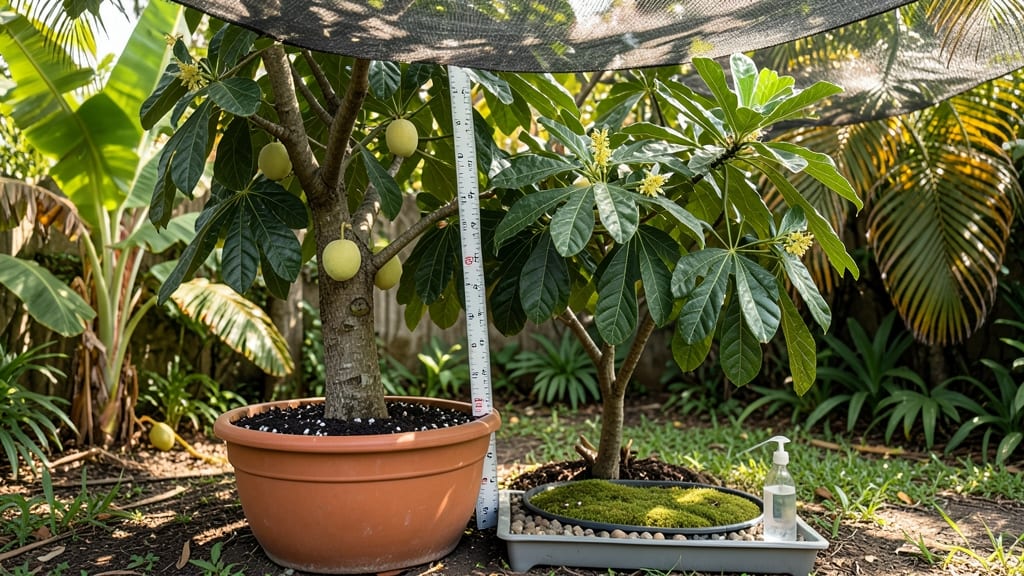
Growing this unique soursop guanabana tree at home means tropical fruit within reach—just imagine slicing into that creamy guanabana pulp fresh from your own backyard. 🌿 The key starts with matching your climate to this tropical queen, which thrives where temperatures stay above 30°F and humidity lingers like a summer afternoon.
I learned the hard way that even a light frost will send it into shock, so zone 10-12 gardeners have the perfect edge here.
Planting begins with the right start: seeds take patience (3-5 years to fruit), while grafts deliver faster results (2-3 years). Dig a hole twice as wide as the root ball, mix in compost for drainage, and space trees 20-25 feet apart—they’re not shy about growing.
My first attempt with seeds nearly gave up until I realized they need warmth to germinate (think 75-80°F soil). A sunny spot with afternoon shade in brutal heat becomes their sweet spot.
Care keeps it simple: water deeply when the top 6 inches of soil dry out, fertilize lightly every 2 months with citrus-friendly mix, and prune only to shape—never to force growth. Pests like aphids and mealybugs might visit, but a spray of neem oil sends them packing.
Within 5-7 years, you’ll spot those signature spiky green fruits maturing from green to yellow—each one a treasure chest of custard-like flesh.
Harvesting is the best part: fruits fall when fully ripe (no need to wait for them to drop). One tree yields 50-100 pounds of fruit annually—enough to share with neighbors or turn into smoothies. Patience pays off here, but the journey? That’s where the real magic grows.
Understanding Soursop Struggles
Growing a soursop (Annona muricata) tree at home can be incredibly rewarding, but like any tropical fruit, it comes with challenges. If your guanabana tree isn’t thriving—or worse, isn’t producing fruit—understanding the root causes (literally and figuratively) is key to turning things around.
Below, we break down the most common reasons why soursop trees fail to grow or bear fruit, along with the science behind them.
Soursop trees are picky eaters when it comes to soil. They thrive in well-draining, slightly acidic to neutral soil (pH 5.5–7.0) with high organic matter. If your tree is struggling, soil issues are often the culprit.
- Compacted or Clay-Heavy Soil ❌ - Why it happens: Soursop roots need oxygen to grow, and dense, waterlogged soil suffocates them.
Clay soil retains too much moisture, leading to root rot (Phytophthora fungi) and poor nutrient uptake. - Actionable fix: - Amend soil with compost, coconut coir, or perlite to improve drainage. - Avoid planting in low-lying areas where water pools. - Test soil pH—if below 5.5, add lime (calcium carbonate); if above 7.0, mix in sulfur or peat moss.
- Nutrient Deficiencies 🍽️ - Why it happens: Soursop trees are heavy feeders, especially when flowering and fruiting.
A lack of nitrogen (N), phosphorus (P), or potassium (K) stunts growth, while magnesium or calcium deficiencies cause yellowing leaves (chlorosis) or blossom-end rot. - Actionable fix: - Use a balanced tropical fruit fertilizer (10-10-10 or 8-3-9) every 2–3 months. - For magnesium deficiency, apply Epsom salt (1 tbsp/gallon of water) monthly. - Citric acid (1 tsp/gallon) can help lower pH if needed.
Soursop trees love moisture but hate soggy roots. Overwatering or underwatering can both spell disaster.
- Overwatering & Root Rot 🚨 - Why it happens: Soursop trees prefer consistent moisture but cannot tolerate waterlogged conditions.
Excess water cuts off oxygen to roots, inviting fungal infections like Pythium or Fusarium, which rot roots and stems. - Actionable fix: - Water deeply 2–3 times per week (adjust for climate—less in rain, more in heat). - Ensure proper drainage—raise containers or plant on a slight mound in ground beds. - Let the top 2–3 inches of soil dry out before watering again.
- Underwatering & Stress 😵 - Why it happens: While soursop trees enjoy humidity, drought stress causes leaves to curl, yellow, or drop, halting growth and fruit production.
The tree prioritizes root survival over flowering. - Actionable fix: - Mulch heavily (3–4 inches of wood chips or straw) to retain moisture. - Drip irrigation is ideal—avoid overhead watering to prevent fungal diseases. - Mist leaves daily in dry climates to mimic tropical humidity.
Soursop trees are tropical creatures—they despise cold and struggle in extreme heat without shade.
- Cold Damage & Frost Sensitivity 🥶 - Why it happens: Soursop trees cannot tolerate temperatures below 30°F (-1°C). Even a light frost can kill leaves, and prolonged cold snaps damage roots and branches.
If your tree is in a temperate zone, it may go dormant or die back without protection. - Actionable fix: - Grow in containers for easy winter relocation indoors or to a greenhouse. - Cover young trees with frost cloth if temps dip near freezing. - Plant in microclimates (e.g., near a warm wall or under eaves) to extend the growing season.
- Heat Stress & Sunburn 🔥 - Why it happens: While soursop trees need full sun (6+ hours/day), intense afternoon heat (especially in dry climates) can scorch leaves, leading to brown patches or leaf drop.
Young trees are most vulnerable. - Actionable fix: - Provide afternoon shade (30–50% shade cloth) in hot, dry regions. - Mulch deeply to keep roots cool. - Avoid transplanting in peak summer—wait for spring or fall.
Soursop trees are magnets for pests and pathogens, especially in humid conditions.
- Common Pests 🐜
- Why it happens:
- Scale insects (sap-sucking bugs) coat leaves/stems in sticky honeydew, leading to sooty mold.
- Mealybugs weaken trees by draining sap, causing yellowing and stunted growth.
- Root-knot nematodes (microscopic worms) mangle roots, reducing water/nutrient uptake.
- Actionable fix:
- Neem oil spray (1 tbsp/gallon of water) weekly to deter soft-bodied pests.
- Introduce beneficial insects (ladybugs, lacewings) for natural control.
- Solarize soil (cover with clear plastic for 4–6 weeks) to kill nematodes.
- Why it happens:
- Fungal Diseases 🍄
- Why it happens:
- Anthracnose (dark spots on leaves/fruit) thrives in wet, humid conditions.
- Powdery mildew (white fuzzy coating) occurs in poor air circulation.
- Bacterial blight causes oozing lesions and leaf drop.
- Actionable fix:
- Prune for airflow—remove crowded branches.
- Copper fungicide (weekly preventative spray) or baking soda mix (1 tsp/baking soda + 1 quart water + drop of soap) for mildew.
- Remove infected leaves/fruit immediately to prevent spread.
- Why it happens:
If your soursop tree looks lopsided, leggy, or overcrowded, it’s likely due to poor pruning habits.
- Why it happens:
- Over-pruning removes too much foliage, reducing photosynthesis and energy for fruit production.
- Under-pruning leads to dense canopies, trapping humidity and inviting diseases.
- Wrong timing (pruning during flowering or fruiting) stresses the tree.
- Actionable fix:
- Prune in late winter/early spring (before new growth).
- Remove dead, diseased, or crossing branches to improve airflow.
- Shape the tree to encourage open growth—avoid a "Christmas tree" shape that blocks light.
- Thin out excess fruit (leave 5–6 per cluster) to prevent brittle branches from snapping.
Even if your soursop tree flowers beautifully, poor pollination can mean no fruit.
- Why it happens:
- Soursop flowers are self-pollinating, but humidity, lack of bees, or weak flowers reduce success.
- Wind or insect activity (bees, bats, beetles) is often needed for cross-pollination in some varieties.
- Actionable fix:
- Hand-pollinate with a soft brush to transfer pollen between flowers.
- Plant near other tropical fruits (e.g., cherimoya, sugar apple) to attract pollinators.
- Avoid over-fertilizing with nitrogen—too much leafy growth means fewer flowers.
Not all soursop trees are created equal—and some may just need more time.
- Why it happens:
- Dwarf varieties (like ‘
How to solve it
Growing a soursop (guanabana) tree at home can be incredibly rewarding, but like any tropical fruit, it comes with its own set of challenges. Whether you're dealing with pests, slow growth, or environmental stress, knowing how to address these issues quickly and effectively will keep your tree thriving.
Below are practical solutions for the most common problems, along with prevention tips to keep your guanabana tree happy and productive.
If you notice holes in the leaves, chewed fruits, or sticky residue on branches, pests like aphids, mealybugs, or fruit flies might be the culprits. These critters can weaken your tree and reduce fruit yield.
How to Fix It:
🔥 Inspect Regularly – Check leaves, stems, and fruits weekly for signs of infestation. 🍳 Neem Oil Spray – Mix 1 tablespoon of neem oil with 1 quart of water and a drop of dish soap.
Spray the solution on affected areas, especially undersides of leaves where pests hide. 👨🍳 Introduce Beneficial Insects – Ladybugs and lacewings are natural predators of aphids.
Purchase them from garden centers and release them near your tree. 🥘 Prune Infested Branches – Remove heavily damaged leaves or fruits and dispose of them far from your tree to prevent spreading.
Prevention Tips:
✨ Keep the Area Clean – Remove fallen leaves and fruits promptly to eliminate hiding spots. 🌡️ Use Mulch – A layer of organic mulch around the base deters some pests and retains moisture. 🎯 Avoid Overwatering – Soggy soil attracts fungus gnats and other moisture-loving pests.
If your guanabana tree isn’t growing as fast as expected or seems weak, it could be due to poor soil, lack of nutrients, or inadequate sunlight.
How to Fix It
🔥 Test the Soil – Use a soil test kit to check pH levels (ideal range: 5.5–7.0).
Amend the soil with compost or peat moss if it’s too alkaline or sandy. 🍳 Fertilize Properly – Apply a balanced, slow-release fertilizer (like 10-10-10) in early spring and again in midsummer.
Avoid over-fertilizing, which can burn roots. 👨🍳 Ensure Full Sunlight – Guanabana trees need at least 6–8 hours of direct sunlight daily.
If indoors, place it near a south-facing window or use grow lights. 🥘 Water Deeply but Infrequently – Water the tree at the base (not the leaves) once a week, ensuring the soil is moist but not waterlogged.
Prevention Tips:
💡 Choose the Right Pot – If growing in containers, use a large pot (at least 15 gallons) with drainage holes to prevent root binding. 🔥 Transplant Young Trees Carefully – If moving a young tree, do so during the rainy season to minimize stress. 🌡️ Monitor for Root Rot – Yellowing leaves or mushy stems may indicate overwatering.
Let the top 2 inches of soil dry out between waterings.
Yellow leaves can signal overwatering, nutrient deficiencies, or fungal issues. Addressing this quickly prevents further damage to your tree.
How to Fix It:
🔥 Check Watering Habits – Guanabana trees dislike soggy roots. Reduce watering frequency and ensure pots have drainage holes. 🍳 Fertilize with Iron – If leaves are pale yellow, they may lack iron.
Use an iron chelate fertilizer or apply compost rich in organic matter. 👨🍳 Prune Damaged Leaves – Remove yellow or brown leaves to redirect energy to healthy growth.
Sterilize pruning tools with rubbing alcohol to prevent infection. 🥘 Treat Fungal Issues – If leaves have brown spots, spray with a copper fungicide or a baking soda solution (1 tablespoon baking soda + 1 quart water + a drop of soap).
Prevention Tips:
✨ Avoid Wetting Leaves – Water at the base to prevent fungal spores from spreading. 🌡️ Improve Air Circulation – Space trees properly or use a small fan to keep foliage dry. 🎯 Use Well-Draining Soil – Mix in perlite or coconut coir to improve drainage if your soil is clay-heavy.
Guanabana trees are tropical and struggle in temperatures below 40°F (4°C). Frost or cold snaps can stunt growth or kill the tree.
How to Fix It:
🔥 Move Indoors Temporarily – If frost is forecasted, bring potted trees inside near a sunny window or under grow lights. 🍳 Use Row Covers or Blankets – For outdoor trees, drape frost cloth or burlap around the trunk and branches to insulate them. 👨🍳 Mulch the Base – Add a thick layer of mulch (4–6 inches) around the trunk to protect roots from cold. 🥘 Avoid Pruning in Winter – Pruning stimulates new growth, which is vulnerable to cold.
Wait until spring to trim.
Prevention Tips:
💡 Choose a Sheltered Location – Plant in a spot protected from wind and cold drafts, like near a south-facing wall. 🔥 Use Heat Lamps (Indoors) – If growing in a cool climate, supplement with a heat lamp during winter months. 🌡️ Monitor Weather Alerts – Sign up for local frost warnings to act quickly if temperatures drop.
With these solutions, your guanabana tree should bounce back stronger and produce those coveted tropical fruits in no time. Stay patient, observe your tree closely, and adjust care as needed—your efforts will pay off with a bountiful harvest! 🌿🍈
Frequently asked questions
How long does it take for a soursop tree grown from seed to produce fruit?
Patience is key with seed-grown soursop trees—expect 5-7 years before your first harvest. The tree focuses on establishing a strong root system and canopy before flowering. For faster results, consider grafting, which can produce fruit in 2-3 years.
Can I grow a soursop tree in a container, and what size pot do I need?
Yes! Soursop trees adapt well to containers, especially if you live in cooler climates. Use a pot at least 15-20 gallons with drainage holes. Choose a lightweight mix of 50% potting soil, 30% coconut coir, and 20% perlite to prevent root rot.
Why aren't my soursop tree's fruits ripening properly?
Improper ripening often stems from nutrient imbalances or environmental stress. Check for low potassium (add banana peel compost) and ensure consistent moisture without waterlogging. Also verify your tree gets 6+ hours of sunlight daily—partial shade can delay ripening.
What's the best way to propagate soursop trees besides seeds?
Grafting is the most reliable method for faster fruiting. Work with a local tropical fruit nursery to obtain healthy rootstock. Air layering (wrapping a branch with moist sphagnum moss) is another option, though it takes 3-6 months to establish roots.
How do I know when soursop fruits are ready to harvest?
Look for these signs: Fruits turn from green to pale yellow and feel slightly soft when gently squeezed. The spiky skin should yield slightly to pressure. Never harvest unripe fruit—it won't develop that signature creamy texture.