
Diseases
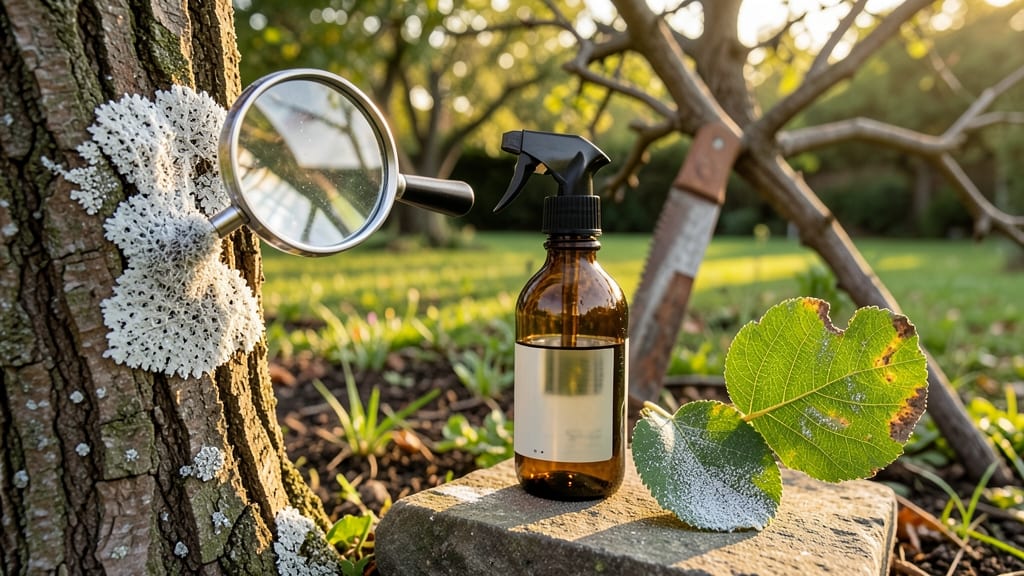
That white powdery mildew on the tree bark isn’t just unsightly—it’s a fungal warning sign that could weaken your tree if ignored. ✨ I’ve battled this on my mature apple tree, and the right spray (plus a few simple adjustments) can stop it dead in its tracks before it spreads to leaves or fruit.
The key is acting fast—powdery mildew thrives in shady, damp spots where airflow stalls.
Most people make the mistake of treating bark mildew like leaf infections, but bark needs a gentler approach: a mix of neem oil spray, baking soda solution, and pruning to open up the canopy. I’ve seen full recovery in as little as 2-3 weeks with consistent treatment.
By the time you’re done, your tree’s bark will look clean, and new growth will emerge free of that chalky film. The best part? These sprays are safe for most trees (just test a small area first) and won’t harm bees or beneficial insects.
No more hiding that unsightly white dust—just healthy, vibrant bark.
Works for apple, pear, and crabapple trees—the usual suspects—but also helps ornamental trees like lilacs and roses. Here’s exactly how to mix and apply the spray for maximum effectiveness.
The Hidden Triggers Behind Fungal Growth
Powdery mildew isn’t just a random visitor—it’s a fungal opportunist that thrives when conditions align perfectly for its survival and spread. Understanding why this fuzzy white menace appears on tree bark helps you prevent it before it takes hold.
Below, we break down the science-backed causes, from environmental factors to tree health, so you can tackle the root of the problem.
Fungal spores love moisture, and powdery mildew is no exception. When tree bark stays damp for extended periods—whether from high humidity, frequent rain, or shaded, stagnant air—spores germinate and spread like wildfire. Here’s why it’s a problem:
- Stagnant air near the bark reduces evaporation, keeping surfaces wet longer. Dense foliage, overcrowded trees, or poorly pruned branches create these "fungal saunas."
- Humidity above 75% (especially at night) is the sweet spot for mildew. Coastal regions or areas with poor drainage are high-risk zones.
- Water droplets on bark (from overhead watering or dew) act like tiny petri dishes, giving spores the perfect environment to colonize.
Pro Tip: 🌡️ Monitor humidity levels with a hygrometer. Aim for below 60% during peak growth seasons (spring/fall) to starve the fungus.
A tree’s health directly impacts its ability to resist fungal invaders. When bark lacks defensive compounds or is weakened, powdery mildew moves in like an unwelcome houseguest. Key stress factors include:
| Cause | How It Weakens Trees |
|---|---|
| Over-fertilization | Excess nitrogen promotes soft, succulent growth—a buffet for fungi. Mildew thrives on tender new bark. |
| Drought stress | Dried-out bark cracks, creating entry points for spores. Weakened roots reduce the tree’s ability to fight off infections. |
| Root damage (compacted soil, girdling roots) | Poor root function = less nutrient transport to the bark, making it vulnerable to fungal attacks. |
| Pests or prior diseases | Insects (like aphids) or past infections create open wounds where mildew spores latch on. |
Actionable Fix: ✨ Test soil pH (ideal: 6.0–7.0) and avoid heavy nitrogen fertilizers. Instead, use balanced, organic amendments like compost to boost resilience.
Powdery mildew doesn’t just appear out of thin air—it spreads via spores carried by wind, water, or even tools. If your tree is in the crosshairs, here’s how contamination happens:
- Infected neighboring plants: Many mildew strains (like Erysiphe species) jump between host plants. A rose bush or apple tree with mildew? Your oak’s bark is at risk.
- Contaminated pruning tools: Knives or saws used on infected branches can transfer spores to healthy trees. Always sterilize tools with 70% alcohol between cuts.
- Windborne spores: A single infected tree can release millions of spores per square inch. In urban areas, this means mildew hops from yard to yard like a fungal game of telephone.
Prevention Hack: 🎯 Isolate new trees for 2–3 weeks when planting near existing ones. Remove heavily infected debris immediately to cut off spore sources.
Now that you know the why, the next step is action. The good news? With the right natural sprays and cultural fixes, you can starve out powdery mildew before it becomes a full-blown crisis. Stay tuned for our DIY cure guide coming next!
Treatments That Actually Work
Once you’ve identified the cause of that unsightly white dust on your tree bark—whether it’s poor airflow, overwatering, or a nutrient imbalance—it’s time to act. The good news? Most powdery mildew issues can be resolved with simple, natural, and effective fixes.
Below, we’ve mapped the most common causes to their best solutions, along with prevention tips to keep your trees healthy long-term.
---
Problem: Trees packed too closely or blocked by fences/walls trap humidity, creating the perfect mildew buffet.
Fix It: 🔥 Prune aggressively – Remove up to 30% of dense branches to improve airflow. Focus on: - Dead or crossing branches (🔪) - Overhanging limbs touching walls/fences - Inner branches that block sunlight
🍳 Thin out foliage – If your tree is a shrub (like lilacs or roses), shear back by 1/3 to open up the canopy.
👨🍳 Space matters – If planting new trees, keep them at least 6–10 feet apart (depending on maturity size).
Prevent Relapse: ✨ Install lattice or trellises to guide vines away from bark. 🌡️ Avoid mulching too close—keep mulch 3–4 inches away from the trunk to prevent moisture buildup.
---
Problem: Overwatering (or poor drainage) keeps bark damp, inviting fungal growth.
Fix It: 🔥 Water deeply but less often – Aim for 1–1.5 inches per week (including rain). Let the top 2–3 inches of soil dry out between waterings.
🍳 Check drainage – If your tree sits in a low spot, amend the soil with compost or create a slight berm to redirect water.
👨🍳 Mulch correctly – Use 2–4 inches of organic mulch (wood chips, straw) but never pile it against the trunk.
Prevent Relapse: 💡 Use drip irrigation instead of overhead sprinklers to keep foliage dry. ✨ Water in the morning so leaves dry quickly in sunlight.
---
Problem: Weak trees (from poor soil or lack of nutrients) struggle to fight mildew.
Fix It: 🔥 Test your soil – A DIY test kit (or lab analysis) will tell you if your tree needs phosphorus, potassium, or micronutrients.
🍳 Apply balanced fertilizer – Use a slow-release, organic fertilizer (like 10-10-10) in early spring before new growth starts.
👨🍳 Boost with compost tea – Brew compost tea (1 part compost to 5 parts water, steep 24–48 hours) and spray on bark and soil monthly.
Prevent Relapse: 🌱 Top-dress with compost every fall and spring. 💪 Avoid synthetic fertilizers—they can burn roots and stress the tree.
---
Once you’ve fixed the environment, attack the fungus with these safe, effective sprays:
| Spray | How to Use | Frequency | |-------------------------|-------------------------------------------------------------------------------|-----------------------------| | Neem Oil Solution | Mix 1 tbsp neem oil + 1 tsp mild soap + 1 quart water.
Spray undersides of leaves and bark. | Every 7–10 days until gone | | Baking Soda Mix | 1 tbsp baking soda + 1 quart water + few drops of soap.
Spray directly on mildew. | Weekly until cleared | | Hydrogen Peroxide | 1 part 3% H₂O₂ + 3 parts water. Spray early morning (avoid hot sun). | Every 3–4 days | | Milk Spray | 1 part milk + 9 parts water.
Spray all surfaces (safe for edible plants). | Every 5–7 days |
Pro Tip: 🔥 Spray in the early morning or late evening to avoid burning leaves in sunlight.
--- To keep mildew from returning, make these habits permanent: - ✅ Prune regularly (remove dead wood in late winter/early spring). - ✅ Space new plants properly (follow mature size guidelines). - ✅ Water at the base, not overhead (use soaker hoses or drip systems). - ✅ Improve airflow (avoid tight groupings, use trellises for vines). - ✅ Monitor humidity (avoid planting in shady, damp spots). - ✅ Inspect trees monthly (catch mildew early before it spreads).
--- Final Thought: Powdery mildew is annoying but beatable—most cases clear up in 2–4 weeks with consistent care. Start with one fix (like pruning or adjusting water), then spray preventatively to keep your trees strong and mildew-free! 🌳💪
Frequently asked questions
Is powdery mildew on bark the same as leaf infections?
No, they’re related but different! Bark mildew (like Erysiphe species) thrives in shaded, damp bark crevices, while leaf infections often appear on foliage surfaces. Bark mildew rarely spreads to leaves unless conditions worsen. The key difference: bark mildew looks like chalky dust on rough bark, while leaf mildew appears as white patches on smooth surfaces.
Can I use the same spray for bark and leaves?
Most natural sprays (like neem oil or baking soda) work for both, but bark needs a gentler touch. Avoid strong solutions that might discolor rough bark. For leaves, you can use hydrogen peroxide (3%), but dilute it to 1:3 ratio for bark to prevent damage. Always test a small area first!
Will pruning alone fix powdery mildew?
Pruning helps improve airflow, which is critical, but it won’t eliminate mildew by itself. You’ll need to combine it with fungicidal sprays (like neem oil) and adjust watering habits. Think of pruning as 50% of the solution—the other 50% is environmental management and direct treatment.
How long does it take to see results after spraying?
With consistent treatment (every 7–10 days), you’ll notice mildew receding in 2–3 weeks. New growth should emerge clean and healthy within 4–6 weeks. If mildew persists after 6 weeks, the tree may need professional assessment for underlying issues like root rot or pest damage.
Are some trees more prone to bark mildew?
Yes! Apple, pear, crabapple, lilac, and rose trees are the most susceptible due to their thin bark and dense foliage. Ornamental trees like dogwood and maple can also develop mildew, but it’s less common. Oak and pine are naturally more resistant thanks to their thick, rough bark, which disrupts spore attachment.