
Pruning
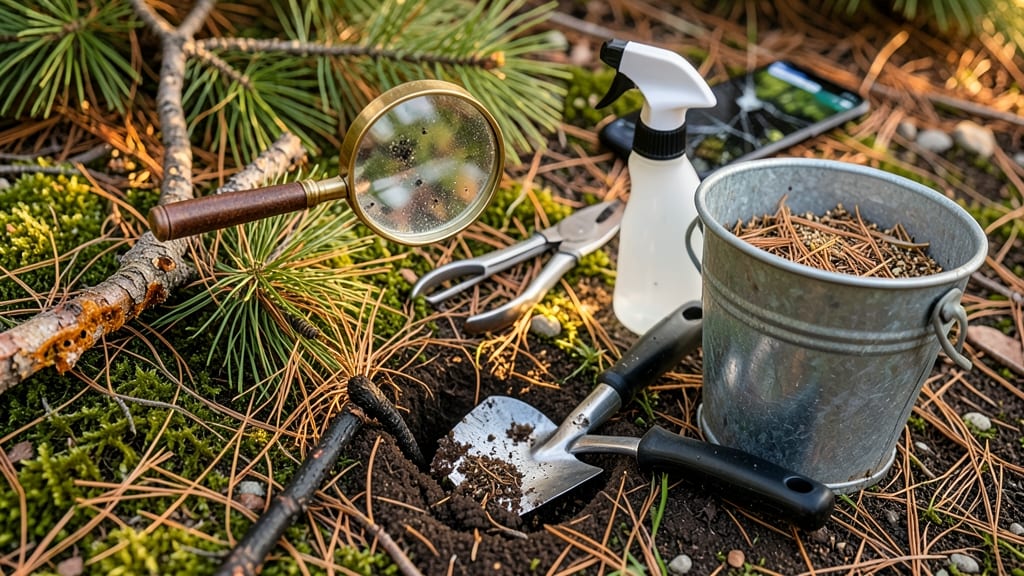
Your pine tree’s dying branches might not be a death sentence—root rot rescue starts with pruning and airflow fixes. I’ve seen pine trees bounce back from this exact problem when I caught it early, and the key was acting fast before the rot spread beyond saving.
The first step is identifying whether your tree’s stress comes from waterlogged soil, fungal infection, or something else entirely.
Root rot thrives in compacted, soggy soil where airflow can’t reach the roots. Check for mushrooms at the base or a foul smell when you dig—those are red flags.
If the needles turn yellow-brown and fall off in patches while the branches stay brittle, pruning the dead growth (not just the obvious parts) helps the tree redirect energy to healthy sections. Just don’t overdo it—you want to keep the tree’s natural shape intact.
Once you’ve pruned, focus on drainage. Amending the soil with coarse sand or gravel (about 2-3 inches mixed into the top 6 inches) breaks up compacted earth, and mulching with pine bark keeps moisture balanced.
Within 4-6 weeks, you’ll start seeing new growth at the branch tips if the roots are still viable. The goal? Turn that stressed tree into a thriving one again.
Prevention is easier than cleanup: water deeply but infrequently, avoid planting pines in low spots where water pools, and inspect for pests like bark beetles (tiny holes in the bark are a dead giveaway). Early action saves trees—and your sanity. Let’s get that pine back to its full, green glory.
Root Causes Behind Dead Pine Branches
If your pine tree’s branches are turning brown, brittle, or falling off, the issue likely stems from one (or more) of these common but often overlooked factors. Understanding the why behind the dieback is the first step to saving your tree—and preventing further damage.
Let’s break down the science behind each culprit, so you can diagnose (and fix) the problem like a pro.
Pine trees thrive in well-draining soil, but their roots are sensitive to waterlogging and drought stress. Both extremes can trigger branch dieback by disrupting nutrient uptake and oxygen flow to the canopy.
- Overwatering & Root Rot 💦 Pines hate soggy roots. When soil stays waterlogged (e.g., after heavy rain, poor drainage, or overzealous irrigation), roots suffocate from lack of oxygen.
This leads to: - Fungal infections (like Phytophthora or Armillaria), which block water and nutrient transport. - Root decay, causing the tree to "starve" its branches, which then turn yellow/brown and die from the tips inward. - Tell-tale sign: Mushrooms at the base or a foul, rotting smell near the trunk.
- Underwatering & Drought Stress 🔥 Pines are drought-tolerant, but prolonged dry spells (especially in sandy or rocky soil) force the tree to prioritize survival. It sheds branches to reduce water loss—a survival tactic called abscission.
Look for: - Needles turning reddish-brown (instead of green or yellow). - Branches dying from the bottom up (older, less resilient growth). - Pro tip: 💡 Check soil moisture 2–3 inches deep—if it’s bone-dry, water deeply but infrequently (pines prefer 1–1.5 inches per week in growing season).
Pine trees are a buffet for sap-sucking insects and borers, which weaken branches by disrupting vascular flow or chewing through cambium (the tree’s growth layer). Common culprits:
| Pest | Damage Signs | How It Kills Branches |
|---|---|---|
| Pine Bark Beetles 🐜 | Sawdust-like frass at branch bases, pitch tubes (resin oozing). | Larvae burrow into phloem, blocking water/nutrients. |
| Sphaeropsis Tip Blight 🍄 | Brown, blighted needles at branch tips, black fungal fruiting bodies. | Fungus clogs stomata, causing desiccation. |
| Aphids/Scale Insects 🐛 | Sticky honeydew, sooty mold, curled needles. | Sap-sucking weakens branches; sooty mold blocks sunlight. |
| White Pine Weevil 🪰 | "Candle-like" dieback (top branches die first). | Larvae feed on terminal buds, starving new growth. |
Action step: 🔥 Inspect branches closely—look for unusual holes, sawdust, or resin buildup. Treat infestations early with neem oil (for soft-bodied pests) or prune and burn heavily infested branches.
Fungi and bacteria hitchhike on stressed pines, exploiting wounds or poor airflow to clog xylem (water pipes) and girdle branches (cutting off nutrient flow). Top offenders:
- Diplodia Tip Blight 🍄
- Symptoms: Needles turn purplish-red, then brown, starting at branch tips.
- Why it happens: Fungal spores spread in wet, humid conditions, infecting through damaged needles or bark.
- Fix: Prune infected tips (sterilize tools with 70% alcohol) and improve airflow around the canopy.
- Armillaria Root Rot 🍄💀
- Symptoms: White fungal "shelves" at the base, sudden branch dieback, and mushrooms in fall.
- Why it happens: Thrives in compacted, waterlogged soil, spreading from infected roots to branches.
- Fix: Remove infected roots (if possible) and amend soil with compost to improve drainage.
- Bacterial Canker 🦠
- Symptoms: Oozing, sunken lesions on branches, wilting needles, and blackened tissue.
- Why it happens: Bacteria (Pseudomonas syringae) enter through pruning wounds or storms, spreading in wet weather.
- Fix: Prune infected branches 6+ inches below lesions and sterilize tools between cuts.
Even the hardiest pines can’t recover from mechanical trauma. Here’s how branches get "accidentally" killed:
- Storm or Hail Damage 🌩️
- Signs: Broken branches, split bark, or crushed needles.
- Why it matters: Exposed wood invites rot and pests. Severed vascular tissue cuts off water flow to downstream branches.
- Fix: Prune storm-damaged branches at the branch collar (swollen base) to prevent further decay.
- Over-Pruning or Topping ❌🪓
- Mistake: Cutting too close to the trunk or removing >25% of foliage at once.
- Why it fails: Pines rely on needles for photosynthesis—sudden defoliation starves the tree.
- Rule: Never remove more than 10–15% of branches in one season, and prune in late winter/early spring (when the tree is dormant).
- Soil Compaction 🚜
- Signs: Gnarled roots, poor water absorption, branches dying on one side.
- Why it happens: Heavy foot traffic, construction, or clay soil crushes roots, reducing oxygen and nutrient uptake.
- Fix: Aerate compacted soil with a manual aerator or top with 2–3 inches of mulch (keep it 3 inches away from the trunk).
Pines are heavy feeders, especially in poor or sandy soil. Deficiencies in nitrogen, phosphorus, or micronutrients lead to weak branches that die back easily.
| Deficiency | Symptoms | Solution |
|---|---|---|
| Nitrogen (N) | Yellow needles (oldest first), stunted growth. | Apply slow-release fertilizer (10-10-10) in early spring. |
| Phosphorus (P) | Purplish stems, slow root growth. | Use bone meal or compost in fall. |
| Iron (Fe) | Yellow needles with green veins (chlorosis). | Soil acidifier (sulfur) or chelated iron in spring. |
| Magnesium (Mg) | Yellow bands between veins. | Epsom salt (1 tbsp/gallon water) spray. |
Pro tip: 🌡️ Test your soil (DIY kits are cheap!)—pines prefer pH 4.5–6.0. If your soil is alkaline, amend with pine needles or sulfur.
Pines need space—dense foliage, nearby structures, or overgrown shrubs trap moisture and humidity, creating a fungal paradise. Stagnant air also reduces transpiration, leading to branch stress.
- Signs of Poor Airflow:
- Needles stay wet for days after rain.
- Fungal diseases (like needle cast) spread easily.
- Branches on one side die (shaded side).
- Fix:
- **Thin out lower
Revive Your Pine Tree Branches
If your pine tree’s branches are turning brown, brittle, or sparse, don’t panic—there’s hope! The key is identifying the root cause (literally and figuratively) and taking targeted action.
Below, we break down practical fixes for the most common issues, from overwatering to pest invasions, plus tips to keep your tree thriving long-term.
If your pine’s roots are drowning, the first step is to stop watering immediately. Wet, suffocating soil blocks oxygen, leading to root rot and branch death.
- 🔥 Drain the Soil
- Dig a shallow trench (6–12 inches deep) around the tree’s drip line to improve drainage.
- Add organic matter like compost or pine bark to loosen compacted soil.
- 🍳 Adjust Watering Habits
- Pine trees prefer well-draining soil. Water deeply once a week (or less in winter) rather than daily shallow soaks.
- Test soil moisture: Stick your finger 2 inches down—if it’s damp, wait before watering again.
- 👨🍳 Improve Airflow
- Prune dense, inner branches to reduce humidity near the trunk (fungi love damp conditions).
- Space mulch 3–4 inches away from the trunk to prevent moisture buildup.
💡 Pro Tip: If root rot is severe, consider mycorrhizal fungi—these beneficial microbes help roots absorb water and nutrients more efficiently.
Pines in full sun with poor water access often show brown, crispy needles. These branches won’t regrow, but you can prune them out and protect the rest.
- 🔪 Prune Dead Branches
- Use sterilized pruners to cut 1/4 inch above a healthy bud or branch collar.
- Avoid "topping" (cutting the main leader)—this stresses the tree further.
- 🌡️ Shade & Hydrate Strategically
- For young pines, use light shade cloth (30–50%) during extreme heat (100°F+).
- Water early morning or evening to reduce evaporation. Aim for 1–1.5 inches per week (including rain).
- ✨ Fertilize for Recovery
- Apply a slow-release, acidic fertilizer (like 10-10-10 or pine-specific formula) in early spring.
- Avoid high-nitrogen fertilizers—they encourage soft, drought-sensitive growth.
💡 Pro Tip: Mulch with pine needles or wood chips to retain moisture and mimic the tree’s natural habitat.
Bugs like pine beetles or spider mites, and diseases like Diplodia tip blight, can turn branches into a buffet of decay. Act fast!
- 🔍 Identify the Culprit
Symptom Likely Cause Fix Small holes, sawdust-like frass Bark beetles Remove infested branches immediately and dispose of them off-site. Yellow/brown needles that stay on branches Spider mites or needle cast fungus Spray with neem oil or horticultural oil (follow label rates). Black, tar-like sap oozing from branches Diplodia tip blight Prune infected tips 12 inches below damage and sterilize tools with 70% rubbing alcohol. - 🛡️ Prevent Future Infestations
- Encourage natural predators like ladybugs or birds by planting nearby flowers.
- Keep the area clean of fallen needles/debris—pests hide there!
Pruning isn’t just about hacking off dead wood—it’s about encouraging healthy growth. Follow these rules:
- ⏰ Best Time to Prune
- Late winter/early spring (before new growth starts) for major cuts.
- Avoid pruning in fall—it stresses the tree before winter dormancy.
- 🎯 What to Remove
- Dead, diseased, or crossing branches (cut at the branch collar).
- Overly dense growth to improve airflow (aim for an "open vase" shape).
- Suckers or water sprouts (fast-growing vertical shoots)—remove them at the base.
- 🔪 Tools & Technique
- Use bypass pruners for small branches (<1 inch thick) and a pruning saw for larger ones.
- Make cuts at a 45-degree angle just outside the branch collar (the swollen area where the branch meets the trunk).
💡 Pro Tip: Never remove more than 25% of the tree’s foliage in one year—this can shock the pine and make it more susceptible to stress.
With the right care, your pine tree can bounce back—sometimes even regrowing needles on older branches! Start with the fixes that match your tree’s symptoms, and monitor progress over the next few months. If the damage is extensive, consult a certified arborist for a tailored plan.
Frequently asked questions
Why are my pine tree branches dying from the tips inward?
This is often a sign of Diplodia tip blight, a common fungal disease that thrives in wet conditions. The fungus blocks water transport, causing needles to turn purplish-red before browning from the tips. Prune infected branches 12 inches below damage and improve airflow around the canopy to prevent spread.
Can I save a pine tree if half its branches are dead?
Yes, but act quickly! First, prune all dead/diseased branches at the branch collar. Then focus on root health—check for waterlogging (dig around the base) and improve drainage with coarse sand or compost. If roots are still viable, new growth should appear within 4-6 weeks.
What’s the difference between drought stress and fungal infection in pines?
Drought stress causes reddish-brown needles that fall off easily, while fungal infections (like needle blight) create black fruiting bodies at branch tips and make needles stay attached but brittle. Test soil moisture—if dry, it’s drought; if damp with fungal signs, prune and apply copper fungicide.
How do I know if my pine tree is beyond saving?
Look for these red flags: Mushrooms at the base (root rot), cracked bark exposing inner wood, or no new growth after 2 years of care. If the trunk is hollow or oozing sap, the tree is likely too far gone. For borderline cases, consult an arborist before giving up.
Should I fertilize a pine tree with dying branches?
Only if you’ve ruled out water issues or pests first! Use a slow-release, acidic fertilizer (like 10-10-10) in early spring, but avoid high-nitrogen options—they encourage weak growth. Focus first on drainage and pruning before adding fertilizer.