
Pruning
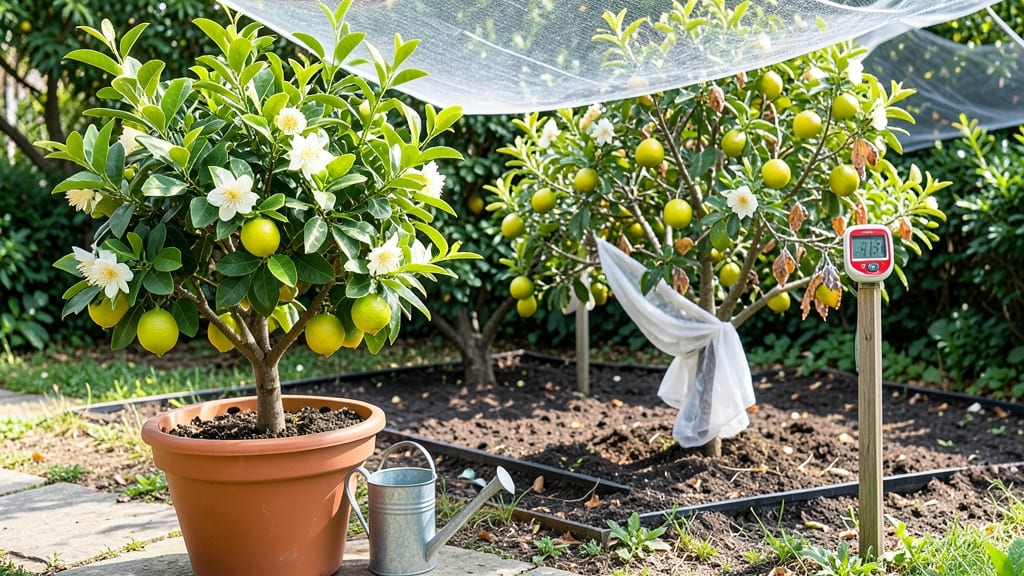
Understanding the Meyer lemon tree temp tolerance 🍋 is the key to keeping your citrus plant alive and productive, whether you're battling frost in zone 8 or sweltering through a Southern summer.
Growing a Meyer lemon tree in colder climates or scorching summers isn’t just possible—it’s rewarding, as long as you understand its temperature limits. But how cold can Meyer lemons handle, and what heat survival strategies keep them thriving?
These trees thrive in USDA zones 9-11, but with the right care, they can survive dips as low as 25°F (-4°C)—and even bounce back from brief freezes.
The trick? Knowing when to move them indoors, how to shield them from sudden cold snaps, and which heat tricks keep the roots cool when temperatures soar.
In this guide, you’ll learn the exact temperature ranges for healthy growth, proven protection methods for frost and heat, and how to spot stress before it’s too late.
Whether you’re a container gardener in Chicago or a backyard grower in Phoenix, these tips will keep your Meyer lemon tree happy year-round.
Meyer lemon tree cold tolerance: USDA Zones & minimum safe temperatures
Understanding your Meyer lemon tree's cold tolerance is the first step to keeping it alive through winter. Native to USDA Zones 9-11, these trees thrive in warm climates but can survive brief cold snaps with proper care.
The key is knowing their minimum safe temperatures and how to protect them when frost threatens.
Meyer lemons are semi-tropical plants that prefer warmth but can handle temporary dips below freezing if prepared correctly. In their natural USDA Zone 10-11 range, they experience mild winters with rare frost.
Gardeners in Zones 8 and below must take extra precautions, often growing them in containers for mobility.
In USDA Zone 9, your Meyer lemon can handle brief dips to 28°F (-2°C) with minimal protection like a frost blanket. However, prolonged exposure below 32°F (0°C) will damage leaves and young branches.
The tree's roots are most vulnerable, so mulching with 4-6 inches of organic mulch helps insulate them.
For Zone 8 gardeners, the threshold drops to 25°F (-4°C). This is where container growing becomes essential. Move potted Meyer lemons indoors before temperatures drop below 40°F (4°C), placing them near a south-facing window for 6+ hours of sunlight daily.
A grow light supplement during winter months ensures they don't go dormant prematurely.
In Zones 7 and below, outdoor cultivation is not recommended without a heated greenhouse. Even with protection, temperatures below 15°F (-9°C) will kill the tree. Instead, grow your Meyer lemon as a houseplant, pruning it annually to maintain size and shape.
Use a well-draining citrus potting mix and fertilize lightly every 6-8 weeks during the growing season.
One common misconception is that Meyer lemons can survive like regular lemons. Unlike their Eureka or Lisbon lemon counterparts, Meyer lemons are less cold-hardy but more adaptable to container life. Their semi-sweet fruit makes the extra care worthwhile, but understanding these temperature limits prevents costly mistakes.
Seasonal adjustments are key. In late fall, reduce watering slightly to prevent root rot from cold, soggy soil. Increase humidity around indoor trees using a pebble tray with water or humidifier to combat dry winter air.
Prune any frost-damaged branches in early spring, cutting back to healthy green wood just above a leaf node.
Monitor your tree's temperature stress signs: dark brown or blackened leaves indicate frost damage, while yellowing leaves in winter may signal nutrient deficiency from lack of sunlight.
Adjust care immediately if you spot these warning signals. With the right seasonal strategies, your Meyer lemon can thrive even in cooler climates.
Remember, prevention is easier than recovery. Invest in a digital thermometer to track nighttime temperatures and plan your protective measures accordingly. Whether you're in Zone 9 or Zone 8, these cold tolerance guidelines will help your Meyer lemon tree survive—and even produce—through winter.
🍋🌡️🪴Heat survival tips: protecting Meyer lemon trees in hot climates
When temperatures climb above 90°F (32°C), your Meyer lemon tree needs extra care to avoid heat stress. Unlike their cold-hardy cousins, these citrus trees struggle in scorching conditions, showing signs like drooping leaves and sunburned bark. The key to survival?
Proactive strategies like strategic shading, deep watering, and soil moisture retention. I’ve learned that even in USDA Zone 10, where I garden, summer afternoons can push limits—so I adjust my routine to keep my tree thriving.
Outdoor Meyer lemon trees in hot climates face three major risks: dehydration, sun scorch, and root stress. Indoor trees, however, can be more manageable since you control humidity and airflow. The challenge is balancing their need for full sun (6-8 hours daily) with protection from extreme heat.
For example, my container-grown tree in Arizona summers gets afternoon shade, while my in-ground tree relies on mulch and frequent watering. Both methods work, but the approach differs based on your setup.
- 🌡️ Optimal Heat Range: 60-85°F (15-29°C) for peak growth; above 90°F (32°C) requires adjustments.
- 💧 Watering Rule: Deep water every 2-3 days (containers daily); morning watering prevents evaporation.
- 🌿 Shade Strategy: Use 30-50% shade cloth for afternoon sun (2 PM–6 PM) to block direct rays.
- 🪴 Soil Hack: Add 3 inches of mulch (straw or wood chips) to retain moisture and cool roots.
- 🚫 Avoid: Overhead watering (causes fungal issues) and fertilizing during peak heat (100°F+).
For outdoor trees, I prioritize afternoon shade using lightweight shade cloth or planting near deciduous trees that provide natural cover. My Meyer lemon thrives under a 30% shade cloth from 2 PM to 6 PM, which blocks the harshest sun without cutting off light entirely.
Pair this with drip irrigation set to run early in the morning, ensuring water reaches the roots before evaporation kicks in. I’ve also noticed that container trees dry out faster, so I move them to a shadier patio during heatwaves.
Indoor Meyer lemon trees in hot regions need a different approach. Place them near a south-facing window but avoid direct afternoon sun. I use a reflective screen on the window to diffuse light while keeping humidity levels high with a pebble tray filled with water.
Mist the leaves lightly in the morning to mimic dew, but avoid wet foliage at night to prevent fungal growth. My indoor tree also gets a fan on low to improve airflow, which helps prevent heat stress even in 85°F (29°C) indoor temps.
Watch for heat stress signs like yellowing leaves, crispy leaf edges, or drooping branches. These indicate your tree is struggling. I once ignored these signals in my outdoor tree during a 105°F (40°C) heatwave, and it lost 20% of its leaves before I acted.
Now, I prune affected branches immediately and increase shade. If your tree’s leaves feel rough or dry, it’s time to adjust your care routine—whether that means more water, extra shade, or moving it indoors temporarily.
With these strategies, your Meyer lemon tree can survive—and even thrive—in hot climates. The key is consistency: water deeply, shield from afternoon sun, and monitor soil moisture.
My trees now produce lemon harvests year-round, even in the summer heat, because I’ve learned to work with the climate, not against it. 🍋