
Trees
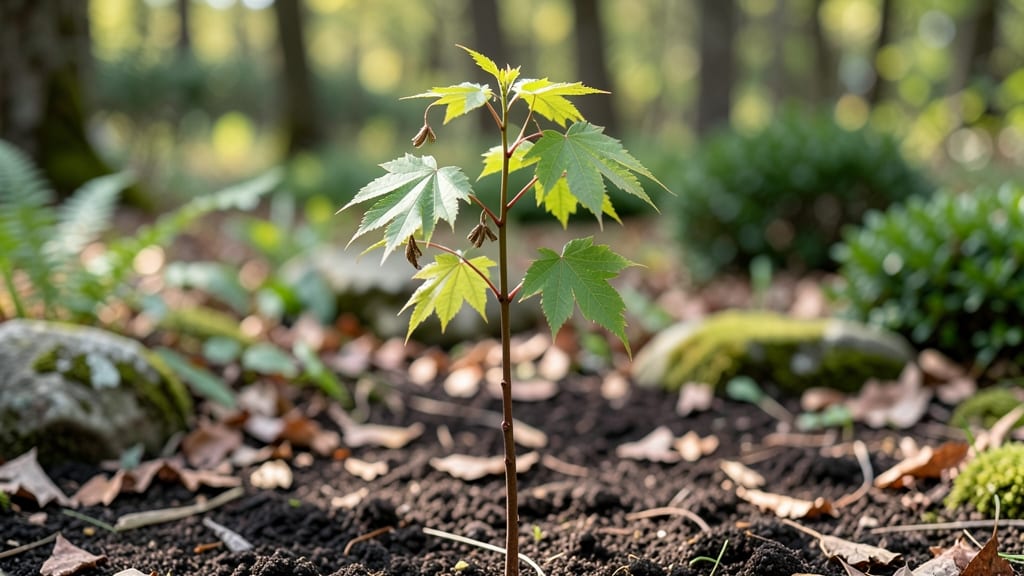
Maple tree seedling identification hides in plain sight—until you know what to look for. 🌱 The key lies in those tiny twigs and bud shapes that scream "maple" before the leaves even unfurl. I’ve spent years sorting through seedlings, and these details cut the guesswork in half.
Start with the twig color: maple seedlings have a distinctive reddish-brown hue when young, especially near the buds. Then check the bud shape—they’re usually oval and pointed, clustered tightly along the stem. Sugar maples have smoother buds, while red maples often show a slight hairiness.
You’ll spot the seedling’s first true leaves (not the cotyledons) as lobed and opposite, a dead giveaway. These clues let you confirm the species before transplanting, saving you from misidentifying them as other hardwoods.
This works for backyard identification, forest forays, or even nursery purchases. No more second-guessing—just confident spotting and care.
What Triggers Seedling Confusion
Identifying maple seedlings can feel like solving a botanical puzzle—especially when nature throws a few curveballs your way. Misidentification often stems from a mix of biological quirks, environmental factors, and human oversight.
Understanding these causes helps you spot the real clues hidden in twigs, buds, and leaves. Let’s break down why seedlings trick even the sharpest eyes.
Maple seedlings don’t announce their species with a neon sign. Many species—like sugar maple (Acer saccharum), red maple (Acer rubrum), or silver maple (Acer saccharinum)—look eerily similar in their earliest stages. Here’s why:
- Juvenile vs. Mature Traits: Seedlings often lack the distinctive leaf lobes or bark patterns that define adult trees. For example, a sugar maple’s iconic "U-shaped" sinuses don’t appear until the plant is 3–5 years old. Without these, seedlings rely on subtler features like bud shape or twig hairiness—details that are easy to miss in a hurry.
- Hybridization: Some maples (like swamp maple, Acer rubrum × saccharinum) hybridize, blending traits. A seedling might inherit a mix of red maple’s vibrant fall color and sugar maple’s smooth bark, creating a confusing hybrid phenotype.
- Seasonal Camouflage: In winter, when buds are dormant, species can look nearly identical. A red maple’s reddish twigs might fade to brown, while a silver maple’s opposite buds (a key trait) could be obscured by bud scales.
💡 Pro Tip: Focus on bud arrangement (opposite vs. alternate) and twig color in late winter. Use a magnifying glass to inspect bud scales—some maples have sticky resins or downy hairs that others lack.
Stress doesn’t just harm plants—it changes them. Environmental factors can alter a seedling’s appearance enough to make identification a gamble. Here’s how:
| Factor | How It Affects Seedlings | Example |
|---|---|---|
| 🌞 Sunlight Exposure | Seedlings in full sun may develop darker, thicker leaves with more pronounced lobes to maximize photosynthesis. Shade-grown seedlings stay delicate and lobeless. | A sugar maple seedling in shade might look like a striped maple (Acer pensylvanicum) until it gets sunlight. |
| 💧 Water Stress | Drought causes smaller leaves, curled edges, or even premature bud dormancy. Overwatering can lead to yellowing (chlorosis), masking natural color. | A red maple seedling under drought might resemble a boxelder (Acer negundo) due to its compound-like leaflets. |
| 🌡️ Temperature Fluctuations | Late frosts or heatwaves can stunt growth, causing buds to form abnormally. Cold snaps may darken twigs prematurely, mimicking mature traits. | A silver maple seedling in a late frost might develop purplish twigs, confusing it with a Freeman maple hybrid. |
🎯 Actionable Fix: Compare seedlings from the same microclimate. If possible, study them in ideal conditions (moderate sun, consistent moisture) to see their "true" form.
Even with perfect seedlings, mistakes happen. Our brains are wired to see what we expect—and maple identification is no exception. Here’s where we go wrong:
- Relying on Leaves Alone: Many guides prioritize mature leaf shapes, but seedlings often have simple, unlobed leaves. A boxelder seedling’s compound leaves might be mistaken for a maple’s single leaf if you’re not looking closely.
- Ignoring Twig Details: Bud shape, twig color, and terminal bud dominance are often overlooked. For example, norway maple (Acer platanoides) seedlings have prominent, hairy buds, while sugar maples have smooth, egg-shaped buds.
- Seasonal Bias: Most identification guides focus on spring/summer traits. In fall, maples like red maple develop bright red foliage, but seedlings may not show this until year 2 or 3.
- Confirmation Bias: If you’re hoping for a sugar maple, you might overlook a silver maple’s asymmetrical leaf bases or a red maple’s darker twig undersides.
🔥 Quick Checklist:
- ✅ Bud arrangement: Opposite (maples) vs. alternate (other trees).
- ✅ Twig color: Reddish (red maple), greenish (silver maple), or gray (sugar maple).
- ✅ Bud scales: Sticky? Hairy? Smooth?
- ✅ Leaf scars: Maple leaf scars have 3 bundle scars (unlike boxelder’s 1–3).
Not all maples are created equal—geography plays a huge role. Seedlings in the Northeast might look different from those in the Southeast or Upper Midwest due to:
- Climate Adaptations: Maple seedlings in colder climates (e.g., sugar maples in Vermont) grow slower, with darker, thicker twigs for insulation. Those in warmer zones (e.g., red maples in Georgia) may have lighter, faster-growing stems.
- Local Hybrids: Some regions have unique hybrid populations. For example, swamp maples in the Southeast might blend red and silver maple traits in ways not seen elsewhere.
- Soil Differences: Acidic soils (common in the Appalachians) can cause chlorosis in seedlings, making them appear yellowish—similar to nutrient-deficient boxelder seedlings.
🌍 Regional Reference: Cross-check with local field guides or university extension resources. For example, a seedling in Michigan might be a black maple (Acer nigrum), which has blackish twigs—a trait absent in
Quick Fixes for Seedling Confusion
Identifying maple tree seedlings can feel like solving a puzzle—especially when twig colors and bud shapes blur together. But with the right approach, you can turn uncertainty into confidence. Below, we’ll tackle the most common challenges and provide practical, step-by-step solutions to ensure you spot the right seedlings every time.
Cause: Many young maple species (like sugar maple, silver maple, and boxelder) share similar leaf shapes, but their twig colors and bud structures differ subtly.
Fix:
- 🍃 Examine the Twigs First
- Reddish-brown twigs → Likely a sugar maple or black maple.
- Greenish or yellowish twigs → Could be a silver maple or boxelder.
- Grayish-brown twigs with a metallic sheen → Often a boxelder.
- 👀 Zoom in on the Buds
- Pointed, egg-shaped buds (like a football) = sugar maple.
- Oval, slightly flattened buds = silver maple.
- Small, clustered buds = boxelder.
- 🌱 Check the Leaf Scar
- Peel back the bark slightly to see the leaf scar (where leaves attach).
- U-shaped or horseshoe-shaped scars = Maple (but not all maples—some oaks have similar shapes, so cross-check with twigs).
Prevention Tip: 💡 Carry a hand lens (magnifying glass) in your gardening toolkit. It makes bud and twig details 10x easier to inspect!
Cause: Improper planting, pests, or disease can kill seedlings before they mature.
Fix:
- 🌱 Plant in the Right Spot
- Sunlight: Maple seedlings thrive in partial shade to full sun (but avoid harsh afternoon sun in hot climates).
- Soil: Well-draining, slightly acidic soil (pH 5.0–6.5). Amend heavy clay with compost.
- 🐜 Pest and Disease Watch
- Aphids or scale insects? Spray with neem oil or introduce ladybugs (natural predators).
- Fungal spots? Remove infected leaves and treat with copper fungicide.
- 💧 Watering Like a Pro
- First 2 weeks: Water daily (keep soil moist but not soggy).
- After establishment: Water 2–3 times per week (deep soakings).
Prevention Tip: ✨ Mulch around the base (2–3 inches of wood chips) to retain moisture and block weeds—but keep mulch away from the trunk to prevent rot.
Cause: Young maples can resemble ash, oak, or walnut seedlings, leading to incorrect planting.
Fix:
| Feature | Maple Seedling | Look-Alike (Ash/Oak/Walnut) |
|---|---|---|
| Leaf Shape | Opposite branching, 3–5 lobes | Ash: Compound leaves; Oak: Lobed but alternate |
| Twig Markings | Often U-shaped leaf scars | Walnut: Chambered pith (hollow twigs) |
| Bud Arrangement | Buds opposite each other | Most oaks have alternate buds |
Quick Test: 🔥 Break a twig—if it has a white, milky sap, it’s almost certainly a maple (some boxelders may vary, but sap is a strong clue).
Prevention Tip: 📊 Take photos of key features (twig, bud, leaf) and compare them side-by-side with a field guide or online database (like the USDA Plants Database).
- 🌡️ Best Time to Plant: Early spring or fall (avoid extreme heat or frost).
- 🎯 Label Your Seedlings: Use biodegradable plant tags to track species and planting dates.
- 🔪 Prune Smartly: Remove dead or crossing branches in early spring to encourage strong growth.
By mastering these simple checks, you’ll never second-guess a maple seedling again—and your young trees will thank you with vibrant growth for years to come! 🌳💚
Frequently asked questions
What’s the easiest way to tell a maple seedling from other hardwoods?
Look for opposite branching—maple buds grow directly across from each other on the twig, while most other trees (like oaks or walnuts) have alternate buds. Also check for U-shaped leaf scars where leaves attach—this is a dead giveaway.
Can I identify maple seedlings in winter when there are no leaves?
Focus on bud shape and twig color. Sugar maples have pointed, egg-shaped buds on reddish-brown twigs, while red maples often show slight hairiness on their buds. A magnifying glass helps spot these details.
How do I know if a seedling is a sugar maple vs. a red maple?
Sugar maple seedlings have smooth, football-shaped buds and grayish-brown twigs, while red maples feature oval buds with slight hairiness and reddish twigs. Check the leaf scars too—sugar maples often have 3 bundle scars.
What should I do if I accidentally planted a boxelder instead of a maple?
Boxelders (a maple relative) have compound leaves with 3–7 leaflets, while true maples have single, lobed leaves. If you’ve already planted, don’t worry—boxelders are hardy, but they grow faster and weaker wood than sugar or red maples.
How long does it take for a maple seedling to show its true leaf shape?
Seedlings often start with simple, unlobed leaves (cotyledons), but their first true leaves (year 1) may show slight lobes. Full lobing (like adult trees) typically appears by year 3–5. Patience pays off!