
Plants
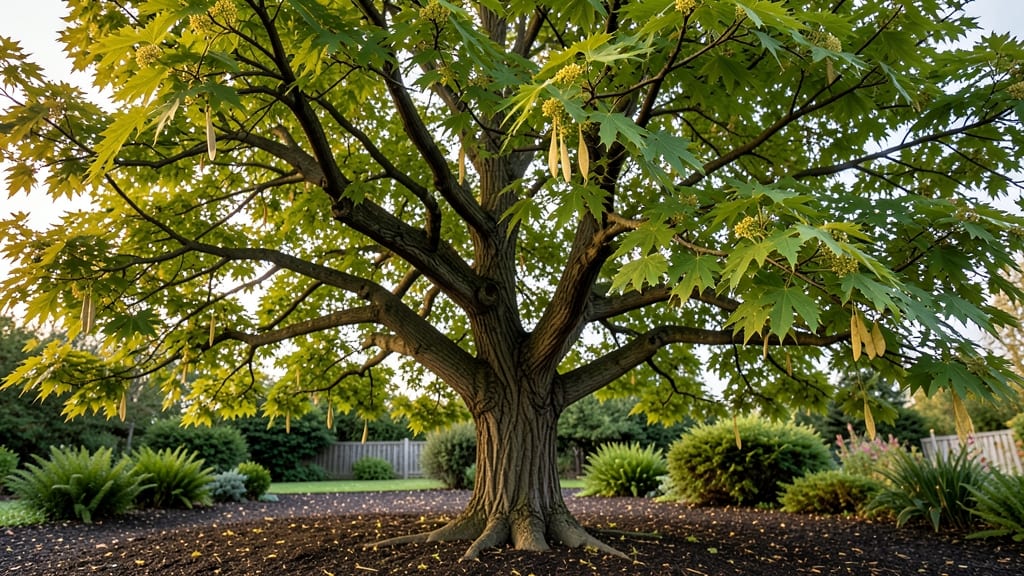
A maple tree looks like a striking tree with hand-shaped leaves featuring 3-9 sharp points, smooth gray bark that develops deep grooves as it ages, and a wide, dome-shaped canopy that turns brilliant autumn colors from golden yellow to fiery red. The tree's branches often spread outward at dramatic angles.
A maple tree's most recognizable feature is its palmate leaves, where all leaflets radiate from a single point like fingers on a hand. 🌳 The bark starts smooth and silvery-gray but develops distinctive ridges as the tree matures, creating a textured surface that's easy to spot from a distance.
What sets maples apart from other trees is their autumn transformation—some varieties like the sugar maple turn a deep crimson, while others like the red maple display fiery oranges and yellows that make them stand out in any landscape.
These trees grow into majestic specimens with broad canopies that can reach 50-75 feet tall, depending on the species. The sharp angles of their branches create a distinctive silhouette that's instantly recognizable.
Whether you're identifying one in your backyard or admiring them during a fall drive, maples offer year-round visual interest with their unique leaf shapes, evolving bark patterns, and spectacular seasonal color changes.
💡 In This Article
- Identifying Maple Tree Leaves and Bark Patterns
- How to Spot Maple Trees in Different Seasons
Identifying maple tree leaves and bark patterns
Maple leaves are nature's perfect handprint, with their palmate shape featuring 3-9 sharp, pointed lobes that all radiate from a single central point.
The sugar maple, famous for its deep red autumn foliage, typically has 5 lobes with serrated edges, while the silver maple's leaves are often 7-lobed with smoother edges.
What's fascinating is how these leaf shapes evolved—studies show the palmate form maximizes sunlight exposure while minimizing wind damage, a perfect adaptation for temperate climates where maples thrive.
The bark tells its own story of age and resilience. Young maples have smooth, silvery-gray bark that feels almost velvety to the touch, but as they mature—typically after 30-50 years—they develop deep, interlocking ridges that create a textured puzzle-like pattern.
This transformation happens because the inner bark grows faster than the outer layers, forcing them to crack and form these distinctive grooves. The red maple's bark often develops shallower furrows compared to the sugar maple's more pronounced ridges, making bark a key identification feature.
Seasonal color changes are another dead giveaway. Maple leaves contain anthocyanins—pigments that intensify in cool autumn weather, creating that iconic red-orange-yellow palette.
The sugar maple's leaves can turn up to 90% red in perfect conditions, while the red maple often shows two-tone leaves with red edges and yellow centers. This isn't just for show—these pigments act as a natural sunscreen, protecting the leaves as they prepare for winter's dormancy.
To distinguish maples from similar trees like oaks or ashes, look for these key differences: maple leaves have opposite branching (leaves grow directly across from each other), while oaks have alternate branching. The samara fruit—those familiar helicopter seeds—are another clue, as they're unique to maples.
Even in winter, maples stand out with their zigzag branch patterns and the way their buds grow in pairs along the stems, unlike the single buds of many other trees.
One surprising fact is how leaf shape varies even within species. A sugar maple in full sun might have broader lobes than one growing in shade, where leaves develop narrower shapes to capture more light.
This plasticity helps maples thrive in diverse environments, from urban streets to wild forests. The bark's texture also changes with exposure—trees in open areas develop more pronounced ridges than those in shaded groves, where bark remains smoother longer.
For gardeners, these identification clues matter when selecting maples for landscapes. The Norway maple, for example, has 7-9 lobes and particularly aggressive roots, while the Japanese maple often grows with dwarf stature and finely serrated leaves.
Understanding these variations helps you choose the perfect maple for your space—whether you want a shade-providing giant or a delicate ornamental specimen. 🌿