
Pests and Diseases
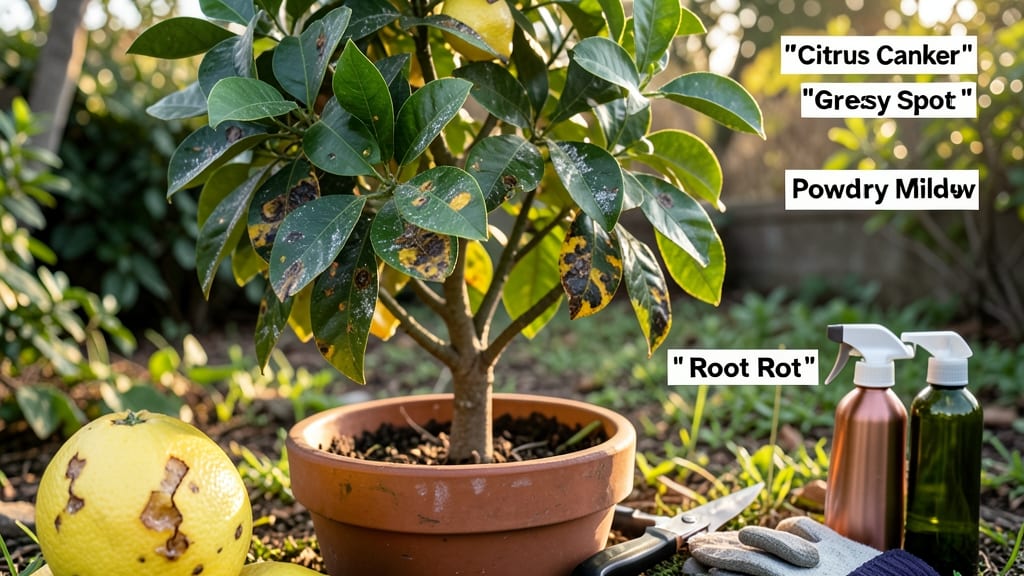
Your lemon tree disease treatment doesn’t have to rely on harsh fungicides—simple, non-toxic fixes can save your plant and restore its health. 🌿 I’ve nursed back three sick lemon trees using targeted methods that stop the spread and revive growth without chemicals.
The key? Acting fast, identifying the exact problem, and applying gentle solutions before the disease takes over.
Most issues start with overwatering or poor drainage, creating the perfect conditions for root rot or fungal infections. Citrus canker shows up as crusted spots on leaves, while yellowing often signals nutrient deficiencies or pests hiding in the soil.
The good news? Every problem has a specific, organic solution—no need for store-bought sprays that harm your tree long-term.
Within 2-4 weeks of proper care, you’ll see fresh green leaves pushing out and roots firming up again. Prune affected branches, adjust your watering routine, and apply organic treatments like neem oil or diluted copper sprays to halt the spread.
The results are nothing short of shocking—healthy growth where there was once despair.
Works for container-grown trees, in-ground citrus, or even stubborn dwarf varieties. Whether you’re dealing with a young sapling or a mature tree, these methods scale easily. Let’s get your lemon tree back to thriving—without the chemical guesswork.
Root Causes of Lemon Tree Ailments
Lemon trees are resilient, but when they succumb to diseases like yellowing leaves or root rot, it’s usually because their environment or care routine has gone off-balance. Understanding the why behind these issues is the first step to restoring your tree’s health—without relying on harsh fungicides.
Below, we break down the most common triggers, explained in simple, actionable terms.
🍋 Why it happens: Fungi thrive in moist, poorly aerated soil, especially when roots are waterlogged. Lemon trees (native to Mediterranean climates) despise soggy conditions, which create the perfect breeding ground for pathogens like Phytophthora (root rot) or Alternaria (leaf spot).
- Overwatering 💦 – Roots deprived of oxygen suffocate, inviting fungal invaders.
Even "well-draining" soil can compact over time, trapping excess moisture. - Poor drainage 🚫💧 – Containers without drainage holes or clay-heavy soil act like sponges, holding water against the roots. - Fungal spores in soil 🌱 – Reusing infected potting mix or planting in garden beds with old citrus debris spreads dormant pathogens.
Actionable fix: Amend soil with perlite, sand, or coconut coir to improve aeration, and water only when the top 2–3 inches of soil are dry.
🍃 Why it happens: Yellowing leaves (chlorosis) often signal a deficiency in key nutrients, particularly iron, nitrogen, or magnesium. Lemon trees need a precise balance—too much of one thing (like synthetic fertilizers) can block others, while poor soil health starves roots.
- Alkaline soil (pH > 7.0) 🧪 – Binds iron and manganese, making them unavailable.
Common in areas with limestone or hard water. - Over-fertilizing with nitrogen 💥 – While nitrogen greens leaves, it can burn roots and wash away micronutrients like zinc or copper. - Lack of organic matter 🌿 – Synthetic fertilizers alone don’t replace the slow-release nutrients in compost or worm castings.
Actionable fix: Test soil pH (aim for 6.0–7.0) and use chelated iron or Epsom salt (magnesium sulfate) for quick fixes. Top-dress with well-rotted compost annually.
🐜 Why it happens: Insects like aphids, scale, or spider mites don’t just feed on sap—they inject toxins and create wounds that open doors for secondary infections. A tree already stressed by pests is far more susceptible to fungal or bacterial diseases.
- Sap-sucking insects 🦟 – Aphids and scale leave sticky honeydew, which fosters sooty mold (a black fungal growth).
- Root-feeding grubs 🪰 – Whiteflies or nematodes damage roots, reducing the tree’s ability to absorb water and nutrients.
- Physical damage ⚔️ – Pruning cuts or hail wounds create entry points for pathogens.
Actionable fix: Inspect leaves weekly for pests. Blast off aphids with water spray, apply neem oil (a natural fungicide/pesticide), or introduce beneficial insects like ladybugs.
🌡️ Why it happens: Lemon trees are sun-loving and drought-tolerant—but extreme conditions (too much shade, temperature swings, or salinity) weaken their defenses.
- Sudden temperature drops ❄️ – Cold nights (below 30°F) shock the tree, making it vulnerable to fungal infections like canker.
- Salt buildup 🧂 – Over-fertilizing with synthetic salts or using brackish water (high in sodium) damages roots and disrupts nutrient uptake.
- Poor air circulation 🌬️ – Dense foliage or crowded plantings trap humidity, promoting fungal spores.
Actionable fix: Acclimate trees gradually to cold, flush soil with rainwater to reduce salt, and prune for airflow (remove crossing branches).
🦠 Why it happens: Diseases like citrus canker or tristeza virus spread via infected pruners, contaminated soil, or grafted nursery stock. Even a single infected leaf can contaminate an entire grove.
- Reusing tools ⚔️ – Pruners or knives carrying bacterial/fungal spores from one tree to another.
- Infected nursery plants 🌱 – Some citrus trees sold at garden centers are asymptomatic carriers of viruses.
- Wind or water splash 💨 – Rain can spread spores from diseased leaves to healthy ones.
Actionable fix: Sterilize tools with 70% isopropyl alcohol between cuts, and quarantine new plants for 30 days before introducing them to your grove.
Pro Tip: 💡 The best defense is offense! Healthy soil, proper spacing, and regular inspections (before symptoms appear) can prevent 90% of lemon tree diseases.
When you spot trouble early, fungicide-free fixes (like copper sprays or hydrogen peroxide soil drenches) work far better than waiting for rot to set in.
How to Fix Lemon Tree Diseases
When your lemon tree shows signs of distress—whether it’s yellowing leaves, blackened stems, or mushy roots—acting fast is key. The good news? Many common lemon tree diseases can be treated (or even prevented) without harsh chemicals.
Below, we’ve mapped out practical, step-by-step fixes for the most frequent issues, along with tips to keep your tree thriving long-term.
🔥 Treat Powdery Mildew (White Dusty Coating)
If your lemon tree leaves look like they’ve been dusted with flour, powdery mildew is likely the culprit. This fungus thrives in humid, shaded conditions and can weaken your tree if left unchecked.
How to Fix It:
- 🍳 Prune for airflow – Trim back dense or overgrown branches to improve circulation. Aim for open, airy growth—this reduces humidity trapped on leaves.
- 👨🍳 Spray with a baking soda solution – Mix 1 tsp baking soda + 1 tsp vegetable oil + 1 tsp dish soap per quart of water. Spray both sides of leaves in the early morning or evening (avoid direct sunlight). Repeat every 7–10 days until the fungus clears.
- 🌿 Apply neem oil – Combine 1 tbsp neem oil + 1 tsp mild soap per gallon of water. Spray thoroughly, focusing on undersides of leaves. Reapply every 2 weeks as a preventative measure.
- ⏰ Water at the base only – Avoid overhead watering, which spreads spores. Use a drip irrigation system or water at the soil line.
💡 Prevention Tip: Space trees 6–8 feet apart and avoid planting in low-lying areas where moisture lingers.
🍳 Fix Root Rot (Mushy, Smelly Roots)
Root rot is a silent killer—often caused by overwatering or poor drainage. If your tree’s leaves yellow, wilt, or the soil smells sour, it’s time to act.
How to Fix It:
- 🔪 Stop watering immediately – Let the soil dry out completely. Check moisture by sticking your finger 2–3 inches deep—if it’s damp, wait another day.
- 🌡️ Improve drainage – If your tree is in a pot, add a layer of perlite or coarse sand to the bottom before repotting. For in-ground trees, consider raising the soil level or installing a French drain.
- 🎯 Trim affected roots (if severe) – Carefully remove the tree from the soil (or dig around it) and prune black, mushy roots with sterilized shears. Replant in fresh, well-draining soil mixed with compost or coconut coir.
- ✨ Use hydrogen peroxide (3%) – Soak roots in a 1:10 hydrogen peroxide to water mix for 10 minutes before replanting to kill fungal spores.
💡 Prevention Tip: Use pots with drainage holes and avoid saucers that trap water. For in-ground trees, plant in sandy loam soil and mulch 2–3 inches away from the trunk.
🔪 Treat Citrus Canker (Oozing Sores)
Citrus canker creates crusty, water-soaked lesions on leaves and stems. It spreads quickly in wet conditions, so early action is critical.
How to Fix It:
- 🍳 Prune infected areas – Cut out all infected leaves and stems (including 1–2 inches below the lesion) using sterilized pruners. Do not compost—bag and discard.
- 👨🍳 Apply copper fungicide (organic option) – Use a copper soap spray (like Bordeaux mixture) or a 1% copper hydroxide solution. Spray every 7–10 days until new growth is healthy.
- 🌿 Quarantine the tree – Keep it separate from other citrus plants for at least 3 months to prevent spread.
💡 Prevention Tip: Disinfect tools with rubbing alcohol between cuts. Avoid overhead irrigation—use drip systems instead.
🌡️ Manage Citrus Greening (Yellowing, Lopsided Fruit)
This bacterial disease (HLB) has no cure, but you can slow its spread and support your tree’s health.
How to Fix It:
- 🍎 Remove and destroy infected leaves/fruit – Burn or bag any yellowing leaves or misshapen fruit immediately.
- 💪 Boost tree health – Fertilize with low-nitrogen, high-potassium fertilizer (like a 5-5-10 blend) to strengthen defenses.
- 🎯 Control psyllids – These insects spread HLB. Use yellow sticky traps or spray with soapy water (1 tbsp mild soap per gallon) every 5–7 days.
💡 Prevention Tip: Inspect new plants before bringing them home—buy from certified disease-free nurseries.
Once your lemon tree is back on track, keep it healthy with these proactive steps:
- ✅ Water deeply but infrequently – Aim for 1–2 inches per week (adjust for climate). Never let soil stay soggy.
- ✅ Fertilize seasonally – Use a balanced citrus fertilizer (like 6-6-6) in spring and early summer. Avoid over-fertilizing.
- ✅ Mulch properly – Apply 2–3 inches of organic mulch (like straw or wood chips) away from the trunk to retain moisture without suffocating roots.
- ✅ Monitor pests – Check leaves weekly for aphids, scale, or spider mites. Blast off pests with water or use insecticidal soap.
With the right care, your lemon tree can bounce back—and stay disease-free. 🌿🍋
Frequently asked questions
What’s the first sign my lemon tree has root rot?
Watch for yellowing leaves that start at the bottom, combined with a sour, musty smell from the soil. If the tree feels light when you tug gently (roots should be firm), or you see black, mushy roots when you check, it’s likely root rot. Act fast by stopping water and improving drainage.
Can I use household items to treat citrus canker?
Yes! A baking soda spray (1 tsp baking soda + 1 tsp oil + 1 tsp soap per quart of water) helps prevent spread. For existing canker, sterilized pruning and copper fungicide (like Bordeaux mixture) are most effective. Always quarantine infected trees to stop the disease from jumping to healthy plants.
How often should I spray neem oil on my lemon tree?
Apply neem oil every 2 weeks during active growing seasons (spring and summer) as a preventative. For existing fungal issues like powdery mildew, spray weekly until symptoms clear, then switch to monthly maintenance. Always spray in the evening to avoid leaf burn from sunlight.
Will my lemon tree recover from citrus greening disease?
There’s no cure for citrus greening (HLB), but you can slow its progress by removing infected leaves immediately and controlling psyllid pests with soapy water sprays. Focus on keeping the tree healthy with balanced fertilization and proper watering—stronger trees handle the disease better.
How do I know if my lemon tree’s yellow leaves are from disease or nutrient deficiency?
Check the pattern: Yellowing between veins (chlorosis) usually means iron or magnesium deficiency, while yellowing with black spots signals fungal disease. Test your soil pH—if it’s above 7.0, nutrients like iron become unavailable. Use chelated iron or Epsom salt for deficiencies.