
Size
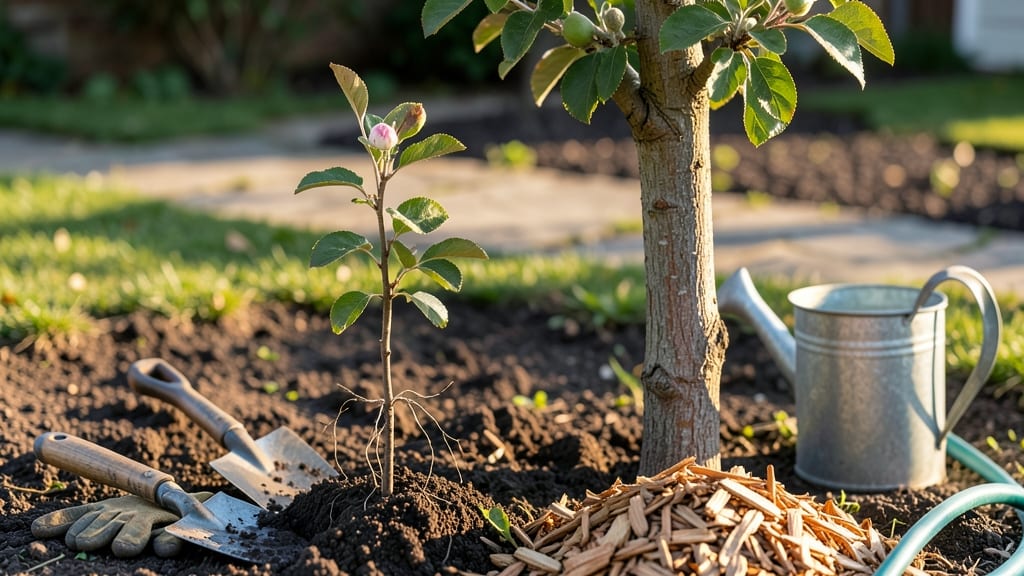
If you plant an apple seed, a tree will grow, but it won’t produce fruit matching the parent variety—expect tiny, tart apples or no fruit at all. For reliable, flavorful fruit, grafting or buying nursery trees is the way to go.
Apple seeds contain the genetic blueprint for a tree, but nature throws a curveball: the resulting fruit won’t resemble the parent apple. 🌱 This happens because apple trees are highly heterozygous—meaning their seeds carry a mix of traits from both parents, leading to unpredictable outcomes.
Even if you grow a tree, it may take 5–10 years to bloom, and the fruit could be bitter or inedible. That’s why serious growers rely on grafting—it guarantees the exact variety you want, with consistent quality and disease resistance.
For the adventurous gardener, planting seeds is a fun experiment, but don’t expect orchard-worthy results. The tree itself might thrive, but the payoff in fruit is a gamble. If you’re dreaming of sweet, juicy apples, skip the seeds and invest in a grafted tree instead.
💡 In This Article
- Why Apple Seeds Rarely Yield Fruitful Trees
- How to Grow an Apple Tree from Seed (With Caveats)
Why apple seeds rarely yield fruitful trees
Apple trees are highly heterozygous, meaning each seed carries a unique mix of genetic traits from both parent trees.
When you plant a seed from a store-bought apple, the resulting tree might grow, but its fruit could be tiny, tart, or even inedible—think of the 1-inch apples you’ve seen in nature rather than the 3-inch supermarket varieties.
This unpredictability stems from how apple trees reproduce: their seeds combine traits from two different parent trees, creating a genetic lottery. 🌱
The science behind this involves polyembryony, a rare trait where multiple embryos develop in a single seed. Even then, only about 1 in 10,000 seed-grown apple trees will produce fruit resembling the parent.
Most will yield small, bitter apples or no fruit at all due to poor pollination or weak fruit development. For comparison, grafted trees (where a scion from a known variety is attached to a rootstock) guarantee the exact traits of the parent plant, including disease resistance and flavor.
Seed dormancy also plays a role in why seed-grown trees struggle. Apple seeds require stratification—a cold period of 60–90 days at 34–41°F—to break dormancy and germinate. Without this step, seeds may rot or fail to sprout entirely.
Even if they do grow, the resulting tree’s root system might not be robust enough to support heavy fruit production, leading to weak growth or early decline. 🍎
Environmental factors further complicate fruit production. Seed-grown trees often bloom later (5–10 years vs. 3–5 years for grafted trees) and may not align with local pollinators, reducing fruit set.
For example, a tree grown from a Honeycrisp seed might produce apples that lack the parent’s signature sweetness and crisp texture, instead yielding something closer to a wild crabapple—small, hard, and tart.
Disease resistance is another critical factor. Commercial apple varieties are bred for traits like fire blight resistance or scab tolerance, which seed-grown trees won’t inherit. Without these protections, your homegrown tree could succumb to common orchard diseases, leaving you with a beautiful but fruitless specimen. 🚫
Consider this: if you planted a seed from a Granny Smith apple, the resulting tree might produce fruit that’s green but sour, lacks the parent’s tangy flavor, and is barely 1 inch in diameter. That’s why grafting—a technique used by commercial orchards—is the gold standard for reliable fruit production.