
Propagation
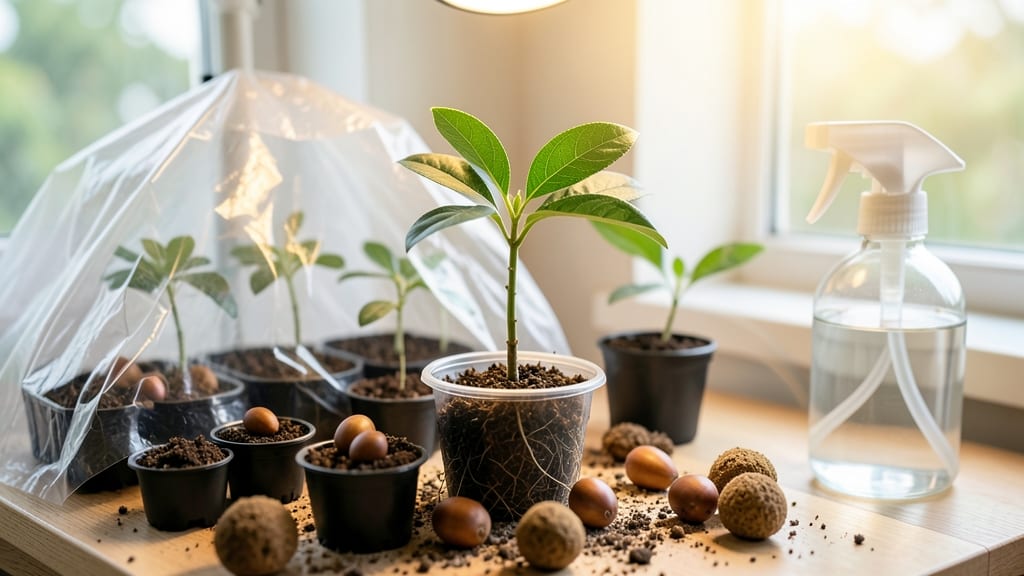
Starting a persimmon tree from seed means waiting for that first pink bloom—years down the road, but the journey begins with a single seed. 🌱 The process is simple but slow: scarify the seed, plant it shallow, and wait for nature to do its magic.
Most gardeners rush this, but persimmons reward patience with hardy trees that outlast store-bought grafts.
Here's the trick: soak the seed in warm water for 24 hours, then nick the shell with a knife to break dormancy. Plant it 1/4-inch deep in well-draining soil and keep it moist but not soggy.
Germination takes 3-6 weeks, and the seedling grows slowly at first—don’t expect fast results. The real payoff comes when the tree matures, often taking 5-10 years before fruiting.
What you'll end up with is a disease-resistant tree that thrives in full sun and handles drought once established. The flowers? Stunning pink clusters that hummingbirds adore. Just remember: seed-grown trees may not fruit true to the parent, but the adventure of growing one from scratch is unmatched.
The hard part is waiting—but oh, how sweet it is when those first blooms appear.
This method works best in USDA zones 7-10, where persimmons love the heat. For faster fruiting, consider grafting later, but the seed-started tree will have a stronger root system. Here’s where the real magic begins—let’s get those seeds planted!
Germination Struggles Explained
Understanding why persimmon seeds resist sprouting is half the battle in growing your own tree. These seeds come with built-in challenges—some biological, some environmental—that can leave even patient gardeners scratching their heads.
Below, we break down the real culprits behind slow or failed germination, so you can troubleshoot like a pro.
Persimmon seeds are naturally dormant, meaning they won’t sprout immediately even when moist and warm. This survival tactic ensures seeds only germinate under ideal conditions—like spring, when the soil is warm and moisture is reliable.
- Why it happens: Seeds produce abscisic acid, a hormone that blocks germination until environmental cues (like cold stratification or warm soil) trigger growth hormones like gibberellins. - Actionable fix: Mimic nature! Cold-stratify seeds for 6–8 weeks in a damp paper towel in the fridge (35–40°F) before planting.
Some gardeners also scarify (nick) the seed coat to encourage water uptake.
Seeds need three things to wake up: water, oxygen, and warmth. If any of these are missing, germination stalls—or never starts.
- Why it happens: - Too wet: Compacted or waterlogged soil suffocates seeds by cutting off oxygen. - Too dry: Seeds shrivel without consistent moisture. - Wrong temperature: Persimmon seeds prefer 70–85°F for germination.
Cooler soil slows metabolic activity. - Actionable fix: - Plant seeds in well-draining, sandy loam mixed with perlite. - Keep soil moist (not soggy) with a spray bottle or drip irrigation. - Use a seedling heat mat (75–80°F) if your climate is cool.
Fungal pathogens like Pythium or Rhizoctonia thrive in damp, warm conditions—exactly where you’re trying to germinate persimmon seeds. These fungi consume seed reserves or block root development before sprouts even appear.
- Why it happens:
- Overwatering creates fungal hotspots.
- Old or moldy seeds are more vulnerable.
- Poor air circulation in containers traps spores.
- Actionable fix:
- Sterilize soil by baking it at 180°F for 30 minutes or using a fungicide like hydrogen peroxide (3%) as a seed soak (30 minutes).
- Space seeds 1 inch apart in pots to improve airflow.
- Use fungicide-treated seed trays or repurpose sterilized peat pots.
Not every persimmon seed is a germination powerhouse. Some varieties (like American persimmons) are more stubborn than others, while hybrids may have weaker viability.
- Why it happens:
- Old seeds (over 1 year) lose viability.
- Underripe fruit produces seeds that never fully mature.
- Cross-pollinated hybrids may have inconsistent germination rates.
- Actionable fix:
- Test seed viability by floating them in water—sinkers are more likely to sprout.
- Harvest seeds from fully ripe, healthy fruit (soft but not mushy).
- Plant multiple seeds (5–10) to increase odds of success.
Persimmon seeds are temperature-sensitive. If soil temps fluctuate wildly (e.g., cold nights + hot days), seeds enter a metabolic limbo, neither growing nor decaying.
- Why it happens:
- Daytime heat (above 90°F) can cook seeds.
- Nighttime chills (below 50°F) stall growth.
- Uneven heating in containers (e.g., one side warmer than the other) causes uneven sprouting.
- Actionable fix:
- Use a seedling heat mat for consistent warmth.
- Move trays to a shaded, sheltered spot if outdoor temps exceed 85°F.
- Monitor with a soil thermometer—aim for 70–80°F at seed depth.
Persimmon seeds have a hard, woody coat that resists water absorption. Without help, seeds stay dormant even in perfect conditions.
- Why it happens:
- The testa (outer seed layer) is impermeable to water.
- Imbibition (water uptake) is blocked until the coat softens.
- Actionable fix:
- Scarify seeds by lightly sanding or nicking with a knife.
- Soak in warm water for 24–48 hours before planting.
- Use a gibberellic acid soak (0.1% solution) to break dormancy chemically.
💡 Pro Tip: If seeds still refuse to sprout after 4–6 weeks, they may be non-viable. Don’t waste time—start fresh with new seeds! Persimmon trees are worth the wait, but patience has its limits. 🌱✨
How to solve it
Growing a persimmon tree from seed can feel like a delicate dance with nature—especially when unexpected hurdles pop up. But don’t worry! Most issues have simple, practical fixes. Below, we’ll tackle the most common problems and show you how to turn them around with confidence.
If your persimmon seeds are taking their sweet time (or worse, not sprouting at all), the culprit is usually moisture, temperature, or dormancy. Here’s how to jumpstart growth:
🔥 Fix: Stratification for Stubborn Seeds
Persimmon seeds often need a cold treatment to break dormancy. Try this:
- Soak seeds in warm water for 24 hours to soften the outer shell.
- Mix with damp peat moss or sand in a sealed bag.
- Refrigerate for 4–6 weeks (or mimic winter by burying them outdoors in a protected spot).
- Plant after stratification—they should sprout within 2–4 weeks.
✨ Pro Tip: If seeds are still slow, gently nick the shell with a knife to help water penetrate.
💡 Prevention:
- Test seed viability by floating them in water—sinkers are good, floaters are likely dead.
- Keep soil consistently moist (not soggy) during germination.
If your young persimmon seedling stretches tall and wobbly, it’s starved for sunlight. Weak stems and sparse leaves are red flags.
🔥 Fix: Optimize Light Exposure
- Move to a sunnier spot—persimmons need 6+ hours of direct light daily.
- Use a grow light (12–14 hours/day) if natural light is lacking.
- Rotate the pot weekly so the seedling grows straight (not lopsided).
🌡️ Pro Tip: If leaves turn yellow or drop, it’s a sign of light deprivation—act fast!
💡 Prevention:
- Start seeds in a bright windowsill (south-facing is ideal).
- Avoid overcrowding—thin seedlings if they compete for light.
Yellowing leaves or crispy edges often mean root stress—whether from overwatering, underwatering, or poor drainage.
🔥 Fix: Diagnose the Root Issue
| Symptom | Cause | Solution |
|---|---|---|
| Yellow leaves | Overwatering | Let soil dry slightly between waterings; improve drainage with perlite. |
| Brown, crispy edges | Underwatering | Water deeply when the top inch of soil is dry. |
| Mushy stems | Fungal rot (too wet) | Repot in fresh, dry soil; trim affected roots. |
🔪 Pro Tip: If roots smell sour or look mushy, prune the bad parts with sterilized scissors and repot in a well-draining mix.
💡 Prevention:
- Use a pot with drainage holes—persimmons hate soggy feet!
- Water at the base (not overhead) to prevent fungal diseases.
Aphids, spider mites, or scale insects can suck the life out of young persimmons. Early intervention is key!
🔥 Fix: Natural Pest Control
- Blast them off with a strong spray of water (disrupts their life cycle).
- Neem oil spray (mix 1 tsp neem oil + 1 tsp mild soap + 1 quart water)—apply every 5–7 days.
- Introduce beneficial insects like ladybugs or lacewings (they eat pests!).
✨ Pro Tip: Check the undersides of leaves—that’s where pests love to hide!
💡 Prevention:
- Keep plants healthy (strong plants resist pests better).
- Inspect new plants before bringing them indoors.
If your seedling wilts after repotting, it’s likely stressed by root disturbance. Don’t panic—here’s how to revive it:
🔥 Fix: Gentle Recovery Care
- Water lightly (don’t drown it) and place in bright, indirect light for a week.
- Avoid fertilizing for 2–3 weeks—let roots adjust first.
- Mist leaves daily to boost humidity while it recovers.
🎯 Pro Tip: If leaves droop but don’t crisp, spritz with a foliar fertilizer (like seaweed extract) to speed up recovery.
💡 Prevention:
- Hardening off seedlings before transplanting (acclimate to outdoor conditions gradually).
- Use a larger pot if roots are circling (bigger = less stress).
Most persimmon growing challenges are fixable with patience and the right tweaks. Whether it’s dormancy, light hunger, or pests, your seedling can bounce back—as long as you act early.
Keep experimenting, and soon you’ll be rewarded with vibrant new growth (and maybe even those dreamy pink blooms!).
💡 Remember: Persimmons are tough once established—your efforts now will pay off in years of fruit and shade!
Frequently asked questions
How long does it take for a persimmon seed to sprout?
Germination usually takes 3-6 weeks with proper care, but some seeds may take up to 12 weeks. The key is maintaining consistent moisture and warmth (70-85°F) during this time. If you've stratified your seeds (cold treatment), sprouting should happen within 2-4 weeks after planting.
Can I grow a persimmon tree from any store-bought fruit?
Yes, but the tree may not produce fruit identical to the parent plant. Store-bought persimmons are often hybrids, so your seedling could develop different fruit characteristics. For guaranteed fruit quality, save seeds from homegrown or locally sourced persimmons, especially from American persimmon varieties.
When should I transplant my persimmon seedling outdoors?
Wait until your seedling has 3-4 true leaves and all danger of frost has passed in your area (typically after last frost, when soil temps stay above 55°F at night). Harden off seedlings by gradually exposing them to outdoor conditions over 1-2 weeks before permanent transplanting.
Will my seed-grown persimmon tree produce fruit?
Yes, but it may take 5-10 years before fruiting. Seed-grown trees are more disease-resistant and hardy, though fruit quality varies. For faster fruiting (3-5 years), consider grafting a known variety onto your seedling when it reaches 1-2 inches in diameter. The roots will stay strong while the grafted top produces better fruit.
What's the best soil mix for persimmon seedlings?
Use a well-draining mix of 50% potting soil, 30% perlite, and 20% compost. Persimmons hate soggy roots, so avoid heavy clay soils. For containers, ensure pots have drainage holes and use a slightly sandy mix to prevent compaction. The ideal pH range is 6.0-7.0.