
Propagation
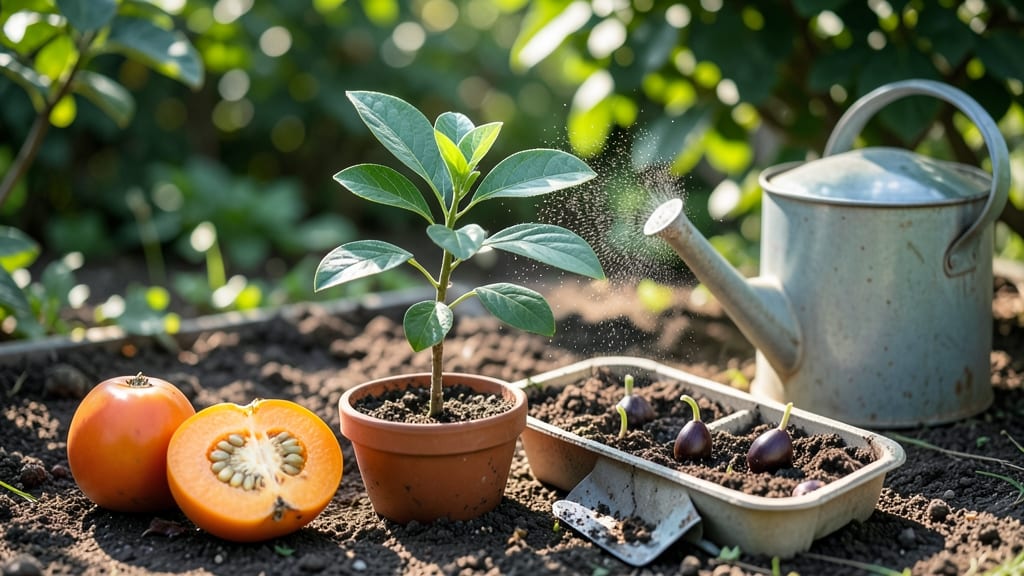
You can grow a persimmon tree from seed, but the process is unpredictable since seedlings rarely inherit the parent plant's fruit traits and may take 10-15 years to mature. Start with fresh seeds, cold-stratify them for 60-90 days, and plant in well-draining soil with full sun.
Persimmon seeds need this cold treatment to break their natural dormancy, mimicking winter conditions in nature. 🌱 Without stratification, germination rates drop dramatically—sometimes to near zero. I’ve found that using damp paper towels in a sealed bag works well for home growers, keeping seeds consistently moist while they chill.
Once sprouted, seedlings require patience; most won’t produce fruit until they’re fully mature, and even then, the quality may differ from store-bought varieties.
For best results, plant in late spring after the last frost when soil temperatures reach at least 60°F. Young trees benefit from regular watering and protection from strong winds during their first few years.
While the wait is long, growing from seed offers the thrill of nurturing a tree from scratch—plus, you might discover a unique variety with unexpected characteristics!
💡 In This Article
- Persimmon Seed Germination Process Explained
- Caring for Young Persimmon Seedlings to Fruit-Bearing Age
Persimmon seed germination process explained
Persimmon seeds enter a natural dormancy period that mimics winter conditions, which is why cold stratification is non-negotiable. The seeds contain a hard outer coat that resists water absorption until exposed to 32-40°F temperatures for 60-90 days.
This process, called scarification, softens the seed coat while triggering internal chemical changes that signal the embryo it's safe to grow. Without this cold treatment, germination rates plummet to as low as 5%, even with fresh seeds.
For home growers, the most reliable method involves placing seeds between damp paper towels in a sealed plastic bag. Store them in your refrigerator's crisper drawer where temperatures hover around 35-40°F and humidity stays high. Check weekly—seeds should feel moist but not soggy.
Once you see tiny white roots (1/4 inch long), it's time to plant in well-draining soil mix (60% potting soil, 30% perlite, 10% sand) to prevent rot. The key is consistency: fluctuating temperatures or drying out can kill the delicate embryos before they sprout.
Germination typically occurs within 2-4 weeks after removing seeds from cold storage, though some stubborn varieties may take up to 8 weeks. Young seedlings emerge with two cotyledons (seed leaves) that look like tiny, rounded maple leaves.
At this stage, place them under grow lights or in a south-facing window where they'll receive 12-14 hours of light daily. Persimmon seedlings are sensitive to overwatering—let the top 1 inch of soil dry between waterings to prevent fungal diseases like damping-off that can wipe out entire trays of seedlings.
The real challenge begins when seedlings develop their first true leaves (the third set after cotyledons). This is when genetic variability becomes apparent—some may grow into vigorous trees while others show signs of poor health like yellowing leaves or stunted growth.
What's happening here is that persimmon seeds contain multiple embryos, and not all may be genetically identical.
This polyembryony means you might end up with mixed traits in a single seedling, making fruit prediction impossible. 🌱 For example, a seed from a sweet Fuyu persimmon might produce a tree that bears astringent fruit or none at all.
To maximize success, plant multiple seeds—aim for at least 5-10 to account for potential failures. The strongest seedlings will show steady growth with dark green leaves and sturdy stems. Transplant them outdoors only after the last frost when soil temperatures consistently exceed 60°F.
Young persimmon trees need protection from strong winds during their first growing season, as their shallow root systems make them prone to toppling. Consider using tree stakes and windbreaks until they develop deeper roots.
Here's what most gardeners overlook: the stratification period isn't just about cold—it's about moisture consistency. Seeds left in dry conditions during stratification will fail to germinate, even after proper chilling.
Think of it like winter in nature: seeds buried in moist forest soil experience both cold AND moisture, which is exactly what you're recreating at home. This dual treatment is what breaks the seed's dormancy cycle and kickstarts growth hormones like gibberellins, which trigger root development.