
Propagation
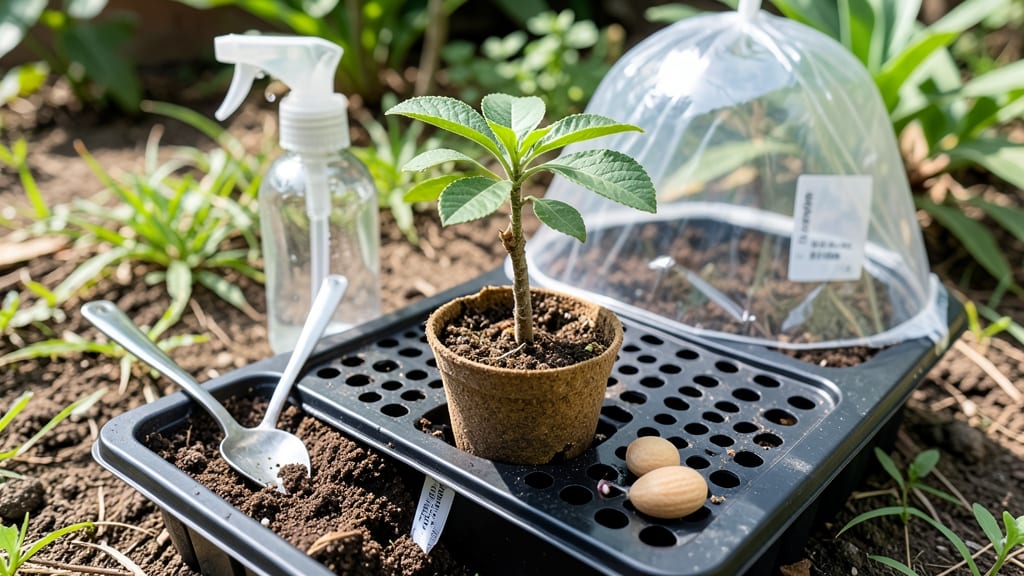
Planting guava trees from seeds gives you a head start on tropical fruit—if you know the tricks. 🌱 The secret to fast sprouts lies in seed selection, moisture control, and a little patience, because these trees take years to bear fruit but start with a surprisingly simple process.
Start with fresh, plump seeds from ripe guava fruit—older seeds lose their vigor. Soak them overnight to soften the hard outer shell, then plant them just ½ inch deep in warm, well-draining soil.
A clear plastic bag over the pot traps humidity and speeds germination, which usually happens within 2-4 weeks if conditions are right. Once your seedlings appear, thin them to the strongest one per pot and move them to brighter light.
The first true leaves signal it’s time to transplant into individual containers—guava roots are sensitive, so handle them gently. By month 3, you’ll have a sturdy young tree ready for its permanent home.
This method works best in warm climates (zones 9-11), but with indoor grow lights, you can try it almost anywhere. The payoff? A tree that could live for decades and eventually reward you with fragrant, sweet fruit. Worth the wait!
📚 In This Guide
- What you need
- Instructions
- Tips and common mistakes
- Wrapping up and next steps
What you need
- ● Fresh guava seeds: 3–5 viable seeds (harvested from ripe, organic guavas—avoid store-bought seeds treated with chemicals).
- ● Small pots or seed trays: 3–4 biodegradable or plastic pots (3–4 inches in diameter) or a seed tray with drainage holes.
- ○ Well-draining potting mix: 1–2 bags of seed-starting mix (lightweight, sterile, and free of weeds/fertilizers). Optional: Mix in perlite or vermiculite (20% by volume) for aeration.
- ● Watering can or spray bottle: With a fine mist nozzle for gentle hydration.
- ● Plastic wrap or humidity dome: To create a mini greenhouse effect (e.g., clear plastic wrap or a propagator lid).
- ● Grow lights or sunny windowsill: A south-facing window (6+ hours of sunlight daily) or a LED grow light (12–16 hours/day, 12–18 inches above seedlings).
- ● Labels and markers: To track seed varieties and planting dates.
- ● Fertilizer: A balanced, water-soluble fertilizer (5-5-5 or 10-10-10 NPK) diluted to half-strength for seedlings.
- ● Heating mat: A seedling heat mat (70–75°F) to speed up germination in cooler climates.
- ● Fungicide: A natural fungicide (e.g., neem oil or cinnamon powder) to prevent damping-off disease.
- ● Larger nursery pots: 5–7 inch pots for transplanting once seedlings are 3–4 inches tall.
- ● Soil moisture meter: To monitor moisture levels without overwatering.
Step-by-step instructions for growing guava trees from seeds
Here’s how to get your guava seeds sprouting quickly—no waiting months for germination.
🌱 Step 1: Extract and Prepare the Seeds
Start by removing the seeds from a ripe guava fruit. Cut the fruit open and scoop out the seeds, making sure to rinse them gently under cool water to remove any fruit pulp. The seeds need to be clean but not dried out—this is key for fast germination.
Lay the seeds on a paper towel and let them air-dry for about 24 hours at room temperature. This step prevents mold and ensures the seeds are ready for planting. Once dry, you’ll notice the outer coating is slightly firmer—this is your cue they’re ready for the next step.
💧 Step 2: Soak Seeds to Speed Up Germination
Fill a small bowl with lukewarm water and add the seeds. Let them soak for 12-24 hours. This softens the outer seed coat, which helps the seedling break through faster. You’ll know they’re ready when the outer shell looks slightly wrinkled and the seed feels plump to the touch.
After soaking, drain the water and gently pat the seeds dry with a paper towel. This prevents them from sitting in moisture, which can cause rot. Now, they’re primed and ready for planting—you’ll see sprouts within 5-10 days if everything goes right.
☀️ Step 3: Plant Seeds in Moist, Well-Draining Soil
Fill a small pot or seed tray with a mix of equal parts potting soil and perlite (or coarse sand) to ensure good drainage. Guava seeds hate soggy soil, so this blend keeps roots healthy. Moisten the mix until it’s damp but not dripping—think of a wrung-out sponge.
Plant the soaked seeds about ½ inch deep in the soil, spacing them 1-2 inches apart. Press lightly around each seed to secure it, but don’t pack the soil too tightly. Place the pot in a warm spot with indirect light—a bright windowsill or under a grow light works well. Keep the soil consistently moist but never waterlogged.
🌿 Step 4: Provide Warmth and Monitor for Sprouts
Guava seeds germinate fastest in warmth (75-85°F). If your home runs cooler, place the pot on a seedling heat mat or near a sunny window. You’ll see the first sprouts poking through the soil in 5-10 days—watch for tiny green shoots breaking the surface.
Once sprouts appear, move the pot to a bright, sunny location (like a south-facing window) to prevent leggy growth. If seedlings stretch too tall or look pale, they need more light. Thin out weaker sprouts, leaving only the strongest 2-3 seedlings per pot to give them room to grow.
⏰ Step 5: Transplant Seedlings When Ready
After 4-6 weeks, when seedlings have 3-4 true leaves and are about 4-6 inches tall, they’re ready for their own pots. Choose 6-inch diameter containers with drainage holes and fill them with fresh potting mix. Dig a hole deep enough to bury the seedling up to its first set of leaves.
Water gently after transplanting and place the new pots in a sunny, sheltered spot for a week to help them adjust. Once established, guava trees thrive in full sun (6+ hours daily) and well-draining soil. With patience, you’ll have a thriving guava tree in just a few months!
Tips & tricks for fast guava tree germination
Here's the secret to cutting your wait time in half—these small tweaks make all the difference when growing guava trees from seeds.
Soaking Secret: The 12-24 hour soak is your fastest path to sprouts, but here's what I learned: use a glass bowl instead of plastic to monitor the seeds more easily. You'll notice the outer shell wrinkling and the seed feeling plump—this is your perfect cue they're ready for planting. If you're impatient, you can soak for just 12 hours, but 24 hours gives the best results.
Temperature Matters: Guava seeds thrive in warmth (75-85°F), but most homes don't maintain this consistently. I keep my seed tray on top of my refrigerator during the day—it stays warm without overheating. If your home runs cooler, consider a seedling heat mat (they're cheap and make a huge difference!). The faster the soil stays warm, the quicker those sprouts will appear.
Lighting Strategy: The instructions mention indirect light, but here's what nobody tells you—guava seedlings need bright light from day one to prevent leggy growth. If you don't have a south-facing window, invest in a simple LED grow light. Place it just 4-6 inches above the seedlings for 12-14 hours daily. This prevents that weak, stretched look while still protecting tender sprouts from harsh direct sunlight.
Transplanting Timing: Those 4-6 weeks until transplanting can feel like forever, but there's a trick to speed things up. When your seedlings reach 3-4 true leaves, they're ready—but if you're in a hurry, you can transplant slightly earlier when they hit 2-3 leaves. Just be extra gentle with watering for the first week after transplanting to help them adjust faster.
Pro Tips for Plant Guava Tree From Seeds
- Here's the secret to cutting your wait time in half—these small tweaks make all the difference when growing guava trees from seeds.
- Soaking Secret: The 12-24 hour soak is your fastest path to sprouts, but here's what I learned: use a glass bowl instead of plastic to monitor the seeds more easily.
- Temperature Matters: Guava seeds thrive in warmth (75-85°F), but most homes don't maintain this consistently.
Frequently asked questions
Got questions about growing guava trees from seeds?
You’re not alone! Here are some of the most common queries—and their straightforward answers—to help you succeed.
How long does it take for guava seeds to sprout?
Guava seeds typically sprout within 10 to 30 days if kept in warm, moist conditions. Some may take up to 2 months, especially if the soil is too cold or dry. Pro tip: Use a seedling heat mat (70–85°F) to speed up germination!
Can I plant guava seeds directly in the ground?
While possible, it’s riskier to plant seeds directly outdoors because they’re vulnerable to pests, uneven soil, and slow growth. For best results, start them indoors in pots with well-draining soil, then transplant seedlings once they’re 6+ inches tall.
Will a guava tree grown from seed produce fruit?
Yes, but it may take 3–5 years (or longer!) for fruit to appear. Seed-grown trees aren’t always true to the parent variety—fruits might differ in size, taste, or quality. For consistent results, consider grafting or buying a grafted sapling.
Why aren’t my guava seeds sprouting?
Common culprits: dry soil, low temperatures (<60°F), or old/damaged seeds. Try soaking seeds in warm water for 24 hours before planting, or test a few in a damp paper towel to check viability. If no sprouts appear in 1–2 months, the seeds may not be viable.
What’s the best soil mix for guava seed germination?
Use a light, airy mix like 50% peat moss or coconut coir + 50% perlite or sand. Guava seeds hate soggy soil—ensure pots have drainage holes to prevent rot. A sterile mix reduces the risk of fungal issues.
Wrapping up and next steps
Growing a guava tree from seed is a rewarding journey that connects you to nature—and your future harvest! 🌱 With patience, the right conditions, and a little care, you’ll soon watch those first tender sprouts push through the soil.
Once your seedling is thriving, the next logical step is to transplant it into a larger pot or directly into the ground, ensuring it gets plenty of sunlight and well-draining soil. Happy growing—your guava tree awaits! 🍈