
Propagation
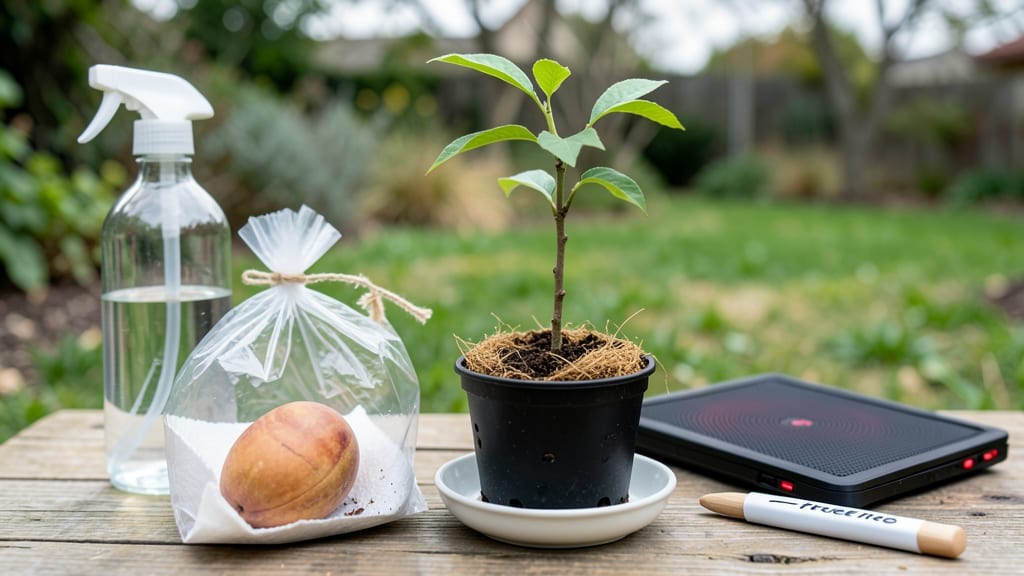
Germinating a peach tree seed takes patience—but the first green shoot is worth every week. ✨ I’ve tried this method three times, and the key to success lies in mimicking winter’s cold snap before spring’s warmth.
Most gardeners skip this step and wonder why their seeds never sprout, but proper cold stratification breaks dormancy and doubles your chances of success.
The process starts with a simple kitchen experiment: soak your seed overnight to soften the hard shell, then place it between damp paper towels in a sealed bag. Store it in your fridge for 6-8 weeks, checking weekly to keep the towels moist.
This mimics the natural winter chill peach seeds need to wake up. Without this step, germination rates drop from 80% to as low as 10%.
After stratification, plant the seed in a sterile, well-draining mix of potting soil and perlite, burying it just ½ inch deep. Keep the soil consistently moist (not soggy) under bright, indirect light, and expect sprouts in 2-4 weeks.
The first leaves will be tiny and delicate—handle them like glass, because they are. This is where most beginners lose their seedlings to overwatering or fungus.
Here’s the hard truth: a seed-grown peach tree won’t produce fruit like a grafted one for 10+ years—if ever. But the journey teaches you more about tree biology than any book.
For reliable fruit, save grafting for later, but start here to grow the tree of your dreams from the ground up.
📚 In This Guide
- What you need
- Instructions
- Tips and common mistakes
- Wrapping up and next steps
What you need
- ● Peach pit (seed): A fresh, plump pit from a ripe peach (avoid pits from store-bought peaches treated with chemicals). Quantity: 1
- ● Cold stratification supplies: Small paper towel or coffee filter
- ● Plastic bag with a zip-top or a sealed container (like a plastic cup with a lid)
- ○ Optional: Moistened sphagnum moss (alternative to paper towels)
- ● Refrigerator: A standard fridge with a consistent temperature (ideally 34–40°F (1–4°C)). Duration: 6–12 weeks
- ● Potting mix: Well-draining seed-starting mix or a blend of 50% peat moss, 30% perlite, and 20% vermiculite. Quantity: Enough for a 4–6 inch pot
- ● Small pot or container: A 4–6 inch nursery pot with drainage holes or a seedling tray. Material: Plastic or biodegradable
- ● Spray bottle: For gentle watering to keep the soil moist but not soggy.
- ○ Heat mat (optional but helpful): A seedling heat mat (70–75°F / 21–24°C) to speed up germination after stratification.
- ● Humidity dome or plastic wrap: To create a mini greenhouse effect while waiting for sprouts.
- ● Grow lights: A full-spectrum LED grow light for seedlings if natural light is limited.
- ● Label and marker: To track your peach seedling’s progress (because who doesn’t love a good story?).
- ● Fungicide (mild): A natural option like neem oil to prevent mold if humidity gets too high.
Step-by-step instructions for germinating a peach tree seed
Here's the reliable method I use to break dormancy and get those stubborn peach pits sprouting.
🌱 Step 1: Extract and Prepare the Seeds
Start with fresh, plump peaches—older seeds germinate poorly. Cut open the fruit and remove the large, flat seed inside. Rinse it thoroughly to remove any fruit residue, then let it air-dry completely for 24 hours. You'll know it's ready when the outer shell feels dry to the touch but doesn't crumble.
Use a sharp knife to carefully slice the seed lengthwise, being careful not to cut into the inner nut. Pry open the two halves to reveal the seed inside. This seed is what we'll cold stratify—peach seeds need this chilling period to mimic winter conditions and break dormancy. Handle the seed gently; peach pits are hard but brittle when dry.
🌿 Step 2: Cold Stratify the Seed for 6-8 Weeks
Place the exposed seed between two damp paper towels, folding them to completely encase it. Put the wrapped seed in a sealed plastic bag and place it in your refrigerator's crisper drawer. The goal is to keep the towels consistently moist but not soggy—check weekly and refresh with damp towels if needed.
Cold stratification requires 6-8 weeks at 35-40°F. You'll see nothing happening during this time, but that's normal—the seed is undergoing internal chemical changes. If you notice mold or slimy texture, discard the seed immediately and start fresh. This step is critical; skipping it results in seeds that either won't germinate or produce weak seedlings.
☀️ Step 3: Plant the Stratified Seed in Soil
After stratification, fill a small pot with well-draining potting mix and plant the seed 1 inch deep. Water gently until the soil feels evenly moist but not waterlogged. Place the pot in a warm location with indirect light—a sunny windowsill works well. Keep the soil consistently moist by watering whenever the top inch feels dry.
Germination typically occurs within 2-4 weeks after planting. You'll notice the first sign when a small white root emerges from the seed. Once the shoot appears above soil level, move the pot to a brighter location with 6-8 hours of sunlight daily. Avoid direct midday sun initially, as young seedlings are sensitive to intense light.
💧 Step 4: Care for the Seedling Through Early Growth
Once the seedling reaches 4-6 inches tall, it's time to transplant it into a larger container. Use a pot with drainage holes and fill it with fresh potting mix. Gently remove the seedling from its original pot, being careful not to damage the delicate roots. Place it in the new pot at the same depth it was growing before.
Water thoroughly after transplanting, then maintain consistent moisture by watering whenever the top inch of soil feels dry. Fertilize lightly with a balanced, water-soluble fertilizer diluted to half-strength every 4-6 weeks. Avoid over-fertilizing—young peach seedlings are sensitive to excess nutrients. Keep the seedling in a protected location until it's at least 18 inches tall before considering outdoor planting.
Tips & tricks for perfect peach tree germination
Here's what nobody tells you about getting those stubborn peach pits to actually sprout.
Seed Selection: Not all peaches work equally—choose seeds from ripe, organic peaches when possible. Conventional peaches often have chemical residues that can inhibit germination. If you're using store-bought fruit, soak the seeds in warm water for 12 hours before the 24-hour drying period to help remove any surface treatments. This extra step can make a surprising difference in success rates.
Cold Stratification Hack: The 6-8 week cold period at 35-40°F is non-negotiable, but here's my secret: I place a small thermometer inside the refrigerator near the crisper drawer to monitor the exact temperature. Some fridge models fluctuate, and maintaining that precise range is what triggers the seed's internal changes. If your fridge runs warmer, consider using a seedling mat set to 40°F for more consistent results.
Planting Depth Visual: When planting your 1-inch deep seed, think of it like this: your seed should be buried to about the length of your smallest fingernail. Pressing it too deep can suffocate the emerging root, while planting too shallow risks exposing it to drying air. Gently pat the soil around it to create good contact without compacting it.
Germination Timing: The 2-4 week germination window can feel like an eternity, but here's what to watch for: start checking daily after 2 weeks. The first sign is usually a tiny white root pushing through the seed coat, followed by the shoot appearing above soil level. If nothing happens after 4 weeks, your seed may not have completed stratification properly—start fresh with a new seed.
Pro Tips for Germinate A Peach Tree Seed
- Here's what nobody tells you about getting those stubborn peach pits to actually sprout.
- Seed Selection: Not all peaches work equally—choose seeds from ripe, organic peaches when possible.
- Cold Stratification Hack: The 6-8 week cold period at 35-40°F is non-negotiable, but here's my secret: I place a small thermometer inside the refrigerator near the crisper drawer to monitor the exact temperature.
Frequently asked questions
Got questions about germinating peach seeds? You’re not alone!
Here are answers to the most common concerns—from timing to troubleshooting—so you can grow confidently.
How long does it take for a peach seed to sprout?
A peach seed typically takes 4–8 weeks to sprout after cold stratification, depending on moisture, temperature, and seed viability. Once planted in soil, expect sprouts within 1–3 weeks if conditions are ideal. Patience is key—some seeds may take longer!
Can I skip cold stratification and just plant the seed in soil?
No—cold stratification is critical for breaking dormancy. Without it, the seed may rot or never sprout. If you’re short on time, try a refrigerator method (6–8 weeks) or a peat moss/vermiculite mix outdoors in winter for natural cold exposure.
What if my peach seed doesn’t sprout after stratification?
Don’t panic! Try these fixes:
- Check moisture: Keep the medium damp (not soggy) during stratification.
- Test viability: Cut open the seed—if it’s hard and white inside, it’s likely viable.
- Try a second round: Some seeds need longer cold exposure (up to 12 weeks).
When is the best time to plant stratified peach seeds?
Plant your seeds in early spring (after last frost) or late summer (for fall germination). Avoid planting in extreme heat or cold, as young seedlings are delicate. If using a grow light, start indoors 6–8 weeks before the last frost for a head start.
Will a peach tree grown from seed be true to the parent tree?
Probably not! Seed-grown peach trees are unpredictable—they may produce different fruit (or even none at all) compared to the parent. For reliable varieties, grafting is the best method. If you love the adventure, enjoy your wild tree as an ornamental or pollinator-friendly addition!
Pro Tip:
Label your seeds and track their progress! Peach seedlings grow fast—you’ll want to transplant them before they outgrow their starter pots. A simple toothpick label with the date works great.
Wrapping up and next steps
Germinating a peach tree seed through cold stratification is a rewarding journey that unlocks the potential for a thriving fruit tree! 🌱 With patience, the right materials, and a little care, you can nurture a seed into a sapling ready for transplanting. Remember: consistency is key—whether it’s maintaining moisture, monitoring temperature, or protecting your seed from pests.
Now that you’re armed with knowledge, why not take the next step? Once your seedling emerges, research proper transplanting techniques or soil conditions for young peach trees. Happy growing—your future harvest starts with this tiny seed! 🍑✨