
Pruning
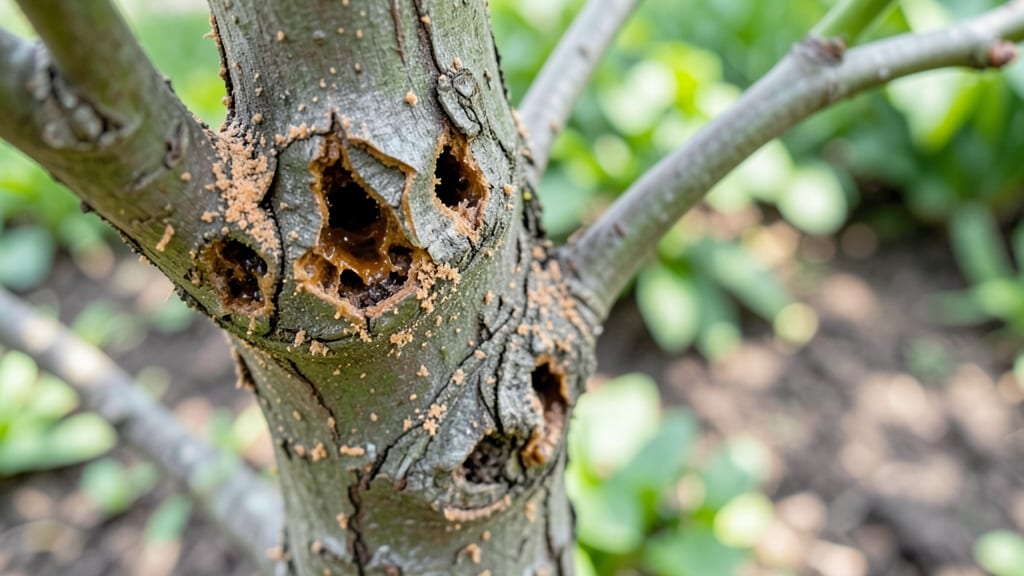
Fruit tree borer treatment turns your orchard into a slow-motion disaster if you wait too long. 🌳 The drill-out method is the fastest way to stop them—no chemicals, no guesswork—just a power drill and a few minutes of focused work that saves your tree.
I’ve used this technique on peach, apple, and cherry trees after finding telltale frass piles and wilting branches, and within 24 hours, the damage stops spreading.
Here’s the science: borers tunnel under the bark, cutting off nutrients. The drill-out method removes them before they hatch or multiply. You’ll need a 5/16-inch drill bit, safety goggles, and a bucket of soapy water to drown the larvae.
Most gardeners hesitate because it sounds invasive—but the holes heal faster than you’d think, and the tree’s health rebounds quickly.
What you’ll achieve is a tree that stops declining and starts recovering within weeks. New leaves emerge stronger, branches firm up, and the risk of secondary infections drops dramatically. The key is acting fast: once you spot frass (sawdust-like shavings) or oozing sap, the borers are already at work.
This method works for any fruit tree—apples, pears, plums, or even citrus—regardless of size. For larger trees, prioritize the main trunk and scaffold branches first. Combine this with pruning dead wood in late winter to prevent future infestations, and your trees will stay productive for years.
Root Causes of Fruit Tree Borers
Understanding why fruit tree borers invade your trees is the first step to stopping them. These pests don’t just appear out of nowhere—they’re drawn to specific conditions that make your trees vulnerable. Here’s a breakdown of the key reasons behind their destructive behavior, explained in clear, actionable terms.
---
🌱 Why it happens: Fruit tree borers, like the peach tree borer (Synanthedon exitiosa) or flatheaded apple tree borer (Chrysobothris femorata), are attracted to trees under stress.
When a tree is struggling—whether from drought, poor soil, or disease—it emits chemical signals (like volatile organic compounds) that borers detect from miles away. Think of it like a distress flare: the weaker the tree, the louder the "help me!" call.
Key triggers:
- Drought stress: Prolonged dry spells reduce a tree’s ability to produce defensive resins, making it easier for borers to penetrate bark.
- Nutrient deficiencies: Lack of nitrogen, potassium, or micronutrients (like boron or zinc) weakens structural integrity, giving borers easier entry points.
- Root damage: Compacted soil or girdling roots (roots growing around the trunk) restrict water flow, signaling stress to pests.
💡 Pro tip: Regularly check your tree’s health by inspecting leaves for yellowing, wilting, or stunted growth—early signs of stress that borers exploit.
---
🔪 Why it happens: Borers are opportunistic. They lay eggs near fresh wounds, such as: - Pruning cuts that weren’t sealed properly (use pruning paint or wound dressing). - Sun scald (bark damage from winter sun exposure). - Physical injuries (e.g., lawnmower cuts, animal scratches, or hail damage).
Once the eggs hatch, larvae burrow into the bark, creating tunnels that disrupt the tree’s vascular system. The lesser peach tree borer (Grapholita funebrana) is notorious for targeting pruning wounds within days of cutting.
Common culprits:
- Improper pruning: Cutting too close to the trunk or leaving jagged edges creates entry points.
- Winter injury: Sudden temperature swings or lack of mulch expose bark to cracking.
- Animal activity: Rabbits, deer, or even squirrels can chew bark, leaving vulnerable spots.
✨ Actionable fix: Seal pruning wounds with tree wound paint or beeswax immediately after cutting. For sun scald, wrap the trunk with tree guard in late fall.
---
🍎 Why it happens: Fruit tree borers (like the apple tree borer, Sanninoidea exitiosa) are drawn to rotting fruit on the ground or still clinging to branches.
Overripe fruit ferments, releasing sugars and alcohols that attract adult borers for feeding and egg-laying. The larvae then move into the tree’s trunk or scaffold branches.
How it escalates:
- Fruit left on the tree past harvest ferments, creating a smorgasbord for borers.
- Piles of fallen fruit under the tree become breeding grounds for larvae.
- Variegated borers (Synanthedon spp.) prefer stone fruits (peaches, plums) but will target apples if fruit is neglected.
🌡️ Prevention tip: Harvest fruit promptly and remove all fallen fruit from the base of the tree. For heavy-yielding trees, consider fruit thinning to reduce overripe buildup.
---
🪵 Why it happens: Borers thrive in cluttered orchards. Old wood, pruned branches left on the ground, and leaf litter create hiding spots for: - Pupating larvae (overwintering stage). - Adult borers seeking shelter before laying eggs.
For example, the roundheaded apple tree borer (Saperda candida) often pupates in pruning wood left near the tree. If you don’t remove debris, the cycle repeats yearly.
High-risk areas:
- Piles of pruned branches stacked near the tree.
- Leaf litter under the canopy (especially in wet climates).
- Old stumps or dead wood in the vicinity.
🔥 Cleanup checklist: - Remove and burn or chip pruned wood immediately (don’t compost infested material). - Rake up leaves and dispose of them far from the tree. - Replace old mulch annually to prevent larvae from overwintering.
--- 🌡️ Why it happens: Borers are highly sensitive to temperature and humidity. Warm, dry conditions (like late summer) trigger adult emergence, while moist bark (from rain or overhead watering) softens entry points for larvae.
Peak risk periods:
- Spring: Adults emerge as new leaves form, targeting stressed trees post-winter.
- Summer: Dry heat dries out bark, making it easier for larvae to bore in.
- Fall: Cool, damp conditions help larvae survive until spring.
🎯 Climate hacks: - Avoid overhead irrigation (use drip systems to keep bark dry). - Mulch 3–4 inches deep to stabilize soil moisture without creating damp bark. - Plant windbreaks to reduce stress from harsh weather swings.
Beat the Borer with These Fixes
Fruit tree borers can feel like a silent nightmare—one day your tree looks healthy, and the next, it’s fighting for its life. But don’t panic! With the right approach, you can save your tree and stop future infestations before they start.
Below, we’ll break down cause-specific solutions and share prevention tips to keep your fruit trees thriving. Let’s roll up our sleeves and get to work! 🌳🔧
---
If you spot sawdust-like frass at the base of the trunk, oozing sap, or weak, wilting branches, borers are already at work. The sooner you act, the better your tree’s chances of recovery.
#### 🍳 Step 1: Identify the Infestation Before treating, confirm the problem: - Check for exit holes (round or oval, about the size of a pencil tip). - Look for sawdust piles (borer frass) under bark crevices or at the base. - Tap the trunk—a hollow or dull sound means the borer may have tunneled inside.
Pro Tip: 💡 Use a flashlight and magnifying glass for a closer look, especially in crevices where borers hide.
---
This DIY-friendly, chemical-free approach works for peach, apple, cherry, and citrus trees (and most fruit trees!). Here’s how:
#### 🔪 Step 2: Drill Out the Larvae (The Core Fix) 1. Gather tools: - A cordless drill with a 1/4-inch to 3/8-inch bit (or a hand screwdriver for smaller trees). - Tweezers or forceps (to pull out larvae). - Rubbing alcohol or soapy water (to kill larvae on contact). - Wood ash or diatomaceous earth (for sealing afterward).
2. Locate and drill into borer holes: - Insert the drill bit slowly into each exit hole (you’ll feel resistance as you hit the tunnel). - Drill just enough to reach the larva—you’ll hear a crunching sound when you hit it. - Pull out the larva with tweezers and drop it in soapy water.
3. Seal the wounds: - After removing larvae, pack the holes with wood ash or diatomaceous earth (this smothers any remaining eggs). - For larger wounds, use pruning sealant (organic, non-toxic options work best).
Pro Tip: ✨ Work in the early morning when borers are least active—you’ll have a better chance of catching them off guard!
---
#### 🥘 Step 3: Strengthen the Tree’s Defenses Borers target weak or stressed trees. Help your tree bounce back with these post-treatment boosts:
| Action | How to Do It | Why It Works | |--------------------------|----------------------------------------------------------------------------------|---------------------------------------------------------------------------------| | Water deeply | Water the base of the tree once a week (1-2 inches of water per session). | Prevents drought stress, which attracts borers. | | Fertilize (right way)| Use balanced organic fertilizer (like 10-10-10) in early spring. | Avoids over-fertilizing, which weakens trees. | | Prune smart | Remove dead, diseased, or crossing branches to improve airflow. | Reduces hiding spots for borers and pests. | | Mulch properly | Apply 2-3 inches of organic mulch (wood chips, straw) away from the trunk. | Keeps moisture in and borers out (they dislike dry conditions). |
Pro Tip: 🌡️ Monitor soil moisture—borers love trees that are too wet or too dry. Aim for consistently moist but not soggy soil.
---
An ounce of prevention is worth a pound of cure! Here’s how to keep borers away for good:
#### 🛡️ Step 4: Borer-Proof Your Trees 1. Encourage natural predators: - Ladybugs, parasitic wasps, and birds eat borer larvae. Plant native flowers (like alyssum or dill) to attract them. - Install birdhouses near your fruit trees to boost feathered pest control.
2. Use organic sprays (as a deterrent): - Neem oil spray (disrupts borer life cycles). - Bt (Bacillus thuringiensis)—a natural bacteria that kills larvae when ingested. - Spray in late spring/early summer (when borers are most active).
3. Inspect trees regularly: - Check for new holes or frass every 2-4 weeks during growing season. - Paint young trees with white latex paint (borers dislike the texture).
4. Avoid wounding the bark: - Don’t use string trimmers or lawnmowers too close to the trunk. - Use sharp pruners to make clean cuts (ragged edges invite borers).
Pro Tip: 🎯 Plant trap crops like plums or peaches near high-value trees (borers may go for these first!).
---
If your tree is severely damaged (large sections of bark missing, oozing sap constantly, or wilting despite treatment), it may need professional help.
A certified arborist can: - Assess if the tree is beyond saving. - Recommend structural support if the trunk is compromised. - Apply targeted treatments for large infestations.
--- Final Thought: 🌟 With the drill-out method + prevention, you can save your fruit trees and enjoy a borer-free harvest for years. Stay vigilant, act fast, and your trees will thank you with juicy, healthy fruit! 🍎🍑🍊
Frequently asked questions
How do I know if my fruit tree has borers?
Look for sawdust-like frass (borer droppings) near the trunk or branches, small exit holes (about the size of a pencil tip), and oozing sap. Tap the trunk—if it sounds hollow, larvae may be tunneling inside. Check for wilting leaves or dieback in branches, which are classic signs of borer damage.
Is the drill-out method safe for all fruit trees?
Yes, this method works for peach, apple, cherry, citrus, and most fruit trees. Use a 1/4-inch to 3/8-inch drill bit to avoid damaging healthy wood. Smaller trees can be treated with a hand screwdriver instead. The key is to drill just deep enough to reach the larvae without over-penetrating.
What’s the best time of year to treat borers?
Act immediately when you spot signs of infestation, but the best prevention window is late spring to early summer when adult borers are most active. For severe cases, treat in fall to catch overwintering larvae. Early morning is ideal—borers are less active and easier to remove.
Can I use chemical treatments instead of drilling?
Chemical options like imidacloprid or carbaryl can help, but they’re less effective than the drill-out method for established infestations. If you choose chemicals, apply them early in the season (before eggs hatch) and follow label instructions carefully. Organic alternatives like neem oil or Bt spray are safer but require repeated applications.
Will my tree heal after borer treatment?
Yes! Trees are resilient. After removing larvae and sealing wounds, the tree will knit over the holes within weeks. Focus on deep watering, proper pruning, and mulching to help recovery. Avoid fertilizing heavily right after treatment—let the tree recover its strength first.