
How To
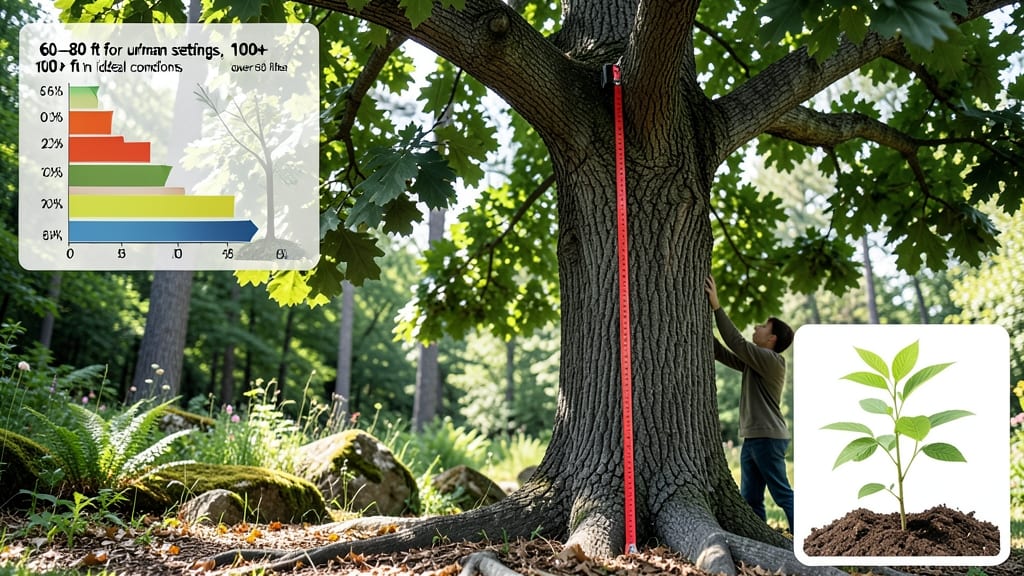
How tall can an oak tree grow? Some varieties reach stunning heights—over 100 feet—while others stay much smaller, depending on species, soil, and climate.
Picture this: a century-old oak 🌳 stretching higher than a 10-story building, its branches forming a canopy that provides shade for an entire neighborhood. That’s the kind of majesty these trees bring—but not every oak grows that tall. Some stay compact, while others shoot up like skyscrapers.
If you’re planning to plant one, you’ll want to know which species lean toward towering giants and which stay more manageable. Soil quality, sunlight, and even water access play a huge role in how tall your oak can become.
Below, I break down the height ranges by species, the factors that push oaks toward the sky, and how to give your tree the best chance to thrive—whether you’re dreaming of a backyard giant or just a sturdy shade provider.


Mature heights of oak tree species: from dwarfs to giants
Oak trees are nature's skyscrapers, with some species stretching toward the sky like towering cathedrals while others remain manageable for suburban landscapes. The mature height of an oak tree varies dramatically by species, from dwarf varieties under 25 feet to giants exceeding 100 feet.
Understanding these differences helps gardeners choose the right oak for their space and long-term vision.
If you're planning to plant an oak, knowing its growth potential is crucial. A white oak might dominate your backyard, while a dwarf bur oak could fit neatly into a small garden.
Below, we break down the height ranges of the most popular oak species, including their growth rates and ideal planting scenarios to help you make an informed decision.
The white oak and red oak are among the tallest species, often reaching heights that make them unsuitable for small yards. A mature white oak can easily surpass 100 feet, while a red oak typically grows between 60–90 feet.
If you're dreaming of a grand oak but lack space, consider the dwarf bur oak, which stays under 25 feet while still offering the classic oak silhouette.
For gardeners in southern climates, the live oak is a popular choice, though its spreading habit means it can grow just as wide as it is tall. This species thrives in USDA zones 7–10 and is perfect for creating shade canopies over patios or driveways.
Meanwhile, the bur oak is a hardy option for drought-prone areas, with a slightly slower growth rate that makes it easier to manage long-term.
If you're planting an oak for wildlife benefits, the red oak and white oak are excellent choices, as their acorns provide food for squirrels, birds, and deer. However, their size at maturity means you'll need plenty of space—at least 50 feet in all directions.
For smaller properties, the chinkapin oak offers a more compact option while still supporting local ecosystems.
When selecting an oak, also consider its growth rate. Faster-growing species like the red oak (which can add 2–3 feet per year in ideal conditions) will fill out your landscape quicker, while slower growers like the dwarf bur oak may take decades to reach their full height.
This difference is critical if you're planning for shade or privacy in the near future.
One final tip: Always check your local climate zone before planting. Some oaks, like the live oak, struggle in colder regions, while others, like the bur oak, thrive in harsh winters. Matching the species to your environment ensures healthier growth and fewer surprises as your oak matures.
What determines how tall an oak tree can grow?
Oak trees are nature's skyscrapers, with some varieties reaching heights that rival city skylines. But their growth potential isn't just about genetics—it's a complex dance between soil quality, sunlight exposure, and climate conditions.
Even the fastest-growing oaks need the right environment to hit their maximum height potential of 60-100 feet or more.
One of the biggest factors is genetic predisposition. White oaks, for example, typically grow taller than bur oaks, which often stay shorter and bushier. But even within the same species, individual trees can vary by 20-30 feet depending on growing conditions.
That's why two red oaks planted side-by-side might end up with dramatically different heights.
Factors That Influence Oak Tree Height
Pros of Optimal Conditions
- 🌱 Full sun exposure (6+ hours daily) boosts growth by 30-50%
- 💧 Well-draining soil prevents root rot and supports deeper root systems
- ☀️ Warm climates (USDA zones 6-9) allow faster growth rates
- 🌿 Proper spacing (30-50 ft apart) reduces competition for resources
Cons of Poor Conditions
- ⚠️ Shade limitation can reduce height by 40% or more
- 🌧️ Waterlogged soil stunts root growth and weakens the tree structure
- ❄️ Harsh winters (below zone 5) slow growth significantly
- 🪴 Overcrowding leads to shorter, weaker trees with poor canopy development
Actionable Tip: Test your soil's pH (6.0-7.5 ideal) and drainage before planting to maximize growth potential!
Did you know that water availability plays a surprisingly critical role? While mature oaks are drought-tolerant, young trees need deep watering every 7-14 days during their first 3-5 years to establish strong root systems. Skimp on water, and you'll see stunted growth that never reaches the tree's full potential.
The climate zone where you live makes a dramatic difference too. Oaks in USDA zones 7-9 grow 20-30% faster than those in colder zones.
For example, live oaks in Florida can reach 80 feet in 30 years, while the same species in zone 6 might only hit 50 feet in the same time.
One often-overlooked factor is pruning practices. Strategic pruning in early spring can encourage upward growth, while over-pruning can actually reduce height by 15-25%. Always remove no more than 25% of the canopy at one time to maintain healthy growth patterns.
For gardeners planning to plant oaks, remember that spacing is everything. Give each tree 30-50 feet of clearance to reach its maximum height potential. Proper spacing allows for unobstructed sunlight and root development, both critical for achieving those impressive heights.
Whether you're dreaming of a towering white oak or a compact bur oak, understanding these factors will help you create the perfect growing conditions for your tree to reach its natural height potential—because with the right care, even your backyard oak could one day rival the giants of the forest! 🌳