
How To
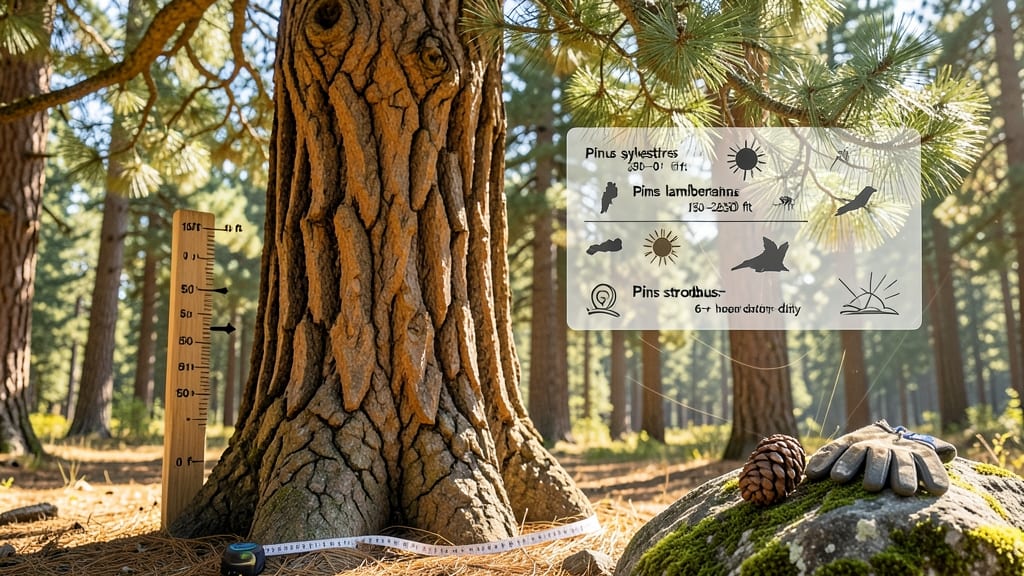
How tall can a pine tree grow to? Some of these stunning giants reach over 200 feet—taller than a 20-story building—depending on the species and growing conditions.
If you’ve ever gazed up at a towering pine tree and wondered just how massive these giants can become, you’re not alone—some pine species reach heights that defy imagination, shaping entire ecosystems and landscapes.
From the towering Coast Redwoods to the hardy Ponderosa Pines, the height of a pine tree is influenced by its species, climate, and soil quality. Whether you’re planting one in your yard or simply curious about nature’s skyscrapers, understanding these factors will help you appreciate—or even cultivate—these remarkable trees.
In this guide, I’ll break down the tallest pine species, the climate zones that fuel their growth, and practical tips to help your pine tree reach its full potential.


Tallest pine tree species: record heights and growth patterns
When most of us think of towering trees, the Coast Redwood immediately comes to mind—but did you know some pine species can rival these giants in height?
The world's tallest pine trees belong to a select few species that thrive in ideal conditions, reaching heights that challenge our perception of what's possible in nature. These majestic trees don't just grow tall; they shape entire ecosystems and provide shelter for countless species.
Among pine trees, the Sugar Pine and Ponderosa Pine are often overlooked in height comparisons, yet they hold impressive records. The Coast Redwood, while not technically a pine, serves as a benchmark for comparison due to its legendary stature.
Understanding these species' growth patterns helps gardeners and landowners make informed decisions about planting and care, especially in regions with suitable climates.
Here’s a comparison of the tallest pine tree species, including their verified record heights, annual growth rates, and ideal climate conditions to maximize their potential. Whether you're dreaming of a backyard forest or managing a large property, these insights will help you appreciate—and cultivate—these natural wonders.
The Coast Redwood holds the undisputed title for the tallest tree species on Earth, but its close relatives in the pine family—like the Sugar Pine—aren’t far behind.
These trees grow fastest during their first 20-30 years, with some species like the Sugar Pine adding up to 3 feet per year under ideal conditions. After maturity, their growth slows dramatically, focusing instead on thickening their trunks and developing dense foliage.
Climate plays a critical role in determining how tall a pine tree can grow. For example, the Ponderosa Pine thrives in the dry, open forests of the Rocky Mountains, where it develops a fire-resistant bark and deep root systems to access water.
In contrast, the Western White Pine prefers the moist, cooler climates of the Pacific Northwest, where it can reach impressive heights without the stress of drought.
If you're considering planting one of these giants, it’s essential to match the species with your local climate. The Sugar Pine, for instance, struggles in hot, arid regions but excels in the cool, foggy summers of California’s Sierra Nevada.
Meanwhile, the Eastern White Pine adapts well to a broader range of conditions, making it a popular choice for home gardens in the Eastern U.S.
One common misconception is that all pine trees grow at the same rate. In reality, their growth patterns vary widely. For example, the Coast Redwood can grow 4 feet in a single year during its prime, while the Ponderosa Pine might only add 6 inches annually once mature.
This difference is largely due to genetics, soil quality, and competition for resources.
For gardeners aiming to cultivate taller pine trees, spacing is key. Planting seedlings too closely can stunt their growth as they compete for sunlight and nutrients. Aim for 10-15 feet between trees to give them room to develop their full height potential.
Additionally, well-drained soil is non-negotiable—pine trees hate soggy roots, which can lead to rot and stunted growth.
While these species are often associated with wild forests, many can be successfully grown in large gardens or landscapes with the right care. The Eastern White Pine, for example, is a versatile choice that tolerates
Climate zones and growth factors: how location affects pine tree height
Your pine tree's ultimate height isn't just about the species—it's heavily influenced by climate zones and local growing conditions. In the Pacific Northwest, for example, coastal redwoods thrive with high humidity and mild winters, reaching heights of 300+ feet in ideal conditions.
Meanwhile, Rocky Mountain pines face colder temperatures and drier air, often maxing out around 100-150 feet.
The USDA hardiness zones play a crucial role—most pines grow best in zones 3-8, but their height potential varies dramatically. Elevation also matters: high-altitude pines grow slower but develop stronger wood structures, while lowland pines shoot upward faster with abundant rainfall and nutrient-rich soil.
For instance, a Ponderosa Pine in Arizona's high desert may only reach 80-100 feet, while the same species in California's Sierra Nevada can surpass 150 feet.
Soil type directly impacts root development and nutrient uptake. Sandy soils drain too quickly, stunting growth, while loamy, well-draining soils with organic matter promote rapid height increases. In acidic soils (common in the Southeast), pines like the Loblolly Pine can grow 1-2 feet per year under optimal conditions. Meanwhile, alkaline soils in the Southwest often limit growth to 6-12 inches annually.
| Climate Factor | Impact on Height | Optimal Range |
|---|---|---|
| Temperature | Warmer climates (zones 7-9) accelerate growth; colder zones (3-5) slow growth but increase wood density. | 50-80°F (spring/summer) |
| Rainfall | High rainfall (>40" annually) fuels rapid height gains; drought (<20" annually) stunts growth. | 30-60 inches/year |
| Elevation | Low elevation (<2,000 ft) enables faster growth; high elevation (>6,000 ft) reduces height but improves cold resistance. | Sea level to 5,000 ft |
| Soil pH | Acidic soils (pH 4.5-6.0) promote faster growth; alkaline soils (pH 7.5+) limit nutrient absorption. | 4.5-6.0 (acidic) |
| Humidity | High humidity (>70%) reduces water stress; low humidity (<30%) increases drought risk. | 50-80% relative humidity |
In coastal regions like Oregon and Washington, the Coast Redwood dominates with heights exceeding 375 feet due to fog drip (a natural irrigation system) and year-round mild temperatures.
Conversely, interior pines such as the Pinyon Pine in the Southwest rarely exceed 30 feet due to limited water and intense sunlight.
Even within the same state, microclimates create stark differences—a Sugar Pine in Northern California's Sierra foothills might grow 120 feet, while one in the Central Valley could only reach 80 feet.
To optimize growth in your region, focus on three key adjustments: amend soil with compost to improve drainage, mulch heavily to retain moisture, and protect young trees from winter winds in exposed areas. In arid climates, drip irrigation systems can add 20-30% more growth compared to surface watering.
For coastal plantings, prioritize wind-resistant species like the Monterey Pine, which thrives in salty, windy conditions where other pines would falter.
Remember, patience is critical—even the fastest-growing pines take 20-30 years to reach maturity. In temperate zones, spring planting yields the best results, while tropical pines can grow year-round.
By aligning your pine species with your local climate zone and making these simple adjustments, you’ll maximize height potential while ensuring a healthy, long-lived tree.