
How To
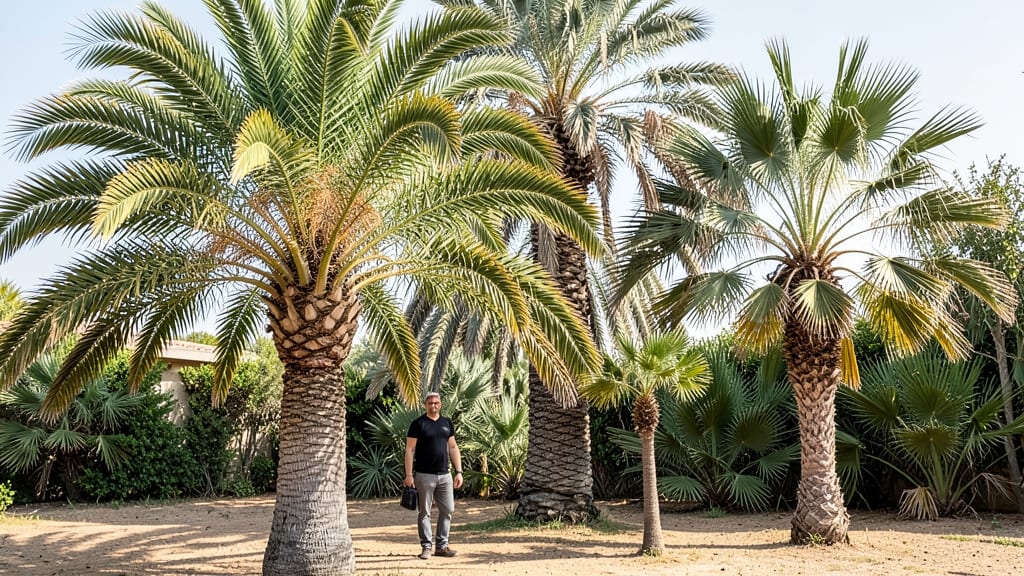
How tall can a palm tree grow?—when given the right conditions, species, and care, some can reach over 200 feet, dwarfing even a 20-story building.
Imagine towering over a 10-story building—some palm trees don’t just imagine it, they achieve it. But which species defy gravity to reach 200+ feet, and what factors determine their staggering heights?
From the towering coconut palm 🌴 to the majestic royal palm, these giants thrive in tropical climates but need specific soil, sunlight, and water to reach their full potential.
Many homeowners assume all palms grow equally fast, but dwarf varieties stay under 15 feet, while giants like the Jubaea spectabilis can take decades to mature.
In this guide, you’ll discover the tallest palm species, how climate and care influence their height, and whether you can grow a skyscraper-sized palm in your backyard—spoiler: it’s possible, but not without strategy.


Tallest palm tree species: giants that defy gravity (with height records)
When I first saw a coconut palm stretching toward the sky in Hawaii, I never imagined some palms could grow taller than a 20-story building. These towering giants aren’t just impressive—they’re architectural marvels of nature.
The tallest palm species can reach heights of 150 to 200 feet, with some species even surpassing that in ideal conditions. But which palms claim these records, and where can you find them thriving?
The coconut palm (Cocos nucifera) holds the crown as one of the tallest palms, with mature specimens reaching 100 to 120 feet in tropical coastal regions.
Meanwhile, the palmyra palm (Borassus flabellifer) can grow even taller, with some individuals exceeding 160 feet in their native habitats of Southeast Asia and the Pacific Islands. These giants aren’t just about height—they’re also vital to ecosystems and human cultures worldwide.
🌴
The palmyra palm (Borassus flabellifer) is a true giant, often considered the tallest palm species in the world. In its native habitats, these palms can reach 160 to 200 feet, with some specimens in the wild even surpassing that.
What makes them so remarkable isn’t just their height but their resilience—they thrive in dry, arid conditions where many other palms would struggle. If you’re dreaming of a palm that can handle both heat and drought, this is your species.
For those in subtropical climates, the royal palm (Roystonea regia) is a stunning choice, reaching 60 to 100 feet with proper care. It’s one of the most cold-hardy palms, making it a favorite in USDA Zones 9-11.
I’ve seen these palms lining streets in Miami and Key West, where they add a tropical feel without requiring constant pampering. Their arching fronds and sleek trunks make them a standout in any landscape.
If you’re looking for a palm with historical significance, the Chilean wine palm (Jubaea spectabilis) is a must-mention. While it only reaches 80 to 100 feet, it’s one of the longest-lived palm species, with some individuals living for over 1,000 years.
Native to the Mediterranean climate of Chile, these palms are a testament to endurance. They’re also edible, with their seeds used to make a traditional wine-like drink.
🌳
Not all tall palms require tropical climates. The queen palm (Syagrus romanzoffiana) is a fast-growing species that can
What determines a palm tree’s height? Climate, soil, and care secrets
A palm tree’s final height isn’t just genetics—it’s a mix of nature’s conditions and your gardening choices. While some species like the Cocos nucifera (coconut palm) can reach 100+ feet in ideal conditions, others like the Pygmy Date Palm max out at 10-15 feet.
The difference? Climate, soil, sunlight, and care all play starring roles.
Think of your palm tree like a skyscraper—it needs a solid foundation (soil), plenty of sunlight (fuel), and proper maintenance (pruning, watering) to reach its full potential. Even the tallest species, like the Roystonea regia (Royal Palm), can be stunted by poor drainage or inconsistent watering.
Let’s break down the secrets to unlocking—or limiting—a palm’s height.
🌱
| Factor | Impact on Height | Optimal Conditions |
|---|---|---|
| Climate | Tropical climates (Zone 9-11) allow 200+ ft growth; subtropical (Zone 8) limits to 50-100 ft. | Consistent warmth, no frost, high humidity. |
| Soil Drainage | Poor drainage = root rot = stunted growth; well-draining soil = faster height gain. | Sandy loam with 30% perlite; avoid clay. |
| Sunlight | 6+ hours of sun = max growth; partial shade = slower, bushier growth. | Full sun in tropical zones; morning sun in subtropical. |
| Watering | Overwatering = root suffocation; underwatering = stress. | Deep watering 2-3x/week (summer); 1x/week (winter). |
| Fertilization | Balanced NPK 8-2-12 boosts height; over-fertilizing burns roots. | Spring/summer: 1 cup/10 sqft every 6 weeks. |
| Pruning | Removing dead fronds improves airflow; over-pruning weakens growth. | Trim brown fronds in dry season; avoid cutting healthy fronds. |
Your palm tree’s growth rate is directly tied to its climate zone. For example, the Canary Island Date Palm (Phoenix canariensis) thrives in Zone 9-11 and can grow 3-5 feet per year, while the same species in Zone 8 might only add 1-2 feet annually.
If you’re in a cooler climate, choose dwarf varieties like the Mediterranean Fan Palm (Chamaerops humilis) to avoid disappointment.
Don’t underestimate the power of soil composition. Palms hate waterlogged roots, which is why well-draining soil is non-negotiable. Amend heavy clay with compost and perlite to create an airy mix.
I once saw a Cocos nucifera in a Florida garden that grew 10 feet in a year because the soil was sandy and slightly acidic (pH 6.0-6.5). The same palm in compacted urban soil? It barely reached 3 feet in 5 years.
Sunlight is another game-changer. While most palms love full sun, some like the Kentia Palm (Howea forsteriana) tolerate low light but grow 3x slower. If your palm isn’t getting enough light, it’ll focus energy on leaf production rather than height growth.
Pro tip: Use a light meter to check if your palm is getting at least 6 hours of direct sunlight.
Finally, human intervention can either accelerate or stunt growth. Regular fertilization with a palm-specific NPK blend (like 8-2-12) can add 20-30% more height per year, while neglecting pests (like palm weevils) can kill a tree before it