
How To
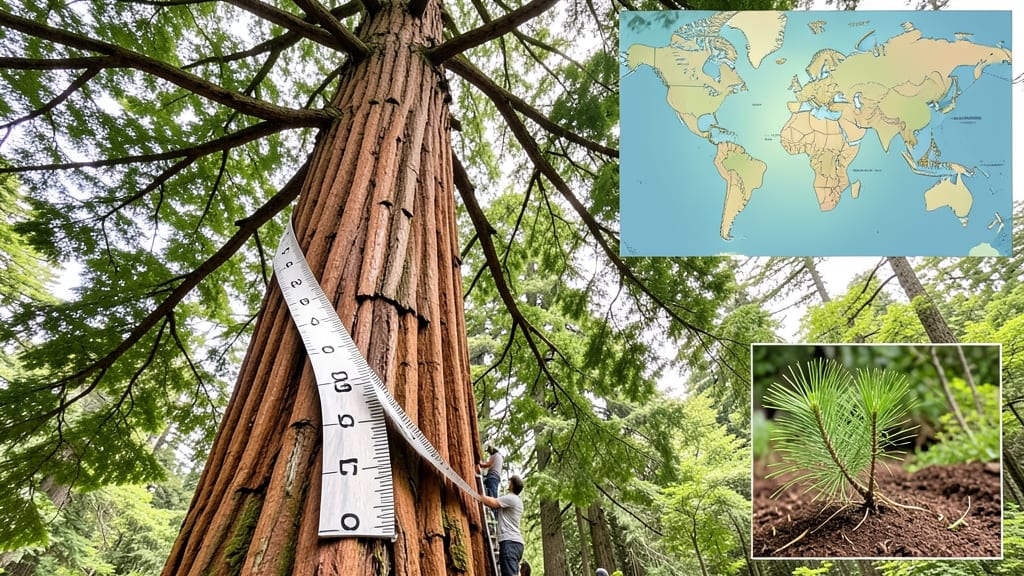
Trees can grow remarkably tall, with the tallest species like the coast redwood reaching over 379 feet in height under ideal conditions, including deep soil, ample water, and minimal competition. Growth rates vary by species and climate, but some continue expanding for centuries.
A tree's height potential depends on its species and environmental conditions. 🌳 The coast redwood, for example, thrives in California's foggy coastal climate, where moisture and nutrients fuel its rapid vertical growth.
Other giants like the eucalyptus and sequoia also reach impressive heights, though their growth patterns differ—some grow faster in their youth while others mature slowly but steadily. Understanding these factors helps explain why certain trees dominate forests worldwide.
What's fascinating is how these trees achieve such heights. Their specialized root systems anchor them while drawing up water from deep underground, and their bark protects against wind damage. 💫 Some species even develop hollow trunks to reduce weight, allowing them to support massive canopies.
This combination of biological adaptations and environmental support creates the towering giants we see today.
💡 In This Article
- Factors Influencing Maximum Tree Height
- Record-Holding Trees: Species and Growth Conditions
Factors influencing maximum tree height
At the core of a tree's height potential lies its genetic blueprint, particularly the length of its vascular system—the xylem and phloem that transport water and nutrients.
Coast redwoods (Sequoia sempervirens), for instance, possess elongated cells in their xylem that create a continuous column capable of supporting 379-foot heights.
These trees also develop specialized root structures called "sinkers," which extend 100 feet or more into the soil to access deep water reserves, a critical adaptation for sustaining vertical growth against gravity.
The environment plays an equally vital role, with water availability being the most influential factor. Redwoods thrive in California's coastal fog belt, where atmospheric moisture condenses on their needles, supplementing rainfall.
In contrast, eucalyptus trees in Australia's wetter regions can grow 300 feet tall by leveraging their ability to tap into groundwater through extensive lateral roots.
Sunlight exposure also matters—canopy trees like the Emerald Ash Borer-resistant ash (Fraxinus) grow taller in open spaces where they compete less for light, while shade-tolerant species like beech trees remain shorter in dense forests.
Climate zones further refine height potential. Tropical trees like the African mahogany grow rapidly in warm, humid conditions, reaching 200 feet in just 50 years, while temperate species like the giant sequoia (Sequoiadendron giganteum) grow slower but can live 3,000 years, accumulating height over centuries.
The interplay of these factors explains why the tallest trees aren't just the fastest growers but those with the right combination of genetic traits and environmental support.
Wind resistance is another critical mechanism. Tall trees develop thick, fibrous bark and flexible trunks to withstand high winds. Redwoods, for example, have bark up to 12 inches thick, acting like armor against storm damage.
Their conical shape also helps shed wind and snow, reducing structural stress. This adaptation allows them to maintain stability at heights where wind speeds can exceed 100 mph at the treetop level.
Nutrient availability in the soil also shapes height potential. Deep, fertile soils provide the phosphorus and nitrogen needed for cell division in the cambium layer, which produces new wood. Redwoods grow best in loamy soils rich in organic matter, while poorer soils limit growth.
For instance, the coast Douglas fir grows 30% shorter in nutrient-poor soils compared to its coastal counterparts. 🌲
Finally, competition for resources determines whether a tree reaches its maximum height. In dense forests, trees grow taller to access sunlight, a phenomenon called "self-thinning." The tallest redwoods often emerge from open groves where they face minimal competition.
This principle applies to urban trees too—street trees in open spaces grow 20-30% taller than those crowded between buildings.