
How To
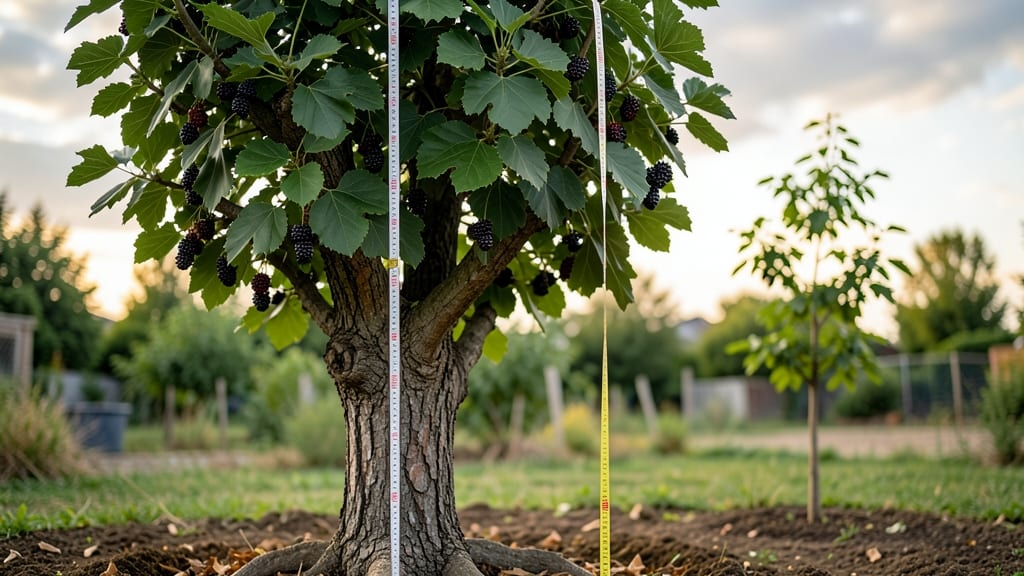
A mulberry tree can grow up to 60 feet tall—taller than most two-story homes—with some wild specimens even reaching 100 feet in ideal conditions.
If you’ve ever dreamed of a towering shade provider or a fruit-bearing giant in your backyard, mulberry trees might just be your answer—but did you know some varieties can reach heights that rival small skyscrapers?
The height of a 🌳 mulberry tree depends on the species: white mulberries (Morus alba) often top out around 20-40 feet, while black mulberries (Morus nigra) can soar to 50-60 feet with proper care.
Even dwarf varieties still hit 10-15 feet, making them a statement piece in any landscape.
Whether you want to maximize shade, control growth with pruning, or simply understand space needs, this guide breaks down how tall your mulberry can (and should) grow based on climate, soil, and variety.


Mulberry tree height by variety: from dwarf to towering giants
If you’re planning to grow a mulberry tree, one of your first questions is likely how tall can a mulberry tree grow? The answer varies dramatically depending on the variety, with some reaching towering heights of 60+ feet while others stay compact.
Understanding these differences helps you choose the perfect tree for your space—whether you need a shade giant or a manageable backyard fruit producer.
Mulberry trees belong to the Morus genus, featuring species like the white mulberry (Morus alba), black mulberry (Morus nigra), and red mulberry (Morus rubra).
Each has distinct growth habits, and some rare specimens can even exceed 100 feet under ideal conditions. Let’s break down the height ranges by variety so you can make an informed decision.
| Variety | Mature Height Range | Growth Rate (Annual) | Canopy Spread | Best For |
|---|---|---|---|---|
| Dwarf Varieties (e.g., 'Illinois Everbearing') | 10–15 ft | 1–2 ft/year | 8–12 ft wide | Small yards, containers, urban gardens |
| Semi-Dwarf (e.g., 'White Mulberry') | 15–25 ft | 2–3 ft/year | 12–18 ft wide | Medium spaces, privacy screens |
| Standard (Morus alba wild type) | 20–40 ft | 3–5 ft/year | 20–30 ft wide | Large properties, shade trees |
| Tall Varieties (e.g., Morus nigra) | 30–50 ft | 4–6 ft/year | 25–40 ft wide | Rural landscapes, orchards |
| Giant Specimens (e.g., Morus rubra in wild) | 50–100+ ft | 5–8 ft/year (optimal conditions) | 30–50+ ft wide | Forests, historic landscapes |
As you can see, the white mulberry (Morus alba) often tops out around 40 feet in cultivation, while the black mulberry (Morus nigra) can push toward 50 feet with its aggressive growth.
The red mulberry (Morus rubra), native to North America, is particularly fast-growing and can reach 60+ feet in ideal conditions, though it’s less common in commercial plantings.
For gardeners with limited space, dwarf varieties like 'Illinois Everbearing' are perfect, staying under 15 feet while still producing abundant fruit. These compact trees grow at a slower rate (1–2 feet per year), making them easier to manage with minimal pruning.
If you’re aiming for a shade canopy, standard varieties will deliver faster results, with some reaching 20 feet in just 5 years.
One fascinating fact is that mulberry trees in the wild—especially in tropical or subtropical climates—can grow even taller. In regions like southeastern U.S. or Japan, red mulberry trees have been documented exceeding 100 feet with sprawling canopies of 50+ feet.
This rapid growth is fueled by warm temperatures, rich soil, and abundant moisture, which we’ll explore further in the next section.
If you’re wondering how tall a mulberry tree grows in your climate, consider your USDA hardiness zone. Trees in Zones 6–9 typically reach their full height potential, while colder zones may see slightly slower growth.
For example, a black mulberry in Zone 7 might max out at 40 feet, whereas the same tree in Zone 9 could hit 50+ feet.
When planning your mulberry tree’s location, account for both height and canopy spread. A 60-foot-tall tree with a 40-foot-wide canopy will dominate your landscape, while a 15-foot dwarf fits neatly into a small patio. Always leave 10–15 feet of clearance around the base for root expansion and future pruning.
For those eager to accelerate growth, providing full sun (6+ hours daily), well-draining soil, and regular watering during the first few years will encourage faster height gains.
Mulberry trees are notoriously fast growers—some varieties can add 5 feet per year under optimal conditions, making them one of the quickest shade solutions for large properties.
🌳 Whether you’re dreaming of a fruit-laden giant or a compact backyard tree, choosing the right mulberry variety ensures you’ll get the height—and harvest—you desire. Next, we’ll dive into how climate and soil can push these trees even taller (or keep them in check).
Climate and soil factors that influence mulberry tree growth height
When planning your mulberry tree's future height, remember that climate and soil conditions play starring roles. In tropical climates like Florida or Hawaii, mulberries can grow 30-50% taller than in cooler regions, thanks to longer growing seasons and warmer winters.
These trees thrive where temperatures stay above 40°F (4°C), allowing them to focus energy on vertical growth rather than surviving harsh winters.
Sunlight is another critical factor—mulberries need full sun exposure (6+ hours daily) to reach their maximum height. In temperate zones like the Midwest, trees may grow 15-20 feet tall in 5 years, while in southern climates, they can add 3-5 feet annually under ideal conditions.
Shade-loving varieties like Morus alba still grow tall but at a slower rate when deprived of sunlight.
Soil type dramatically affects height potential. Mulberries prefer well-draining, slightly acidic soil (pH 6.0-7.0) rich in organic matter. In clay-heavy soils, roots struggle to expand, limiting height to 20-30 feet even with proper care.
Meanwhile, sandy loam soils provide the perfect balance, allowing trees to reach 40-60 feet in optimal conditions. Amending compacted soil with compost can boost growth by 25% or more.
Height Potential by Climate
50-70 ft
Long growing season, warm winters
30-50 ft
Moderate growth, seasonal dormancy
20-35 ft
Water stress limits vertical growth
60+ ft
Optimal soil moisture accelerates growth
Moisture levels create another critical divide. In humid climates like the southeastern U.S., mulberries can grow 10-15 feet taller than in arid regions because consistent moisture supports rapid cell division in stems.
However, overwatering young trees can stunt height growth by 20% or more, as roots suffocate in waterlogged soil. Drip irrigation systems in dry climates can restore normal growth rates by maintaining even moisture levels without flooding.
Case studies reveal extreme growth potential. A Morus nigra (black mulberry) in Georgia reached 65 feet in 20 years due to rich, loamy soil and year-round warmth. Meanwhile, a Morus alba in Minnesota maxed out at 30 feet despite ideal care, limited by short growing seasons.
These examples prove that while mulberries are adaptable, climate dictates ceiling height—not just care routines.
For gardeners in cooler regions, microclimates can work wonders. Planting near south-facing walls or in sunken beds adds 5-10°F of warmth, extending the growing season by 3-4 weeks and boosting height by 15-20%.
Even in Zone 5, strategic placement can push a mulberry from 25 feet to 35 feet over a decade. The key is combining optimal soil prep with climate-smart planting strategies to unlock your tree's full height potential.