
Trees
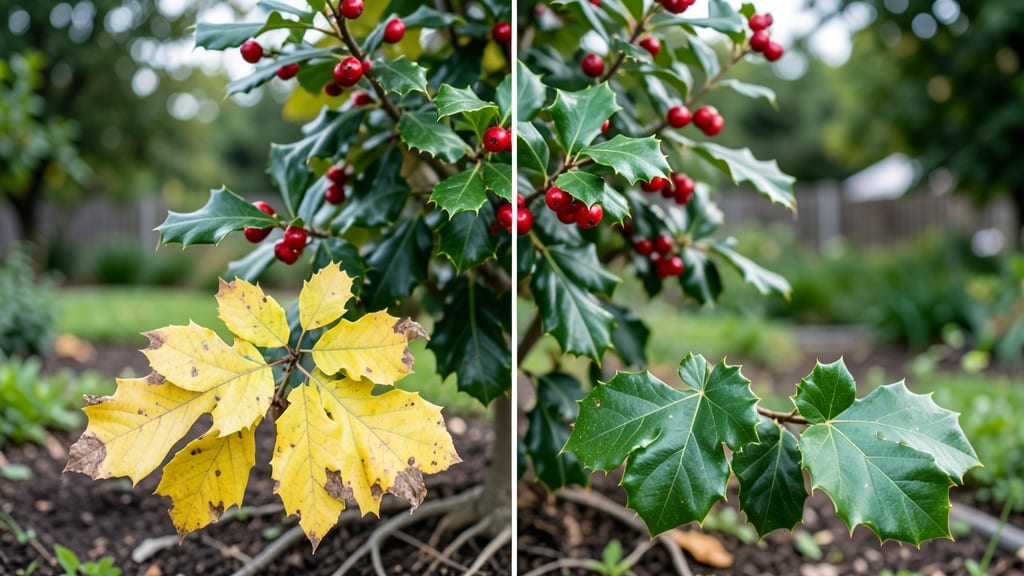
Your holly tree’s yellow leaves aren’t a death sentence—just a cry for help. 🌿 The good news? Most cases are fixable with simple adjustments to watering, soil, or pest control. I’ve nursed back more than a few hollies with these same steps, and you can too.
Start by checking the soil: yellowing often means overwatering, poor drainage, or iron deficiency. Stick your finger 2 inches down—if it’s soggy, hold off on watering. For nutrient issues, a chelated iron supplement works wonders in just a few weeks, turning pale leaves back to their glossy green.
Next, inspect the undersides of leaves for spider mites or fungal spots. A strong spray of water (or neem oil for pests) usually clears up the problem within 10-14 days.
The key is acting fast—yellow leaves spread quickly, but healthy new growth follows just as fast with the right care. Prevention is easier than cleanup: mulch around the base to retain moisture, prune for airflow, and test soil pH annually.
If the problem persists after 3 months of adjustments, it’s time to call in a local arborist—they’ll spot what you might miss.
Root Causes Behind Yellow Holly Leaves
Yellowing leaves on your holly tree can be frustrating, but understanding the science behind it helps you take precise action. Holly trees (Ilex spp.) typically display vibrant green foliage, so sudden yellowing signals an underlying issue. Below are the most common causes—each with a clear explanation and actionable insights.
---
Holly trees thrive when their soil provides balanced nutrition. Yellow leaves often indicate a lack of essential nutrients, particularly:
- 💡 Iron Chlorosis (Yellow Between Veins) - Why it happens: Iron is crucial for chlorophyll production. In alkaline soils (pH > 7.0), iron becomes less available, even if present.
Holly trees struggle to absorb it, causing interveinal yellowing (leaves stay green near veins but turn pale yellow elsewhere). - Actionable fix: - Test your soil’s pH (ideal: 5.0–6.5 for hollies). - Apply chelated iron supplements (e.g., iron sulfate or EDTA-chelated iron) to the root zone. - Use acidifying fertilizers (like sulfur or peat moss) to lower pH gradually.
- 🌿 Nitrogen Shortage (Overall Pale Yellow) - Why it happens: Nitrogen is the building block of chlorophyll.
If leaves turn uniformly yellow (not just between veins), your holly may be nitrogen-deficient, often due to poor soil quality or over-pruning. - Actionable fix: - Apply a balanced fertilizer (e.g., 10-10-10) in early spring. - Use compost or organic matter to enrich soil naturally. - Avoid excessive pruning, which depletes stored nutrients.
- 🍃 Magnesium or Manganese Deficiency (Yellow Edges or Spots) - Why it happens: Magnesium (for chlorophyll) and manganese (for enzyme function) deficiencies cause yellowing, often in older leaves first.
Compacted or sandy soils lack these minerals. - Actionable fix: - Spread Epsom salt (magnesium sulfate) around the base (1 tbsp per gallon of water, applied monthly). - Use manganese sulfate (follow label rates) if spots appear.
---
Holly trees are drought-tolerant but hate soggy roots. Water issues are a top cause of yellowing:
- 🌧️ Overwatering or Poor Drainage - Why it happens: Waterlogged roots suffocate holly trees, preventing nutrient uptake. Yellow leaves + wilting = root rot risk.
Clay or compacted soils trap excess moisture. - Actionable fix: - Improve drainage by amending soil with perlite or compost. - Ensure the tree isn’t planted in a depression where water pools. - Water deeply 1–2 times per week (adjust for rain) and avoid shallow, frequent watering.
- 🏜️ Drought Stress (Crispy Yellow Edges) - Why it happens: Hollies drop leaves or turn yellow/brown at edges when underwatered.
Their shallow roots dry out quickly in hot, windy conditions. - Actionable fix: - Mulch heavily (3–4 inches of wood chips) to retain moisture. - Water at the base, not overhead, to reduce evaporation. - Group hollies with other plants to create a microclimate that retains humidity.
---
Yellowing can signal an unseen battle between your holly and invaders:
- 🐜 Spider Mites or Scale Insects - Why it happens: These pests suck sap, causing leaves to yellow, wilt, or drop prematurely.
Look for fine webbing (mites) or brown bumps (scale) on stems. - Actionable fix: - Blast off mites with a strong hose stream or use neem oil spray (repeat weekly). - Prune and dispose of heavily infested branches. Apply horticultural oil in dormant season to smother scale.
- 🍄 Fungal Infections (e.g., Leaf Spot) - Why it happens: Fungi like Phyllosticta thrive in wet, humid conditions, causing yellow spots with dark edges.
Leaves may drop early. - Actionable fix: - Remove and destroy infected leaves (don’t compost them). - Apply copper fungicide or baking soda spray (1 tbsp baking soda + 1 gallon water + a drop of soap) every 2 weeks. - Space trees for better airflow to reduce humidity around foliage.
- 🐛 Holly Leaf Miner (White Grubs in Leaves) - Why it happens: Larvae tunnel through leaves, creating yellow/brown blotches. Severe cases cause defoliation. - Actionable fix: - Handpick pupae (small white cocoons) in fall/winter. - Use Bt (Bacillus thuringiensis) spray, a natural bacterial pesticide safe for pollinators.
---
Hollies are adaptable but react to extreme conditions:
- ☀️ Sun Scorch (Sudden Yellowing on South/West Sides) - Why it happens: Intense afternoon sun (especially after winter) burns leaves, causing yellow/brown patches.
Young trees or those recovering from stress are vulnerable. - Actionable fix: - Provide afternoon shade with a temporary shade cloth (50% block). - Mulch to insulate roots from temperature swings. - Choose shade-tolerant holly varieties (e.g., Ilex × ‘Nellie R. Stevens’) for hotter climates.
- ❄️ Winter Desiccation (Dry, Yellow Leaf Tips) - Why it happens: Windy winter conditions dry out leaves faster than they can transpire, leading to crispy yellow edges (not the same as nutrient issues). - Actionable fix: - Water deeply before winter to hydrate roots. - Apply anti-desiccant spray (e.g., Wilt-Pruf) in late fall to seal leaf pores. - Use burlap wraps around young trees to block wind.
--- Pro Tip: 🔍 Diagnose like a pro: Collect a yellow leaf, flip it over, and check for: - Pests? (Mites, eggs, or frass/droppings) - Spots? (Fungal or bacterial marks) - Veins? (Iron deficiency = yellow between veins; nitrogen = uniform yellow) This quick check saves time and targets solutions!
Revive Your Holly’s Health
Yellow leaves on your holly tree can be frustrating, but the good news is that most issues are fixable with the right approach. Below, we’ll break down practical solutions for the most common causes—from overwatering to pests—along with prevention tips to keep your holly thriving.
Let’s get your tree back to its vibrant green glory!
---
If your holly’s leaves are yellowing due to soggy roots, act fast to save it.
How to Fix It: 🔥 Adjust Your Watering Routine - Holly trees prefer moderate moisture but hate waterlogged soil. Let the top 2–3 inches of soil dry out before watering again. - Test the soil: Stick your finger in the ground—if it’s damp past 2 inches, hold off on watering.
🍳 Improve Soil Drainage - Amend heavy clay soil with compost or organic matter to help water drain better. - If your holly is in a pot, ensure it has drainage holes and use a well-draining potting mix.
👨🍳 Check for Root Rot - If the roots smell foul or look mushy, your tree may have root rot. Prune affected roots and repot in fresh, dry soil.
🌡️ Prevention Tips - Water deeply but less frequently—holly trees are drought-tolerant once established. - Avoid planting in low-lying areas where water pools.
---
Too much direct sun can scorch holly leaves, turning them yellow or brown.
How to Fix It: 🔥 Provide Partial Shade - Move potted hollies to a spot with morning sun and afternoon shade. - For in-ground hollies, plant them where they get dappled sunlight (e.g., under taller trees).
🍳 Mulch to Retain Moisture - Apply a 2–3 inch layer of mulch around the base (but not touching the trunk) to keep roots cool.
💡 Pro Tip - If your holly is newly planted, gradually acclimate it to full sun over a few weeks.
---
Yellowing leaves can signal an infestation or fungal issue.
How to Fix It: 🔥 Identify the Culprit - Spider mites or aphids? Look for tiny webs or sticky residue on leaves. - Fungal disease (like leaf spot)? Check for dark spots with yellow halos.
🍳 Treat Pests Naturally - Spray with neem oil (mix 1 tbsp neem oil + 1 tsp mild soap in 1 quart water) to kill pests. - Blast off aphids with a strong stream of water.
👨🍳 Fight Fungal Issues - Remove infected leaves and dispose of them in the trash (not compost). - Apply a copper fungicide or baking soda spray (1 tsp baking soda + 1 quart water + a drop of dish soap).
✨ Prevention Tips - Prune for airflow—thin out dense branches to reduce humidity (which fuels fungi). - Water at the base (not overhead) to keep leaves dry.
---
Yellow leaves can also mean your holly isn’t getting enough nitrogen, iron, or magnesium.
How to Fix It: 🔥 Test Your Soil - A simple DIY soil test kit (available at garden centers) can reveal deficiencies.
🍳 Fertilize Correctly - For nitrogen deficiency (yellow lower leaves): Use a balanced fertilizer (10-10-10) in early spring. - For iron deficiency (yellow between veins): Apply chelated iron or use an Epsom salt spray (1 tbsp per gallon of water).
💡 Pro Tip - Avoid over-fertilizing—too much can burn roots. Follow package instructions!
--- Newly planted hollies or those adjusting to winter can drop yellow leaves.
How to Fix It: 🔥 Give It Time - If your holly was recently planted, yellow leaves may just be normal shedding as it adjusts.
🍳 Support Weak Trees - Water deeply during dry spells. - Mulch heavily to protect roots in winter.
🌡️ Prevention Tips - Plant in early spring or fall (avoid extreme heat or cold). - Water thoroughly after transplanting to reduce shock.
--- If your holly’s leaves are severely yellow, wilted, or accompanied by oozing sap, it may need professional help. A local arborist can diagnose deeper issues like bacterial infections or severe root damage.
--- Your holly can bounce back! Start with the fixes that match your tree’s symptoms, and soon, you’ll see those lush green leaves returning. 🌿✨
Frequently asked questions
Why are my holly tree leaves turning yellow only between the veins?
This classic pattern usually signals iron chlorosis, where your holly can't absorb enough iron from alkaline soil (pH above 7.0). The veins stay green because they contain more chlorophyll, but the leaf tissue between them turns yellow. Test your soil and apply chelated iron supplements to restore green color within 4-6 weeks.
Can I save my holly tree if half the leaves are already yellow?
Act fast by checking for root issues (waterlogged soil) or nutrient deficiencies. Prune back severely affected branches to redirect energy to healthy growth. Within 6-8 weeks of proper care, new leaves should emerge vibrant green. Focus on improving drainage and applying the right fertilizer for your specific deficiency.
What's the difference between yellow leaves from overwatering vs. underwatering?
Overwatered hollies show uniform yellowing with soggy soil and possible wilting, while underwatered trees develop crispy yellow edges with dry, brittle leaves. Stick your finger 2 inches deep - if damp, you're overwatering; if bone dry, increase watering. Holly trees prefer moderate moisture, not soggy or parched conditions.
Will Epsom salt really help my yellow holly leaves?
Yes! Epsom salt (magnesium sulfate) works wonders for magnesium deficiencies that cause yellowing, especially on older leaves. Mix 1 tablespoon per gallon of water and spray directly on leaves every 4 weeks. For iron issues, use chelated iron instead - they address different mineral deficiencies. Always water thoroughly after application.
How long should I wait before calling an arborist for my yellow holly?
Give your holly 3 months of consistent care before seeking professional help. If yellowing persists despite proper watering, soil testing, and fertilization, or if you notice oozing sap, severe wilting, or fungal growth, it's time to consult an arborist. They can diagnose hidden issues like bacterial infections or root damage that may require specialized treatment.