
Trees
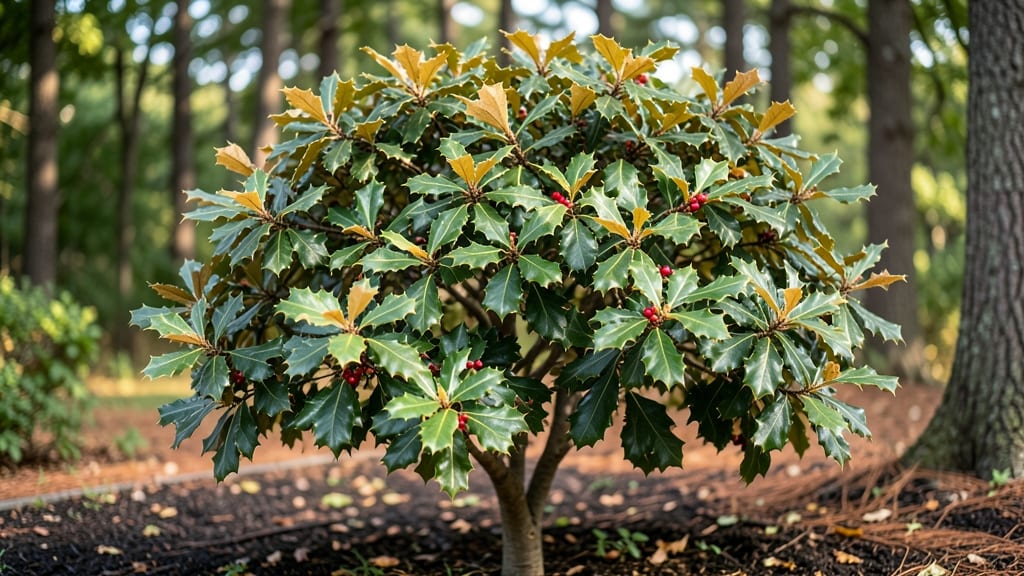
Your holly tree’s leaves turning yellow scream for attention—this is the fix. 🌿 The problem isn’t always obvious, but the solution starts with understanding whether it’s a thirst issue, nutrient starvation, or something sneaking under the leaves.
I’ve nursed back holly trees from patchy yellow to vibrant green using these targeted steps, and you can too.
Start by checking the soil—damp and clumpy means overwatering, while dry and powdery points to underwatering. Yellowing often hides nutrient deficiencies like iron or nitrogen, especially in alkaline soil.
A simple soil test (or DIY pH kit) reveals whether your holly needs chelated iron or a balanced fertilizer to wake up those roots.
For quick fixes, apply a slow-release nitrogen fertilizer in spring and a foliar iron spray if leaves show classic yellowing between veins. Prune any severely damaged branches to improve airflow, and mulch to keep moisture steady.
Within 4-6 weeks, you’ll see new growth pushing through with that rich, holly-green color.
Prevention is easier than cleanup: water deeply but infrequently, monitor soil pH, and spray preventatively for pests in early spring. A healthy holly tree rewards you with glossy leaves and those signature red berries—no more guessing games. Let’s get those branches back to their best.
Root Causes Behind Yellowing Holly Leaves
When your holly tree’s leaves start turning yellow, it’s often a cry for help—whether from hidden pests, poor soil health, or environmental stress. Understanding the why behind the discoloration is the first step to restoring that vibrant green canopy.
Below, we break down the most common culprits, backed by science, so you can diagnose the issue and take targeted action.
Holly trees thrive when their soil is rich in essential nutrients, but deficiencies—especially in iron, nitrogen, or magnesium—can turn leaves yellow faster than you’d expect. Here’s how to spot them:
- Iron Chlorosis: Yellowing between leaf veins (while veins stay green) is classic iron deficiency. Hollies in alkaline soil (pH > 7.0) struggle to absorb iron, even if it’s present. Fix: Apply chelated iron or use sulfur to lower soil pH gradually.
- Nitrogen Shortage: Pale yellow leaves (often starting at the tips) signal nitrogen hunger. This macronutrient fuels leaf growth, and hollies in poor or sandy soil are especially vulnerable. Fix: Use a balanced fertilizer (10-10-10) in early spring or top-dress with compost.
- Magnesium Deficiency: Yellow patches between veins (similar to iron but often with brown edges) mean magnesium is missing. This nutrient is mobile in plants, so older leaves show symptoms first. Fix: Apply Epsom salt (magnesium sulfate)—mix 1 tablespoon per gallon of water and spray foliage or soil.
Pro Tip: 💡 Test your soil before fertilizing! A simple pH test kit (available at garden centers) can reveal if alkalinity is blocking nutrient uptake.
Yellowing leaves aren’t always about nutrients—sometimes, tiny (or not-so-tiny) pests or pathogens are to blame. Here’s how to identify the troublemakers:
| Pest/Disease | Symptoms | Solution |
|---|---|---|
| Spider Mites | Yellow stippling (tiny dots) on leaves, often with webbing. Severe cases cause leaf drop. | Spray leaves with water to dislodge mites, or use neem oil (1 tsp per quart of water). Repeat weekly. |
| Scale Insects | Sticky residue (honeydew) on leaves, yellowing, and black sooty mold growth. | Scrape off visible scales with a soft brush or apply horticultural oil in dormant season. |
| Fungal Leaf Spot | Yellow rings or spots with brown centers, often in humid conditions. | Prune infected branches, improve airflow, and spray with copper fungicide. |
| Root Rot (Overwatering) | Yellowing leaves paired with mushy stems or wilting, especially in compacted soil. | Stop watering until soil is dry 2–3 inches deep, and amend soil with perlite for drainage. |
Pro Tip: 🔥 Inspect the undersides of leaves—pests love to hide there! A hand lens can help spot early infestations.
Holly trees are hardy, but extreme conditions—like scorching sun, poor drainage, or sudden temperature swings—can shock them into dropping or yellowing leaves. Here’s how to adjust:
- Overwatering or Poor Drainage: Yellow leaves + soggy soil = root suffocation. Hollies prefer well-draining soil and hate “wet feet.” Fix: Amend clay soil with compost or sand, and ensure the planting hole has a drainage layer (gravel or rocks).
- Underwatering: Dry, crispy yellow edges on leaves mean the tree is thirsty. Hollies need 1–1.5 inches of water weekly (more in heatwaves). Fix: Water deeply at the base (not the leaves) and mulch to retain moisture.
- Sunburn or Heat Stress: Sudden yellow patches on south-facing leaves in hot climates? That’s sunburn. Hollies prefer partial shade in intense heat. Fix: Prune to reduce dense foliage or install shade cloth temporarily.
- Cold Damage: Yellowing after a hard freeze? Hollies are semi-evergreen, but young leaves can scorch in temperatures below 10°F. Fix: Protect vulnerable trees with burlap wraps in winter, or plant cold-hardy varieties like Ilex × ‘Nellie R. Stevens’.
Pro Tip: 🌡️ Monitor soil temperature—if it’s >85°F, your holly may be heat-stressed. Mulch with wood chips to regulate root zone temps.
Now that you know the why, the next step is action. Start with soil tests and visual inspections, then tailor your fixes to the root cause. A healthy holly rewards you with glossy green leaves year-round!
Revive Your Holly’s Health
When your holly tree’s leaves start turning yellow, it’s a clear call to action—but don’t panic! With the right approach, you can restore that vibrant green canopy.
Below, we’ve mapped out practical fixes for the most common causes, along with prevention tips to keep your holly thriving. Let’s get to work!
---
Yellowing holly leaves often signal a lack of essential nutrients. Here’s how to diagnose and correct them:
#### 🔥 Iron Deficiency (Chlorosis) Symptoms: Yellowing between leaf veins (especially on new growth). How to Fix It: - Apply iron supplements: Use a chelated iron spray or granules (like Ironite or ferrous sulfate) and follow package instructions for application. - Adjust soil pH: Holly trees prefer slightly acidic soil (pH 5.0–6.0).
Test your soil and amend with sulfur or peat moss if needed. - Water deeply: Ensure roots get consistent moisture—dry soil worsens nutrient uptake.
💡 Pro Tip: If your holly is in a container, repot with acidic, well-draining potting mix and fertilize with an iron-rich formula every 2–3 months.
---
#### 🍳 Nitrogen Shortage (General Yellowing) Symptoms: Overall pale yellow leaves, stunted growth. How to Fix It: - Fertilize with nitrogen: Use a balanced 10-10-10 or 20-10-10 fertilizer in early spring and mid-summer. - Add organic matter: Mix compost or aged manure into the soil to boost nitrogen naturally. - Mulch properly: Apply 2–3 inches of pine bark or wood chips to retain moisture and slow nitrogen loss.
⏰ Timing Matters: Avoid fertilizing in winter—holly trees are dormant and won’t absorb nutrients well.
---
#### 👨🍳 Potassium & Magnesium Deficiency Symptoms: Yellowing edges or between veins, weak stems. How to Fix It: - Use a complete fertilizer: Look for one with higher potassium (K) and magnesium (Mg), like 6-10-10. - Apply Epsom salt (for magnesium): Dissolve 1 tbsp per gallon of water and spray on leaves monthly during growing season. - Avoid overwatering: Soggy soil leaches nutrients—ensure proper drainage with raised beds or containers.
🌡️ Quick Test: If leaves feel soft or mushy, overwatering may be flushing out potassium.
---
Sometimes, yellowing isn’t about nutrients—it’s about unwanted guests!
#### 🐛 Holly Leaf Miner or Spider Mites Symptoms: Yellow patches, webbing, or tiny tunnels in leaves. How to Fix It: - Spray with neem oil: Mix 1 tsp neem oil + 1 tsp mild soap per quart of water and apply weekly until pests disappear. - Introduce beneficial insects: Ladybugs and lacewings eat mites naturally—buy them online or attract them with dill or fennel plants. - Prune heavily infested branches and dispose of them in sealed bags.
✨ Organic Boost: Garlic spray (blended garlic + water) deters pests without chemicals.
---
#### 🍄 Fungal Issues (Like Leaf Spot) Symptoms: Yellow spots with dark borders, leaf drop. How to Fix It: - Remove infected leaves and sterilize pruners with rubbing alcohol. - Apply copper fungicide (like Bordeaux mixture) or baking soda spray (1 tbsp baking soda + 1 quart water + a drop of soap). - Improve airflow: Thin dense foliage and avoid overhead watering to keep leaves dry.
🎯 Prevention: Water early in the morning so leaves dry quickly.
---
Once you’ve addressed the issue, keep your holly healthy with these habits: - Water deeply but infrequently—holly trees hate soggy roots but also drought stress. - Mulch annually to lock in moisture and nutrients. - Prune in late winter to remove dead/diseased branches and encourage new growth. - Monitor soil pH every 2–3 years—holly trees hate alkaline soil.
--- Final Thought: Most yellowing holly leaves respond within 4–6 weeks of proper care. Stay consistent, and your tree will bounce back with rich, glossy green foliage! 🌿💚
Frequently asked questions
Why do holly leaves turn yellow in patches instead of all at once?
Patchy yellowing often signals nutrient deficiencies or localized stress. If patches appear between leaf veins, it’s likely iron chlorosis (common in alkaline soil). Yellow edges or spots usually mean magnesium deficiency or fungal leaf spot. Check soil pH first—holly trees prefer acidic soil (pH 5.0-6.0).
Can I save my holly tree if the yellowing has spread to most leaves?
Yes, but act fast! Start with a soil test to check pH/nutrient levels. Apply chelated iron for chlorosis or Epsom salt spray for magnesium issues. Prune severely affected branches to improve airflow, and adjust watering—1-1.5 inches weekly is ideal. With proper care, new growth should return in 4-6 weeks.
How do I tell if my holly’s yellow leaves are from overwatering vs. underwatering?
Check the soil: if it’s soggy 2-3 inches down with yellow leaves + mushy stems, it’s overwatering (root rot). If soil is bone-dry with crispy yellow edges, it’s underwatering. Holly trees hate “wet feet” but also drought stress—aim for consistent moisture, not soggy soil.
Will pruning yellow leaves help my holly recover?
Yes, but strategically! Prune only severely yellow/diseased branches to improve airflow and reduce stress. Avoid heavy pruning—remove no more than 25% of foliage at once. Focus on nutrient fixes (fertilizer, soil amendments) first, then prune to encourage fresh growth.
Can I use household items to fix yellowing holly leaves?
For magnesium deficiency, mix 1 tbsp Epsom salt per gallon of water and spray leaves monthly. For pests, try a garlic spray (blend 3 garlic cloves + 1 quart water) or soapy water spray (1 tsp mild soap per quart). Avoid vinegar—it raises soil pH and worsens nutrient issues.