
Trees
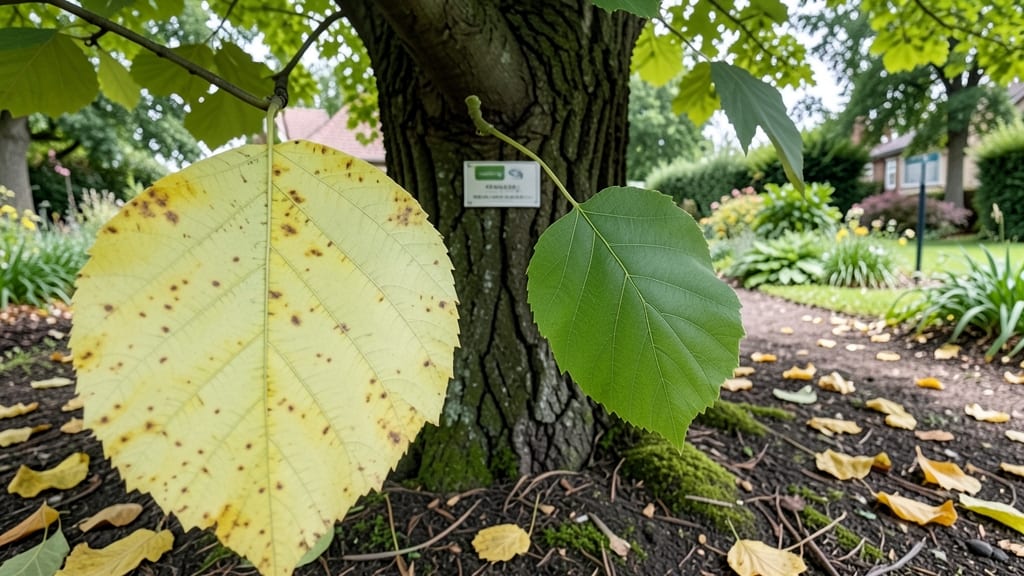
Yellow leaves on elm trees usually point to underlying stress from nutrient imbalances, fungal infections, environmental conditions, or insect damage. Examine the pattern—even yellowing suggests overwatering or iron deficiency, while irregular spots or curling hints at pests or disease. Address the issue promptly to prevent further leaf loss.
Elm trees often show yellowing leaves as a warning sign their roots or foliage aren't getting what they need. 🌿 The most common culprits are overwatering (which suffocates roots) or nutrient deficiencies like iron chlorosis, especially in alkaline soils.
I've seen this most frequently in younger trees or those planted in compacted soil where water drains poorly. For mature trees, check the leaf edges—brown crispy edges often mean underwatering, while soft yellowing usually points to overwatering or fungal issues like Dutch elm disease.
Don't wait until the leaves turn brown and drop—the sooner you act, the better your tree's chances of recovery. Start by testing your soil pH and amending with organic matter if needed.
For fungal concerns, prune affected branches immediately and consider applying a copper-based fungicide. 💫 Remember, elm trees are particularly vulnerable to stress, so consistent care makes all the difference in keeping them healthy.
💡 In This Article
- Diagnosing Elm Tree Leaf Yellowing by Location and Pattern
- Step-by-Step Elm Tree Care Fixes for Yellowing Leaves
Diagnosing elm tree leaf yellowing by location and pattern
Elm trees reveal their health struggles through leaf patterns that act like a diagnostic map. Start by examining where the yellowing occurs—new growth turning yellow first often signals nutrient deficiencies like iron chlorosis, where the tree can't absorb iron from alkaline soils (pH above 7.0).
The yellowing typically appears between leaf veins first, creating a pale green or yellow "net" pattern. 🌿 In contrast, older leaves yellowing uniformly often point to overwatering, where roots suffocate in soggy soil and can't transport nutrients properly.
The color intensity and texture offer critical clues too. Bright yellow leaves with green veins suggest iron deficiency, while dull yellow with brown patches may indicate fungal infections like Dutch elm disease (caused by Ophiostoma novo-ulmi).
Check for other symptoms: curled leaves with yellow spots often mean spider mites, while sticky residue on leaves could signal aphid infestations. Elm trees also show stress through leaf edges—brown, crispy edges usually mean underwatering, while soft, mushy yellowing points to overwatering or root rot.
Light exposure plays a surprising role too. Yellowing on leaves facing south or west often results from sun scorch, where intense afternoon sun burns leaf edges while the center remains green. This creates a "fried" appearance along leaf margins.
Conversely, yellowing on shaded leaves might indicate light deprivation, where the tree stretches toward light but can't produce enough chlorophyll. 💫 Always compare leaves on different branches—if only certain branches show symptoms, it may point to localized soil compaction or poor drainage in that root zone.
Season matters significantly. Spring yellowing often relates to nutrient depletion after winter dormancy, while summer yellowing frequently stems from heat stress or fungal spores thriving in warm, humid conditions. Fall yellowing is normal for deciduous trees, but if it starts before late September or affects only certain leaves, investigate further.
The key is timing—sudden yellowing in non-fall months demands immediate attention, as elm trees can lose large branches quickly when stressed.
Don't overlook the soil's role either. Compacted soil restricts root growth, causing yellowing that spreads upward from the bottom of the tree. Press your finger into the soil—if it feels hard 2-3 inches down, roots are struggling.
For elm trees, which have shallow root systems, even slight soil compaction can trigger widespread yellowing. Consider that elm trees also suffer from "elm yellows," a physiological disorder where leaves turn yellow but remain attached—this often occurs in hot summers and requires no treatment beyond proper watering.
One advanced technique is the "leaf rub test": gently rub a yellow leaf between your fingers. If you see fine black or brown specks, it's likely fungal spores.
For nutrient deficiencies, examine the leaf undersides—iron-deficient leaves often show rust-colored spots, while magnesium deficiencies create yellow patches between veins. 🌟 These visual cues help distinguish between treatable issues (like nutrient amendments) and systemic problems (like fungal diseases) that may require professional intervention.