
How To
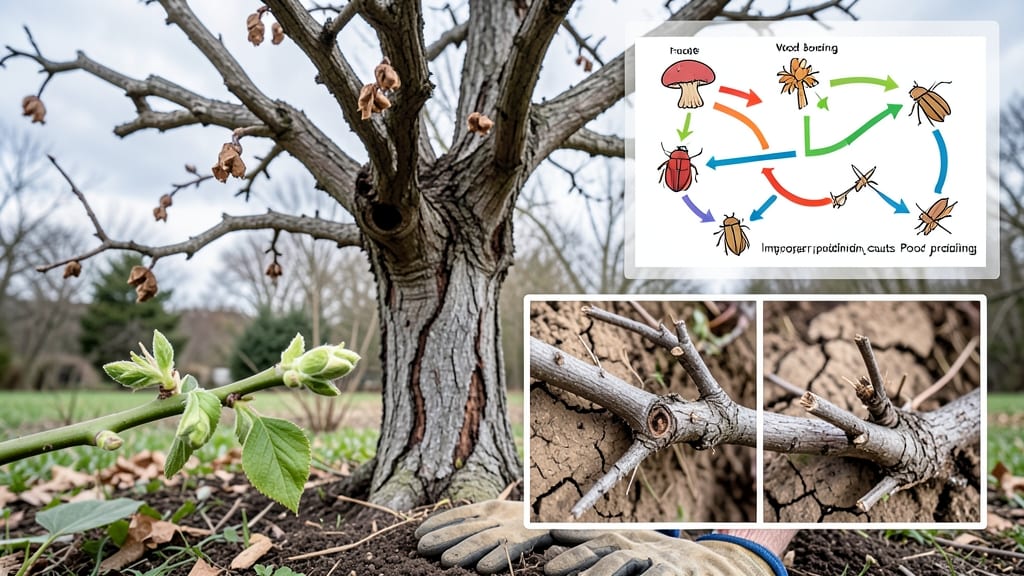
Can dead tree branches come back to life? No, once fully desiccated or rotted, but some dormant or partially damaged branches may recover if the tree’s core remains healthy and environmental conditions improve. Prune dead sections and monitor for new growth signs like buds or sap.
Most people assume a dead branch is beyond saving, but the truth is more nuanced. 🌿 Branches that appear lifeless might actually be dormant due to seasonal changes or environmental stress.
The key is to check for signs of life like slight green undertones under the bark or a faint sap response when scratched. Even if the branch looks hopeless, the tree’s root system and core health can sometimes spark a comeback with proper care.
If you spot any potential for revival, focus on pruning away the clearly dead sections first. This reduces stress on the tree and allows energy to redirect toward healthier growth.
I’ve seen cases where a tree that looked completely lost in winter would burst with new buds by spring—just give it time and the right conditions.
💡 In This Article
- How to Identify If Tree Branches Are Truly Dead
- Steps to Revive Partially Damaged Tree Branches
How to identify if tree branches are truly dead
The science behind branch death revolves around the tree's vascular system—specifically the xylem and phloem tissues that transport water and nutrients. When a branch dies completely, these tissues break down, leaving no pathway for life-giving fluids.
Look for bark texture as your first clue: healthy bark remains firm and slightly flexible, while dead bark becomes brittle and powdery when rubbed between fingers.
The color shift is another telltale sign—healthy branches have green undertones under the bark, while dead ones reveal brown or blackened tissue when you scrape away the outer layer.
A simple scratch test can reveal hidden life. Use a knife or screwdriver to create a shallow cut in the bark. If a green layer appears beneath, the branch is alive. If you see only brown or black, it's dead.
This test works because living cambium tissue (the growth layer) stays green due to chlorophyll, while dead tissue loses all moisture and color.
Seasonal timing matters too—test branches in late spring or early summer when sap flow is strongest, as dormant branches may appear dead in winter even if they'll revive later.
Watch for buds or sap as definitive signs. Live branches often produce small buds along their length, especially in spring, while dead branches remain bare. A fresh cut on a live branch will ooze sap within minutes, whereas dead branches produce nothing.
Even if you spot only a few buds or a tiny amount of sap, that's enough evidence the branch might recover with proper care. The key is patience—some trees take months to show signs of revival after stress.
Don't overlook the branch angle and attachment point. Branches that grow at sharp angles (often called "water sprouts") are frequently dead, as they compete for nutrients. Healthy branches typically grow at 45-degree angles or less from the trunk.
Check the junction where the branch meets the trunk—if it's soft or spongy, that's a sign of decay and irreversible death. On the other hand, a firm, slightly raised collar indicates the branch is still connected to the tree's life support system.
Environmental factors play a surprising role in what appears to be death. Branches in full sun may look crispy and dead during droughts, only to green up after rain. Shade-loving trees like maples often lose leaves in winter but remain alive—what looks like dead branches might just be dormant.
Pay attention to the tree's overall health: if most branches are thriving but one section looks dead, that single branch might still have a chance with targeted care.
One advanced test involves using a hydrometer or even a simple water test. Place a cut branch in a bucket of water for 24 hours—if it absorbs water and shows signs of swelling, it's still alive. This works because living cells maintain osmotic pressure to draw in moisture.
Dead branches remain dry and unchanged. For large branches, this test isn't practical, but it's a great way to check smaller limbs you're unsure about.