
Trees
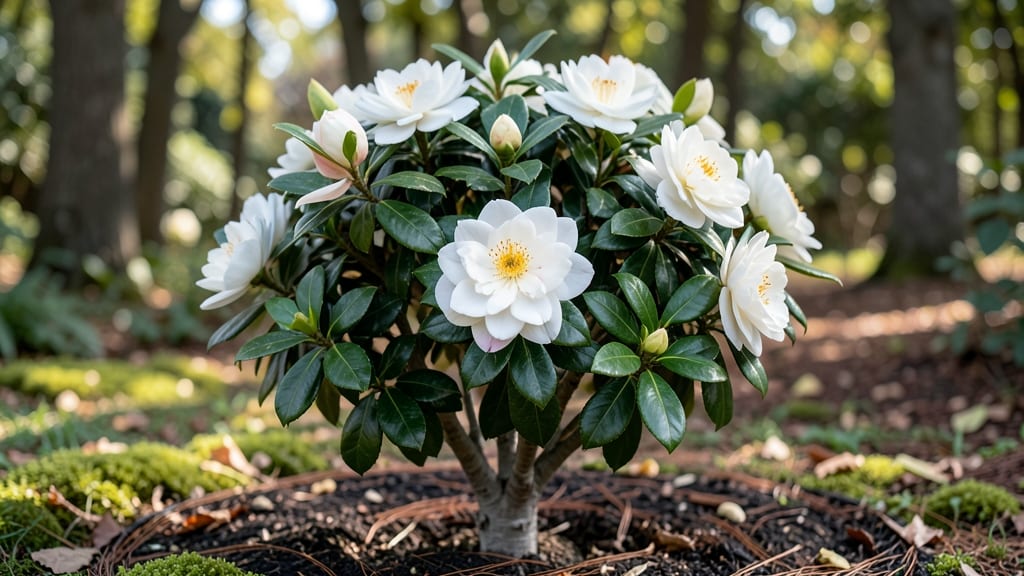
The white camellia tree blooms when others sleep—silent sentinels of winter’s quiet beauty. 🌸 I’ve grown them for years, and their year-round elegance comes from understanding just three secrets: soil that stays moist but never soggy, morning sun with afternoon shade, and the right pruning rhythm that keeps them lush without stressing them.
Their waxen-white flowers last for weeks, even through light frosts, while glossy dark leaves add structure year-round. Unlike fussy plants, white camellias thrive with minimal pruning—just shape after blooms fade, and they’ll reward you with bold, fragrant blooms from late fall through spring.
The key? Planting in well-draining, acidic soil and watering deeply but infrequently.
📚 In This Guide
- What you need
- Instructions
- Tips and common mistakes
- Wrapping up and next steps
What you need
- ● Camellia Tree White: A healthy, disease-free sapling (3–5 years old for best results) or seeds (though grafting is preferred for true white blooms). Quantity: 1 per planting site.
- ● Well-draining soil: Mix of 50% acidic loam (pH 5.0–6.0), 30% peat moss or pine bark, and 20% perlite/sand. Pro tip: Test soil pH with a kit—camellias hate alkaline soil! 🌡️
- ● Organic compost: Aged manure or worm castings (1–2 gallons) to enrich soil before planting.
- ● Mulch: 3–4 inches of pine bark or wood chips to retain moisture and regulate temperature.
- ● Slow-release fertilizer: Acid-loving plant fertilizer (e.g., 8-3-9 or 10-6-4 ratio) with micronutrients like iron and magnesium.
- ● Watering can or hose with a gentle spray nozzle: Camellias dislike soggy roots—aim for 1–2 inches of water per week (adjust for rain).
- ● Pruning tools: Bypass pruners: Sharp, clean pair for trimming small branches.
- ○ Loppers: For thicker stems (optional, if your camellia grows tall).
- ● Disinfectant (70% isopropyl alcohol or bleach solution): To sterilize tools between cuts.
- ○ Support stake (optional): A 5–6 foot bamboo or metal stake if planting in windy areas or for young, top-heavy saplings.
- ○ Drip irrigation system (optional): For automated, consistent watering—camellias love steady moisture! 💧
- ● Location: Partial shade to dappled sunlight (3–6 hours of morning sun max). Avoid harsh afternoon rays in hot climates.
- ● Climate: Thrives in USDA Zones 7–10. Protect young trees with burlap wraps if temperatures dip below 20°F (-7°C).
- ● Spacing: Plant saplings 8–10 feet apart to allow airflow and prevent disease.
- ● Timing: Planting: Fall (September–November) or early spring (March–April) for best root establishment.
- ● Pruning: Late winter (before buds swell) or immediately after flowering.
Step-by-Step instructions for planting and caring for white camellia trees
Here's how to establish your white camellia for decades of elegant blooms with just a few key steps.
🌱 Step 1: Choose and Prepare the Planting Site
White camellias thrive in partial shade with morning sun and afternoon shade, especially in hotter climates. Select a spot where they'll receive 4-6 hours of filtered light daily—too much direct sun scorches the delicate blooms, while too little shade reduces flowering. I always test the site by observing how sunlight moves through the area at different times of day.
Dig a hole twice as wide as the root ball but no deeper—camellias hate having their roots buried too deeply, which can cause root rot. Amend the native soil with 3 inches of organic compost mixed into the bottom and sides of the hole. This improves drainage while providing essential nutrients without overwhelming the plant.
🪴 Step 2: Plant with Proper Spacing and Support
Position the camellia so the top of the root ball sits 1 inch above the surrounding soil line—this prevents water pooling around the stem. Gently loosen the roots if they're circling tightly in the container, then spread them outward in the hole. The 4 plants you're establishing should be spaced 8-10 feet apart to allow for mature growth without overcrowding.
Backfill with the amended soil, pressing lightly as you go to eliminate air pockets. Water deeply right after planting to settle the soil and encourage root contact. I like to add a 2-inch layer of mulch (like pine bark) around the base, keeping it 3 inches away from the trunk to prevent moisture buildup that invites disease.
☀️ Step 3: Establish a Watering and Fertilizing Routine
Water deeply once a week during the first year to encourage deep root growth, but never let the soil stay soggy. Camellias prefer slightly acidic soil (pH 5.5-6.5)—test your soil and amend with sulfur or peat moss if needed. I fertilize lightly in early spring with a balanced, acid-loving plant fertilizer (like 8-8-8 or 10-10-10) at half-strength, then again in late summer to support fall blooming.
Watch for yellowing leaves—this usually means overwatering or poor drainage. If you see this, reduce watering and check that your mulch isn't smothering the roots. The first year is about root establishment, so resist the urge to prune. Let the plant focus on growing strong before you shape it.
✂️ Step 4: Prune for Health and Shape (Minimalist Approach)
Prune only when necessary—camellias bloom on old wood, so aggressive cutting reduces flowers. The best time to prune is right after blooming, in late spring or early summer. Remove dead, diseased, or crossing branches first, then thin out 10-15% of the oldest growth to improve airflow and light penetration.
Use clean, sharp pruners to make cuts just above a leaf node or outward-facing bud. Avoid "heading back" (cutting into older wood)—this removes next year's blooms. I like to shape the plant naturally, letting it grow into its mature form without forcing it into a rigid structure. The goal is health, not perfection.
⏰ Step 5: Prepare for Winter and Encourage Year-Round Blooms
Camellias are evergreen, but they still need protection in harsh winters (below 10°F). Wrap the trunk and branches with burlap or frost cloth if your climate gets colder than this. In milder winters, they'll bloom year-round with minimal care—just keep the soil consistently moist and avoid heavy pruning.
For maximum blooms, feed lightly in early spring with an acid-loving fertilizer (like cottonseed meal) and mulch again in late fall to insulate roots. The key to long-term success is patience—camellias often take 2-3 years to establish enough to bloom heavily, but once they do, they'll reward you with stunning white flowers for decades.
Tips & tricks for perfect white camellia planting and care
These small details make all the difference between a struggling camellia and one that thrives for decades.
Light Assessment: Don't just guess about that 4-6 hours of filtered light—use a simple trick to test your spot. Place a white plate where you plan to plant and observe it at different times of day. If it gets direct sun for more than 2 hours at any point, you need more shade. Morning sun is ideal, but afternoon shade is non-negotiable for delicate white blooms.
Root Preparation: When loosening those circling roots in Step 2, I've found that scoring the bottom of the root ball with a clean knife (about 4 shallow cuts) helps encourage faster root spread. This mimics natural root growth patterns and prevents the plant from struggling to adjust. Just be gentle—you're not trying to chop through anything, just encouraging outward growth.
Mulch Placement: That 2-inch layer of mulch is crucial, but its placement matters just as much. Keep it 3 inches away from the trunk to prevent moisture buildup that causes rot. I like to create a shallow "well" around the base where the mulch sits—this helps direct water away from the stem while still insulating the roots. Pine bark works beautifully because it breaks down slowly and improves soil structure over time.
Winter Protection: For those harsh winters below 10°F, I've learned that wrapping the trunk first makes all the difference. Start with the trunk, then work outward to the branches. This creates a protective barrier that prevents cold winds from drying out the cambium layer—the plant's growth tissue. Think of it like putting on a sweater before your coat, not the other way around.
Pro Tips for Camellia Tree White
- These small details make all the difference between a struggling camellia and one that thrives for decades.
- Light Assessment: Don't just guess about that 4-6 hours of filtered light—use a simple trick to test your spot.
- Root Preparation: When loosening those circling roots in Step 2, I've found that scoring the bottom of the root ball with a clean knife (about 4 shallow cuts) helps encourage faster root spread.
Frequently asked questions
Got questions about growing and caring for your white camellia tree? You’re not alone! Here are some of the most common queries—plus straightforward answers to keep your tree thriving with minimal fuss.
When is the best time to plant a white camellia tree?
The ideal window is late fall to early spring (November–March), when the tree is dormant. This gives roots time to establish before summer heat arrives. Avoid planting in extreme heat or cold—your camellia will thank you with lush, vibrant blooms!
Can white camellias survive winter frost?
Yes! Most white camellias (like Camellia japonica) are hardy to USDA Zones 7–9. Young trees or tender varieties may need winter mulch (3–4 inches of organic matter) to protect roots. Older trees usually bounce back—just avoid heavy pruning in cold months.
Why isn’t my white camellia blooming?
Common culprits include:
- Too much shade: Camellias need partial sun (4–6 hours/day).
- Over-fertilizing: Too much nitrogen = leaves over growth, fewer flowers.
- Improper pruning: Prune after blooming (late spring) to avoid cutting next year’s buds.
- Age: Young trees (under 3 years) may focus on root growth first.
What’s a low-maintenance alternative to a white camellia?
If you want easy-care evergreens with flowers, consider:
- Gardenia: Fragrant white blooms, thrives in shade, but hates soggy soil.
- Oleander: Drought-tolerant, blooms year-round (but toxic to pets).
- Dwarf Japanese Maple: Stunning foliage, minimal pruning, but slower-growing.
Are white camellias toxic to pets?
Yes, all parts of the camellia tree (leaves, flowers, seeds) contain cyanogenic glycosides, which can cause vomiting, diarrhea, or lethargy if ingested. Keep pets away from fallen petals or chewed branches. Opt for pet-safe alternatives like Hydrangea or Azalea if you’re concerned.
Wrapping up and next steps
The white camellia tree is a stunning, low-maintenance addition that brings elegance to any landscape with its year-round beauty—whether in bloom, lush foliage, or winter charm. With the right care, you’ll enjoy its resilience and minimal pruning needs, making it perfect for both beginners and seasoned gardeners alike.
Ready to transform your outdoor space? Start by selecting the ideal spot—whether sun-dappled or shaded—and follow the simple steps outlined above. Your white camellia will thrive with just a little patience and love! 🌸✨