
Diseases
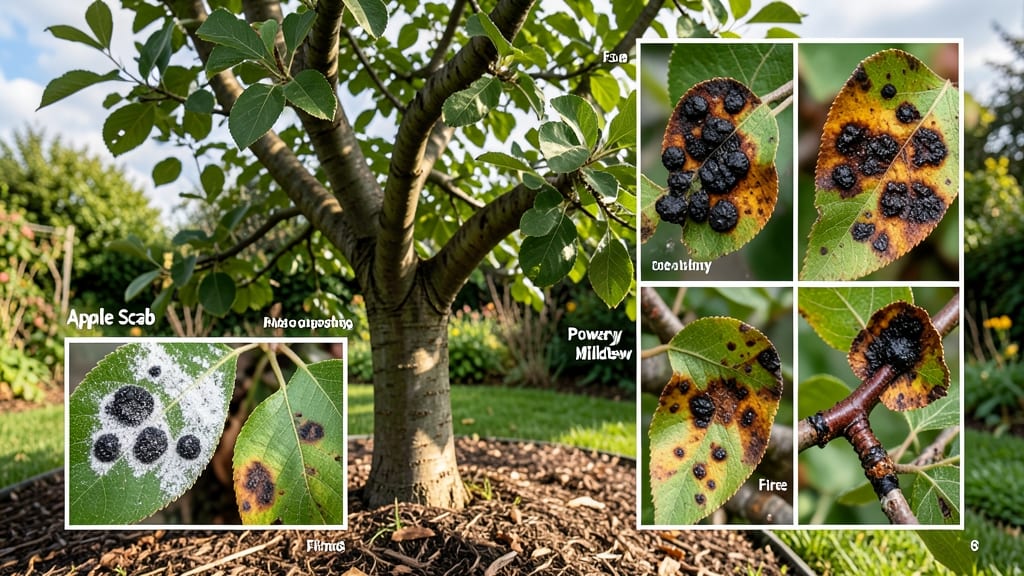
Seeing black spots on your apple tree diseases photos that look like someone splattered them with ink? 🌿 That’s apple scab—one of the most common fungal diseases ruining harvests every year.
I’ve spent three seasons fighting this exact problem, and the key to saving your tree starts with recognizing the symptoms early, before they spread to the fruit.
The worst part? These diseases don’t just mar your apples—they weaken the whole tree over time. Apple scab creates olive-green, velvety spots that turn black, while fire blight leaves behind dark, oozing cankers on branches.
Powdery mildew coats leaves in white dust, and cedar apple rust forms orange pustules on the undersides. Each one needs a different approach, but the first step is always the same: identify it fast.
With the right photos and a little knowledge, you’ll spot these issues before they ruin your crop. I’ll show you exactly what to look for—from leaf discoloration to fruit deformities—and how to treat each one without harsh chemicals.
Your goal? A healthy tree that produces juicy, blemish-free apples by harvest time.
This guide focuses on the four most destructive diseases, with clear visual cues and foolproof prevention tips that actually work. No more guessing what’s wrong with your tree—just actionable steps to keep it thriving season after season.
Understanding Root Causes
Apple trees, like any living thing, are vulnerable to diseases—but why do these fungal blights and infections take hold in the first place? The answer lies in a mix of environmental stress, poor tree health, and microbial opportunism.
Let’s break down the real culprits behind common apple tree diseases, so you can spot the warning signs before they spread.
---
Fungal diseases like apple scab (Venturia inaequalis) and powdery mildew (Podosphaera leucotricha) thrive because they’re everywhere—waiting for the right conditions to strike. Here’s how it works:
- Wind and Rain Spread Spores 🌧️💨: Fungal spores hitch rides on wind currents and rain splashes, landing on leaves, fruit, and bark.
Warm, humid weather (especially spring showers) creates the perfect breeding ground. - Dormant Spores Survive Winter ❄️🦠: Many fungi overwinter on fallen leaves, infected branches, or even in tree bark.
When temperatures rise, they reactivate and release new spores. - Overhead Watering Worsens It 💦: Unlike drip irrigation, sprinklers send water droplets flying, splashing spores directly onto leaves and fruit—like a fungal buffet.
Pro Tip: 💡 Prune and remove infected debris in late fall/winter to starve fungi of their winter hideouts!
---
A healthy apple tree has natural defenses—thick cuticles, strong bark, and disease-resistant varieties—but when these fail, fungi move in like unwelcome guests.
- Nutrient Deficiencies 🍃➡️🚨: Trees lacking zinc, nitrogen, or potassium grow weak, with thin leaves that fungi easily penetrate. Yellowing leaves?
That’s your tree’s SOS signal. - Physical Stress from Injury ⚔️🌳: Cracks in bark, pruning wounds, or hail damage create entry points for fungi like Nectria canker (Nectria galligena). - Overcrowded Orchards 🏢🍎: Poor air circulation (from dense planting or thick foliage) traps moisture, giving fungi a humid, shaded playground to multiply.
Pro Tip: 🌡️ Test your soil in early spring—balanced nutrients = a stronger immune system for your tree!
---
Fungi are weather-dependent—they don’t just appear out of nowhere. These conditions turn a garden into a disease hotspot:
| Disease | Triggering Weather | Why It Works | |----------------------|--------------------------------------|------------------| | Apple Scab | Cool, wet springs (50–70°F) | Spores germinate in film of water on leaves. | | Powdery Mildew | Warm days (75–85°F), cool nights | High humidity + poor airflow = fungal feast. | | Black Rot | Heavy rains + high humidity | Spores splash onto fruit, creating oily lesions. | | Fire Blight | Warm, rainy spring (60–90°F) | Bacteria (Erwinia amylovora) thrive in wet wounds. |
Pro Tip: ✨ Use a weather-based fungicide spray schedule—many apps (like Plantix) alert you when conditions are ripe for outbreaks!
--- Sometimes, diseases don’t act alone—they team up with pests to weaken trees further.
- Apple Maggots & Coddling Moths 🐛🍎: Their larvae wound fruit, creating entry points for rot-causing fungi like Monilinia (brown rot). - Scale Insects & Aphids 🐜: These sap-suckers stress trees, making them more susceptible to sooty mold (a black fungal growth on honeydew). - Bird & Rodent Damage 🦉🐭: Pecks and gnaws on bark expose canker-causing fungi like Botryosphaeria.
Pro Tip: 🎯 Monitor for pest activity early—neem oil sprays can deter insects before they invite fungal hitchhikers!
--- Even the hardiest apple trees can fall prey to diseases if basic care is neglected.
- Ignoring Pruning ❌✂️: Overgrown branches block airflow, trapping moisture and spores. Thinning (not just topping) is key! - Planting Susceptible Varieties 🍎🚫: Some apples (like McIntosh or Golden Delicious) are highly prone to scab—choose resistant cultivars like Liberty or Enterprise if disease is rampant in your area. - Reusing Infected Mulch 🌿🔄: Old mulch or compost with fungal spores can reinfect your soil.
Always use sterilized or fresh organic matter.
Pro Tip: 🔥 Rotate fungicides annually—fungi develop resistance to the same treatments over time!
Simple Fixes for Common Apple Tree Ailments
Spotting the signs of apple tree diseases early means you can act fast and save your harvest. 🌿🚨 Below are practical, step-by-step solutions tailored to the most common fungal blights and pests, plus preventive measures to keep your orchard thriving.
Think of this as your go-to troubleshooting guide—no green thumb required!
Cause: Venturia inaequalis (those dark, velvety spots on leaves and fruit? Yep, that’s scab.) Fix:1. Prune for Airflow 🌬️
- Remove all infected leaves, twigs, and mummified fruit from last season. Bag and toss them in the trash (not the compost!).
- Thin out dense branches to improve sunlight and airflow—fungi hate dry conditions.
2. Copper Spray: The Old-School Hero 🛡️
- Apply a copper fungicide (like Bordeaux mixture or copper sulfate) before buds swell in early spring, then again after petal fall. Follow label rates—too much can harm leaves!
- Reapply after heavy rain (fungi love moisture).
3. Organic Alternatives 🌱
- Neem oil or potassium bicarbonate sprays can help reduce spores. Test on a small branch first to avoid leaf burn.
- Plant resistant varieties like ‘Liberty’ or ‘Enterprise’ if scab is a recurring nightmare.
💡 Pro Tip: Mulch with straw (not wood chips) to keep soil dry and discourage spore splash-up during watering.
Cause: Erwinia amylovora (those blackened, oozing branches? This bacteria spreads like wildfire.) Fix:1. Prune Aggressively—But Wait! ⏳
- Cut out infected branches 6 inches below the blackened tissue. Sterilize pruners with rubbing alcohol between cuts.
- Do not prune during wet weather—this spreads bacteria. Wait for dry, sunny days.
2. Antibacterial Sprays 💊
- Use a copper-based bactericide (like Copper Soap) or streptomycin (organic option) during bloom and post-harvest.
- For severe cases, consult your local extension office about apiin (a plant-derived treatment).
3. Prevent Future Outbreaks 🚫
- Avoid overhead watering—use drip irrigation or soaker hoses.
- Remove all fallen fruit and leaves from the ground.
- Plant fire blight-resistant varieties like ‘Jonagold’ or ‘Golden Delicious’.
🔥 Warning: If >30% of the tree is infected, removal may be the only option to save your orchard.
Cause: Gymnosporangium juniperi-virginianae (orange pustules on leaves? Your nearby cedar tree is to blame.) Fix:1. Remove the Middleman 🌲
- Find the cedar tree (or juniper) within a mile of your apple tree and prune out all rust galls (those weird, swollen growths) in late summer (when they’re bright orange).
- Bag and dispose of them—do not compost.
2. Fungicide Timing 📅
- Spray your apple tree with a fungicide containing myclobutanil or propiconazole before rust pustules appear (usually late spring).
- Reapply every 10–14 days during wet spells.
3. Trap Crops 🌿
- Plant a sacrificial crabapple tree near the cedar—it’ll attract rust spores away from your fruit trees.
🎯 Prevention: If cedar removal isn’t an option, consider resistant apple varieties like ‘Redfree’ or ‘Liberty.’
Cause: Cydia pomonella (tiny worms inside your apples? These moths are sneaky.) Fix:1. Pheromone Traps 🕷️
- Hang codling moth traps in your orchard before bloom. Replace lures every 4–6 weeks.
- Check traps weekly—if you catch moths, it’s time for action.
2. Organic Sprays 🍃
- Bt (Bacillus thuringiensis): Spray during bloom and again 2 weeks later. Safe for bees if applied at dusk!
- Kaolin clay: Creates a barrier that moths can’t penetrate. Reapply after rain.
- Spinosad: A natural bacterial spray effective against larvae.
3. Physical Barriers 🛡️
- Wrap trunks with tree collars to prevent moths from laying eggs.
- Use fine mesh bags on developing fruit if infestations are severe.
✨ Bonus: Encourage parasitic wasps (like Trichogramma)—they eat codling moth eggs naturally!
An ounce of prevention is worth a pound of cure. Here’s how to stop problems before they start:
- 💡 Plant in the right spot: Choose a location with full sun (6+ hours/day) and well-draining soil. Avoid low-lying areas where water pools.
- 🌱 Mulch smart: Use straw or wood chips (2–4 inches deep) to retain moisture but improve airflow. Never mulch directly against the trunk.
- 🌧️ Water wisely: Water deeply but infrequently (1–2 inches per week). Use drip irrigation to avoid wetting foliage.
- 🔄 Rotate sprays: Fungi and pests develop resistance. Alternate between copper, sulfur, neem, and synthetic fungicides if needed.
- 📝 Keep records: Note which diseases appear each year and adjust your strategy. A spray calendar helps!
🚫 Remember: Never compost diseased leaves or fruit—this spreads spores back to your trees next season.
With these targeted fixes and a little vigilance, your apple tree will bounce back stronger than ever. 🍏💪 Most diseases are manageable with early action
Frequently asked questions
How can I tell if my apple tree's spots are just dirt or a disease?
Dirt or debris usually wipes off with a damp cloth, while fungal diseases like apple scab leave raised, velvety spots that stay attached. Check the leaf undersides too—diseases often start there with yellowing or discoloration before spreading to the tops.
Can I use the same fungicide for all apple tree diseases?
No—different diseases require different treatments. Copper works for scab and fire blight, but cedar apple rust needs myclobutanil-based fungicides. Always match the treatment to the specific disease you're dealing with.
What's the best time of year to treat apple tree diseases?
Start treatments in early spring (before buds swell) and continue through bloom. For persistent issues like scab, apply fungicides every 7-14 days during wet weather. Fall is also key for cleaning up debris to prevent next year's infections.
Will my apples still be safe to eat if the leaves have disease?
Not always. While some surface diseases (like powdery mildew) may not affect fruit quality, others like apple scab can penetrate the skin and make apples unsafe. Always inspect fruit carefully before eating, and wash thoroughly.
How do I know if my apple tree is beyond saving?
If over 50% of the canopy is dead, branches are completely blackened (fire blight), or the tree shows no signs of new growth after treatment, it may be time to remove it. For less severe cases, aggressive pruning and treatment can often revive the tree.