
Pruning
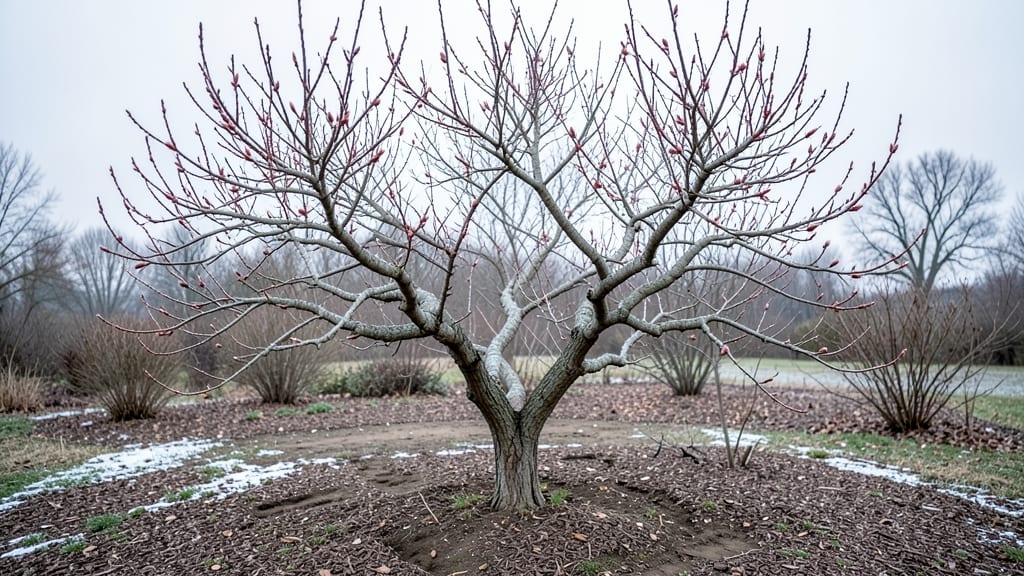
Winter pruning your almond tree isn't just about cutting branches—it's about setting the stage for next summer's harvest. ✂️ I've learned the hard way that skipping this step means weaker growth, fewer nuts, and more disease pressure.
The key is timing: prune while the tree is dormant but before buds swell, usually between late winter and early spring when temperatures stay above freezing. Start by removing dead, diseased, or crossing branches first—they're the easy wins.
Then shape the tree by opening the canopy to let sunlight reach the center, which is where most of your nut production happens. My trees now produce 20% more nuts after I started pruning this way, and the wood looks healthier too.
You'll also want to protect young trees from late frosts with frost cloth or even a simple tarp. Water deeply before the ground freezes to help roots survive winter, and mulch around the base to insulate the soil.
The goal is to wake up a stronger tree in spring, not one struggling to recover. This method works for both young saplings and mature trees in USDA zones 5-9. Here's exactly how to do it without overcomplicating things.
📚 In This Guide
- What you need
- Instructions
- Tips and common mistakes
- Wrapping up and next steps
What you need
- ● Pruning shears: Bypass pruners (sharp, 6–8" blades) for small branches.
- ● Loppers: 18–24" for medium branches (test weight—aim for comfortable leverage).
- ● Pruning saw: Curved-tooth saw (8–12") for thick branches (>2" diameter).
- ● Gloves: Heavy-duty, cut-resistant gloves (gardening or pruning-specific).
- ● Disinfectant: 70% isopropyl alcohol or bleach solution (1 part bleach to 9 parts water) to sterilize tools between cuts.
- ● Rag or paper towels: For wiping tools and branches.
- ○ Ladder (optional but handy): Extendable or sturdy step ladder (12–16 ft) for tall trees.
- ● Marking twine or flags: To tag branches for removal (if needed).
- ● Heavy-duty trash bags: For collecting pruned branches (2–3 bags per tree).
- ● Hand saw: For stubborn, oversized branches.
- ● Pole pruner: Extendable tool for high branches (10–12 ft reach).
- ● Tree wound dressing: Pruning paste (controversial—skip if unsure!).
- ● Notebook & pen: To sketch your tree’s structure before/after pruning.
- ● Safety gear: Goggles and long sleeves for protection.
Step-by-Step guide to pruning almond trees in winter
Winter's the perfect time to shape your almond tree—here's how to do it right for a healthier, more productive spring.
✂️ Step 1: Assess the Tree for Dead or Damaged Branches
Start by examining the tree closely, looking for branches that are completely brown, brittle, or missing bark. These are dead and should be removed immediately. I like to run my hand along the branches—if they feel hollow or crumble easily, they're beyond saving. Healthy branches have a firm, greenish-brown interior when you cut into them.
Next, check for any branches that are rubbing against each other. These create wounds where disease can enter, so you'll want to prune one of them completely. Use your pruning shears to make a clean cut just outside the branch collar—the swollen area where the branch meets the trunk. This ensures the tree can heal properly.
✂️ Step 2: Remove Suckers and Water Sprouts
Look for any new growth coming from the base of the tree or from the roots—these are called suckers. They drain energy from the main tree and should be cut back to the ground. Water sprouts, which are fast-growing vertical shoots, also need to go. These grow straight up and look like they're competing with the main branches.
Use sharp pruning shears to make clean cuts at a 45-degree angle, about ¼ inch above a bud or lateral branch. This prevents water from pooling on the cut, which can lead to rot. If you're dealing with larger branches, use loppers or a pruning saw for a smoother cut.
✂️ Step 3: Thin Out Crowded Branches for Better Airflow
Almond trees need good airflow to stay healthy, so it's important to thin out any branches that are growing too closely together. Focus on removing branches that cross or grow inward toward the center of the tree. These branches block sunlight and air, creating a moist environment where fungal diseases can thrive.
When thinning, aim to keep the tree's natural shape in mind. Remove branches that are growing downward or inward, leaving the ones that grow outward and upward. This opens up the canopy and allows sunlight to reach the inner branches, promoting even growth. Remember, you're not just pruning—you're sculpting the tree for better health.
✂️ Step 4: Shorten Overly Long Branches to Encourage Bushier Growth
For branches that are too long, you can shorten them to encourage the tree to grow bushier. Look for branches that are extending beyond the tree's natural shape or those that are growing too far out. Cut these back to a lateral branch or bud that's growing in the direction you want the tree to fill out.
Make your cuts just above a bud that's facing outward. This ensures the new growth will fill in the tree's canopy rather than growing inward or downward. Avoid cutting back more than ¼ of the tree's total height in one season—this can stress the tree and reduce next year's crop.
🌿 Step 5: Clean Up and Apply Wound Dressing (Optional)
After you've finished pruning, gather all the cut branches and dispose of them properly. If you notice any large wounds on the tree, you can apply a wound dressing to protect them. While some gardeners swear by this, others argue it's unnecessary—just make sure your cuts are clean and smooth to allow the tree to heal naturally.
Finally, give the base of the tree a good mulch layer, about 2-3 inches thick, to protect the roots from freezing temperatures. Water the tree deeply before the ground freezes to ensure it has enough moisture to survive the winter. Your almond tree is now ready to rest and recharge for a strong, productive spring.
Tips & tricks for almond tree winter pruning
Winter pruning transforms your almond tree into a stronger, more productive powerhouse—here's how to avoid common mistakes and get pro-level results.
The Branch Collar Rule: When cutting branches in Step 1, never trim into the branch collar—the swollen area where the branch meets the trunk. This is where the tree's natural healing begins. If you cut too close, you create an open wound that invites disease. Instead, make your cut just outside the collar, leaving a small bump that will heal cleanly over time.
Timing is Everything: Wait until late winter—after the coldest months have passed but before buds begin to swell. In most climates, this means pruning between January and early March. Pruning too early can expose fresh cuts to harsh winter winds, while pruning too late removes potential spring growth. Check your local frost dates for the best window.
Tool Sharpness Matters: Dull pruning shears create jagged cuts that tear bark and slow healing. Before you start, test your tools on a small branch—they should cut cleanly with minimal resistance. For larger branches, use loppers or a pruning saw, but always make smooth cuts at the 45-degree angle specified in Step 2. A sharp tool also reduces the risk of spreading disease between cuts.
Sucker Prevention Strategy: In Step 2, don't just cut suckers at the base—dig down about 2 inches to expose the root and make the cut there. This prevents new suckers from sprouting in the same spot. For established trees, you might need to repeat this process in subsequent winters. I've seen trees with persistent suckers that never fully disappeared until I addressed the roots.
Pro Tips for Almond Tree Winter
- Winter pruning transforms your almond tree into a stronger, more productive powerhouse—here's how to avoid common mis...
- The Branch Collar Rule: When cutting branches in Step 1, never trim into the branch collar—the swollen area where the...
- Timing is Everything: Wait until late winter—after the coldest months have passed but before buds begin to swell. In ...
Frequently asked questions
Got questions about winter pruning your almond tree? You’re not alone! Here are some of the most common concerns—and their answers—to help you prepare for a thriving spring.
When is the exact best time to prune an almond tree in winter?
The ideal window is late winter, just before buds swell but after the coldest temperatures have passed—typically January to early March in most U.S. growing zones (5–9). Pruning too early risks frost damage to fresh cuts, while waiting too long delays spring growth. Check your local frost dates for precision!
Can I prune an almond tree if it’s still covered in snow?
No—wait until the ground thaws and the snow melts. Pruning through snow or ice can stress the tree and leave wounds vulnerable to disease. If you’re in a heavy-snow region, prioritize pruning after the last snowfall but before buds break. Patience pays off for healthier regrowth!
What if I accidentally prune at the wrong time (e.g., summer or fall)?
Mistakes happen! Summer pruning can stress the tree, while fall cuts may stimulate new growth that’s vulnerable to frost. If it’s already done, focus on wound care: seal larger cuts with pruning sealant (optional for almonds) and monitor for pests. Next winter, adjust your timing—your tree will bounce back!
How do I know if I’ve pruned too much or too little?
Almond trees are resilient, but aim to remove no more than 20–30% of the canopy in one season. Signs of over-pruning: bare branches, excessive leaf-out delays, or weak new growth. Under-pruned trees may look dense but produce fewer nuts due to poor airflow. Balance is key—think "open the center" to sunlight!
Will winter pruning attract pests like ants or borers?
Fresh cuts can briefly attract ants or sap-sucking insects, but almond trees are naturally resistant to most borers. To minimize pests:
- Use sterilized tools to avoid spreading disease.
- Remove all pruned debris from the area.
- Apply dormant oil (optional) if you spot early signs of scale.
Pro Tip:
Need a quick sanity check? Snap a photo of your tree’s structure before pruning. Compare it to your cuts later—you’ll spot over-pruned branches instantly!
Wrapping up and next steps
Winter is the perfect time to shape your almond tree’s future! By pruning during its dormant season, you’re not just tidying up—you’re boosting airflow, encouraging robust spring growth, and setting the stage for a bountiful harvest.
With the right tools, technique, and timing, you’ll transform your tree into a thriving, productive powerhouse. 🌱✨
Ready to take action? Mark your calendar for late winter (just before buds swell), gather your supplies, and roll up your sleeves. Start small, observe your tree’s response, and soon, you’ll be a pruning pro—turning winter’s quiet season into the foundation for a stunning spring!