
Pruning
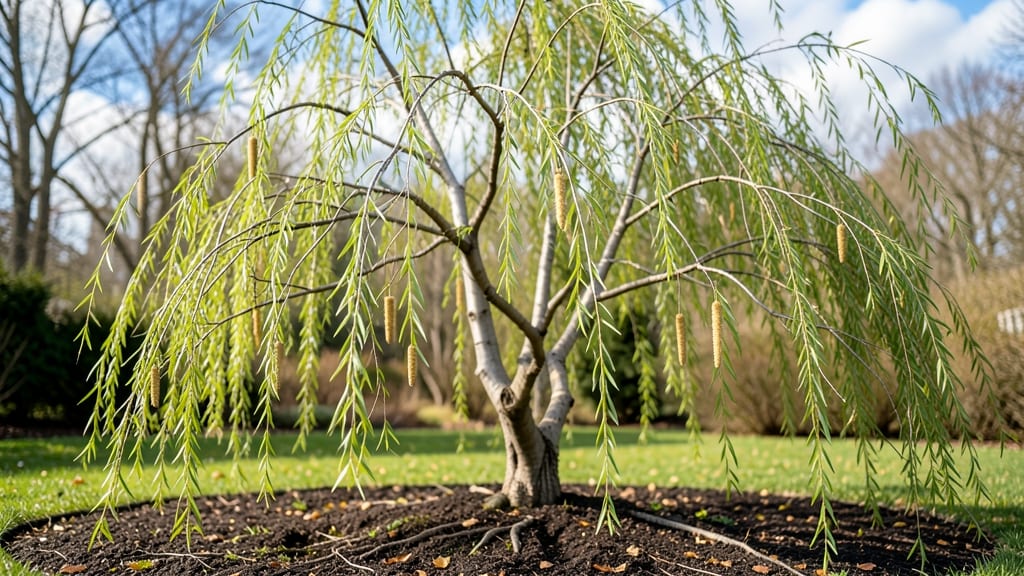
Spring is when your willow tree wakes up from winter dormancy—and pruning at the right moment can transform it from a tangled mess into a graceful, vigorous centerpiece. 🌿 The key is timing: wait until after the first flush of bright green leaves appears, but don’t delay past early May, or you’ll miss the best growth window.
I’ve seen willows that looked dead in winter burst into life after just a few strategic cuts, their new shoots reaching for the sky within weeks.
What makes spring pruning different for willows? Unlike many trees, they bleed sap aggressively when cut, so timing matters—aim for 45-55°F days when sap flow slows. You’ll also spot those fuzzy yellow catkins (the tree’s early flowers) as a signal it’s ready.
Grab your loppers and focus on removing dead wood first, then thinning out crowded branches to improve airflow. The goal isn’t perfection; it’s encouraging that lush, weeping growth you love willows for.
By late spring, you’ll see the payoff: new shoots emerge within 2-3 weeks, and the tree’s natural shape starts to reassert itself. The fresh foliage smells faintly sweet, and those iconic willow branches—long and graceful—begin to form.
Just watch for aphids, which love new growth; a strong spray of water can keep them in check without chemicals.
This method works for all willow varieties, whether you’ve got a fast-growing weeping willow or a compact dwarf variety. The same principles apply, just scaled to your tree’s size. Spring pruning isn’t just about shaping—it’s about giving your willow the energy to thrive all season long.
📚 In This Guide
- What you need
- Instructions
- Tips and common mistakes
- Wrapping up and next steps
What you need
- ● Pruning shears: Bypass shears (8-10" blade) for clean cuts on branches up to ½" thick.
- ● Loppers: 12-16" long, with a bypass or anvil blade for branches ½" to 2" in diameter.
- ● Pruning saw: Curved-tooth saw for thick branches (2"+) to avoid tearing.
- ● Gloves: Heavy-duty, cut-resistant to protect hands from thorns and sap.
- ● Disinfectant (70% isopropyl alcohol or bleach solution): 1 part bleach to 9 parts water to sterilize tools between cuts.
- ● Rubbing alcohol or hand sanitizer: For quick tool cleaning in the field.
- ○ Pruning sealant (optional but recommended): Tree wound paint for cuts larger than 2" in diameter.
- ● Ladder or extension pole: If your willow is taller than 6 feet (safety first! 🚧).
- ● Heavy-duty trash bags: For collecting pruned branches and debris.
- ● Sharpie or marker: To label branches if you’re doing structured pruning.
- ● Safety goggles: Protects eyes from flying debris.
- ● Earplugs: Useful if your willow is near power lines (sparks can fly!).
- ● Knee pads: For comfort if you’re working on the ground.
- ● Tree growth regulator (e.g., hydrogen peroxide spray): Helps reduce sap bleeding post-pruning.
- ● Camera or phone: Snap before/after shots to track progress!
Instructions for pruning a willow tree in spring
Here’s how I refresh willow trees each spring—clean cuts that boost growth and prevent messy regrowth.
✂️ Step 1: Assess the Tree’s Structure and Health
Start by examining the willow’s branches from the ground up. Look for dead, crossing, or overcrowded limbs—these are your first targets. Willow trees grow fast, so their branches often tangle or grow inward, which weakens the tree and invites disease. I like to use a 10x magnifying glass to spot small cracks or signs of fungal infection on the bark.
Focus on removing any branches that rub against each other or grow toward the center of the tree. These are called water sprouts or suckers—they drain energy from the main structure. If you see branches with brown, brittle wood or no leaves, they’re dead and should be cut back to healthy wood. This step is all about visual inspection—trust your eyes, not just what feels obvious from a distance.
✂️ Step 2: Make Clean Cuts at the Right Angles
Use sharp pruning shears or a pruning saw for thicker branches (over ½ inch in diameter). Cut just outside the branch collar—that’s the swollen area where the branch meets the trunk. The cut should be at a 45-degree angle, sloping away from the branch collar. This prevents water from pooling and rotting the wound.
For larger branches, I make a three-cut technique: First, cut downward about 2 feet from the branch collar to reduce weight. Then, cut upward just outside the collar. Finally, trim any remaining stub. Avoid leaving stubs—they invite pests and disease. If you’re unsure, take a photo first; willow trees regrow quickly, so you can always adjust later.
✂️ Step 3: Thin Out Overcrowded Areas for Better Airflow
Willow trees thrive when their canopy gets good airflow and sunlight. Remove one-third of the oldest or weakest branches to open up the center. Start at the bottom and work your way up—this encourages new growth lower on the tree. If you’re pruning a young willow (under 5 years old), focus on structural shaping rather than heavy thinning.
Watch for sucker growth at the base—these are aggressive new shoots that steal energy. Cut them back to the ground immediately. If left unchecked, they’ll turn into a thicket. I like to mulch the base with 2-3 inches of wood chips after pruning to suppress future suckers while keeping the soil moist.
☀️ Step 4: Encourage New Growth with Strategic Trimming
After removing dead or weak branches, look for healthy, outward-facing branches and leave them intact. These will form the new structure. If the tree looks top-heavy, trim back the topmost branches slightly to balance it. Willow trees respond well to light pruning—don’t overdo it, or you’ll stress the tree.
Once you’ve finished, step back and visualize the tree’s shape. It should look open and airy, not dense. If you’re unsure, compare it to a natural willow shape—willows grow in a weeping or rounded form, so aim for that silhouette. Water the tree deeply after pruning to help it recover, especially if you’ve made large cuts. A slow, deep watering (about 10 gallons) is better than a quick sprinkle.
⏰ Step 5: Monitor and Maintain Through the Growing Season
Check the tree every 2-3 weeks for new suckers or signs of stress. Willow trees grow fast, so new branches may sprout within 4-6 weeks. If you see weak, leggy growth, it’s a sign the tree needs more sunlight or nutrients. Apply a balanced fertilizer (like 10-10-10) in early summer to support recovery.
If you notice yellowing leaves or slow growth, it could mean over-pruning or root damage. Don’t panic—willows are resilient. Just reduce watering slightly and give it time. By late summer, you should see new, vibrant growth filling in the pruned areas. This is your reward: a stronger, healthier tree ready for next spring’s pruning.
Tips & tricks for pruning willow trees in spring
These simple strategies will help you prune with confidence and get the best results for your willow's health.
Visual Inspection is Key: In Step 1, when assessing your tree, look for subtle signs of disease like tiny black spots on leaves or powdery residue on bark—these are early warnings of fungal issues. I’ve seen willows with hidden rot that only showed up when I examined the bark closely with a magnifying glass. The earlier you catch these problems, the easier they are to treat. Remember, healthy wood should be firm and greenish-brown, not brittle or hollow-sounding when tapped.
Timing Your Cuts: Willow trees heal quickly, but the best time to prune is during the dormant season or early spring before new growth begins. If you must prune later in the season, avoid heavy cuts—focus on removing only dead or diseased branches. The three-cut technique in Step 2 is especially important for larger branches, as it prevents tearing and creates a cleaner wound that heals faster. Think of it like making a precise surgical cut rather than a rough hack.
Focus on Airflow: In Step 3, when thinning out overcrowded areas, aim to create a dome shape rather than a flat canopy. This allows sunlight to reach the lower branches, encouraging fuller growth throughout the tree. I’ve noticed that willows pruned this way develop stronger trunks and fewer weak, leggy branches. Also, don’t forget to remove any branches growing toward the center—they’ll block light and airflow, creating a perfect environment for disease.
Post-Pruning Care: After finishing your cuts, step back and visualize the tree’s new shape. The goal is to maintain that natural weeping or rounded form willows are known for. Water deeply right after pruning to help the tree recover, especially if you’ve made large cuts. A slow, deep watering of about 10 gallons helps prevent shock. And here’s a pro tip: if you’ve pruned heavily, consider applying a thin layer of mulch around the base to retain moisture and suppress any new suckers that might pop up.
Pro Tips for Willow Tree In Spring
- These simple strategies will help you prune with confidence and get the best results for your willow's health.
- Visual Inspection is Key: In Step 1, when assessing your tree, look for subtle signs of disease like tiny black spots on leaves or powdery residue on bark—these are early warnings of fungal issues.
- Timing Your Cuts: Willow trees heal quickly, but the best time to prune is during the dormant season or early spring before new growth begins.
Frequently asked questions
Got questions about pruning your willow tree in spring? You’re not alone! Here are some of the most common concerns—and their answers—to help you get started with confidence.
When is the exact best time to prune a willow tree in spring?
The ideal window is late winter to early spring (just as buds swell but before new growth starts), typically February through March in most U.S. climates. Avoid pruning during frost or extreme cold, as willows heal slower in harsh conditions. Pro tip: If you miss this window, wait until fall—but never prune in summer, as it stresses the tree.
How much can I safely cut off a willow tree without harming it?
Willows are resilient but never remove more than 20-30% of the canopy in one season. For young trees, light pruning (10-15%) encourages bushier growth. Mature willows can handle heavier cuts, but avoid "topping" (cutting back to stubs)—this invites disease. Focus on shaping and removing dead/diseased branches first.
Why are my willow tree’s new shoots growing wildly after pruning?
Willows love to regrow—it’s their survival instinct! Heavy pruning triggers "sucker" growth from the roots or trunk. To manage this:
- Prune in dormant season (not spring) to reduce sucker growth.
- Apply a growth regulator (like hydrogen peroxide spray) to new shoots if they’re unsightly.
- Mulch the base to suppress root suckers naturally.
Can I prune a willow tree if it’s already blooming in spring?
If your willow is actively blooming or leafing out, wait 4-6 weeks before pruning. Cutting during this phase stresses the tree and can reduce flower/fruit production (if applicable). Instead, focus on light maintenance like removing broken branches. Patience pays off—willows recover faster when pruned before growth spikes!
Are there alternatives to pruning if my willow tree is overgrown?
Yes! If pruning feels overwhelming, try these low-effort solutions:
- Gradual thinning: Remove a few branches per year over 2-3 seasons.
- Root barriers: Install a buried barrier (like corrugated metal) to block root suckers.
- Professional help: Hire an arborist for structural pruning—they’ll prioritize safety and health.
- Natural shaping: Let the tree grow wild in a permeable area (like a meadow) if aesthetics aren’t a priority.
For aggressive willows (like weeping varieties), consider selective pruning to maintain a "natural" look.
What should I do if my willow tree bleeds sap after pruning?
Sap bleeding (especially in weeping willows) is normal but can be messy! To minimize it:
- Prune on a dry, cool day (not warm/humid).
- Use sealant (like pruning paint) on cuts larger than 2 inches.
- Avoid pruning in late winter—sap flow peaks then.
- Clean up sap spills with vinegar or soap to protect driveways.
Bleeding stops once new growth starts—it’s not harmful!
Wrapping up and next steps
Spring is the perfect time to give your willow tree the care it deserves—strategic pruning can transform its growth, health, and even its aesthetic appeal. 🌿 Whether you’re trimming for shape, encouraging new shoots, or removing deadwood, the key is patience and precision.
With the right tools, timing, and techniques, your willow will thrive and reward you with vibrant foliage and graceful branches for years to come.
Ready to take action? Start small—pick one section of your willow to practice your cuts, then gradually expand your efforts. And don’t forget: safety first! Wear gloves, goggles, and long sleeves to protect yourself while you work. Happy pruning—your willow’s spring revival awaits! 🌱✂️