
Pests and Diseases
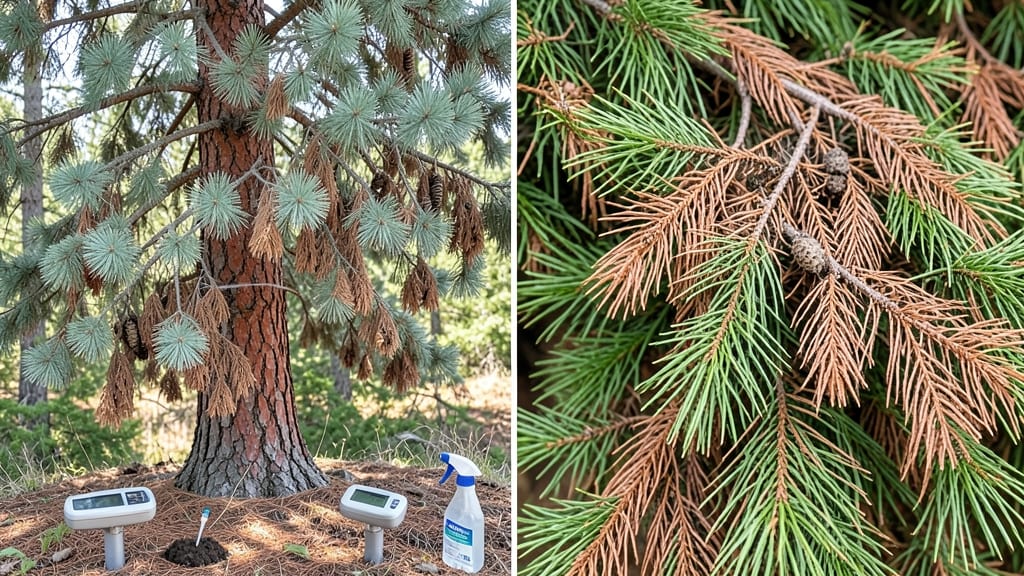
Your cedar tree’s brown needles are screaming for help—but before you panic, why is my cedar tree turning brown? The real culprit could be fungal blight, drought stress, or even winter burn, and each needs a different fix.
I’ve seen cedars go from lush to lifeless in a single season, but the good news is you can often turn things around with the right steps.
First, check the pattern: fungal blight starts at the tips and spreads inward, often with a white, powdery mold, while drought stress causes uniform browning from the bottom up.
Winter burn looks crispy on sun-exposed branches. Grab a magnifying glass—close inspection reveals whether it’s a fungal infection, insect damage, or just thirsty roots.
Once you know the cause, the fix is straightforward. For fungal blight, prune infected branches 6 inches below the browning and apply a copper-based fungicide. Drought?
Deep water once a week and mulch heavily to retain moisture. Winter burn? Avoid late-season fertilizing and protect young trees with burlap wraps in harsh winters.
Prevention is easier than cleanup: water consistently, avoid overhead sprinklers, and prune for airflow. Most cedars bounce back in a season if you act fast—don’t let this become a permanent problem. Let’s get your tree back to its vibrant green self.
Root Causes Of Cedar Browning
If your cedar tree is turning brown, it’s often a sign of stress—whether from environmental factors, pests, or disease. Understanding the why behind the browning helps you take targeted action before the damage spreads.
Below, we break down the most common culprits, from fungal infections to water woes, with clear explanations of how they harm your tree.
Fungal blights, like cedar apple rust or needle cast, thrive in damp conditions and attack cedar trees by disrupting their natural defenses. Here’s how it happens:
- 🔬 How Fungi Spread: Spores land on needles, germinate in moisture (think rain or overhead watering), and penetrate the tree’s tissues. Once inside, fungi block water and nutrient flow, causing browning, wilting, or premature needle drop.
- 🌡️ Ideal Conditions: Warm, humid summers (60–80°F) with poor airflow (e.g., dense foliage or nearby shrubs) create a fungal paradise. Overhead irrigation or morning dew can also fuel outbreaks.
- 🦠 Signs to Watch For:
- Yellowing needles that turn brown and crispy (especially on lower branches).
- Orange or rust-colored pustules (a dead giveaway for rust diseases).
- Thinning canopy as the tree struggles to photosynthesize.
Pro Tip: 💡 Fungi love stagnant water—ensure your tree’s base has proper drainage and prune to improve airflow. If you spot pustules, act fast: fungicides with copper or myclobutanil can help.
Cedar trees are drought-tolerant, but prolonged dry spells or shallow root systems (from compacted soil or poor watering habits) can starve them of moisture. Here’s the science:
- 🌱 Root Zone Matters: Cedar roots typically extend 12–18 inches deep but spread widely. If the topsoil dries out (especially in sandy or rocky soil), roots can’t absorb enough water, leading to wilting and browning needles.
- 🔥 Transpiration Trap: Hot, dry winds increase transpiration (water loss through leaves), while roots can’t replenish fast enough. This causes needle desiccation (drying out), turning them brown from the tips inward.
- 📊 How to Tell It’s Drought:
- Needles pull away from branches when tugged gently (a sign of severe moisture loss).
- Soil feels dry 2–3 inches below the surface (stick a screwdriver in—if it resists, you’re in trouble).
- New growth stunts or appears dull and brittle.
Pro Tip: 🌡️ Water deeply 1–2 times per week during droughts (1–1.5 inches per session) to encourage deep root growth. Mulch with wood chips to retain moisture—just keep it 3–4 inches away from the trunk to avoid rot.
Insects like cedar bark beetles, spider mites, or bagworms don’t just nibble—they drain your tree’s vitality, leaving brown, crunchy needles in their wake.
- 🐜 How Pests Damage Trees:
- Bark Beetles: Bore into the phloem (the tree’s "veins"), disrupting nutrient transport. Frass (sawdust-like debris) at the base of branches is a red flag.
- Spider Mites: Tiny arachnids suck cell sap, causing stippling (tiny brown dots) on needles. Severe infestations lead to complete browning.
- Bagworms: Their silk nests defoliate trees, forcing the cedar to divert energy to regrowth—weakening it and turning needles brown prematurely.
- 🌿 Early Warning Signs:
- Webbing or cocoon-like sacs on branches (bagworms).
- Yellowing followed by browning (mites or beetles).
- Sawdust-like frass or exit holes in bark (beetles).
Pro Tip: 🎯 Act fast with horticultural oil (for mites) or Bt (Bacillus thuringiensis) spray (for caterpillars like bagworms). For beetles, remove infested branches and treat with systemic insecticides like imidacloprid.
Not all browning is from biology—sometimes, it’s physical stress from your tree’s surroundings.
- ☀️ Sun Scorch:
- Sudden heat waves after a cold snap can burn needles exposed to direct sunlight. The edges turn brown and crispy, while the center stays green.
- Common in young cedars or those planted in full-sun, windy areas with little acclimation.
- 🧂 Salt Burn:
- Road salt or fertilizers with high sodium/potassium can scorch roots and foliage. Symptoms include brown needle tips and stunted growth.
- Soil tests can confirm salt buildup—look for a white crust on the soil surface.
Pro Tip: ✨ For sun scorch, provide afternoon shade with temporary shade cloth or mulch. For salt burn, flush the soil with water to dilute salts and use organic mulch to prevent buildup.
Each of these causes has a distinct signature—match the symptoms to the solution, and your cedar can bounce back. Still unsure? Grab a magnifying glass and check for pustules, pests, or soil clues next.
Fixing Your Cedar Tree’s Brown Spots
A cedar tree turning brown is a clear SOS—whether from fungal blight, drought stress, or another issue, acting fast can save its health. Below, we’ve mapped out practical fixes for each common cause, plus prevention tips to keep your tree lush and green. Let’s get to work! 🌿✨
If brown patches, tar-like spots, or moldy growths are the culprit, fungal blight is likely the villain. Here’s how to evict it:
🔪 Step 1: Remove Infected Branches
- Use sterilized pruning shears (wipe with rubbing alcohol between cuts).
- Trim all brown, mushy, or discolored branches, cutting 6–12 inches below the damage to ensure the fungus doesn’t linger.
- Dispose of clippings in a sealed trash bag—do not compost them!
🧼 Step 2: Clean Up Debris
- Rake away fallen needles, leaves, and bark around the tree’s base.
- Fungus thrives in damp, organic matter—keep the area dry by improving airflow.
💦 Step 3: Apply Fungicide
- Copper-based fungicides (like Bordeaux mixture or copper sulfate) are effective against cedar blight.
- Neem oil (a natural fungicide) can also help—mix 1 tbsp per gallon of water and spray thoroughly (repeat every 7–10 days).
- Preventative spray: Apply fungicide early spring before fungal spores spread.
🌡️ Prevention Tips
- Water at the base (avoid wetting foliage) to reduce moisture that fuels fungus.
- Space trees properly (3–5 feet apart) for better airflow.
- Avoid overhead irrigation—drip systems or soaker hoses work best.
If your cedar’s browning is even across branches (not just patches) and the needles feel dry or brittle, drought stress is likely the issue. Rehydrate it properly:
💧 Step 1: Deep Watering
- Water slowly and deeply—1–2 inches per week (more in extreme heat).
- Use a soaker hose or drip irrigation to deliver water directly to the roots (avoid wetting leaves).
- Best time to water: Early morning (reduces evaporation and fungal risk).
🌱 Step 2: Mulch Like a Pro
- Apply 2–4 inches of organic mulch (wood chips, bark, or straw) around the drip line (the tree’s canopy edge).
- Keep mulch 6 inches away from the trunk to prevent rot.
- Mulch retains moisture, regulates soil temperature, and blocks weeds that compete for water.
🌡️ Prevention Tips
- Monitor soil moisture—stick your finger 2 inches deep; if dry, it’s time to water.
- Group plants with similar water needs (cedars prefer well-draining but consistently moist soil).
- Avoid compacted soil—aerate the root zone if the ground feels hard.
If you spot tiny holes, sawdust-like frass, or chewed needles, pests like cedar bark beetles or bagworms may be to blame. Act fast:
🔍 Step 1: Identify the Pest
- Bagworms: Look for spun silk bags (1–2 inches long) on branches.
- Bark beetles: Check for tiny exit holes in bark and sawdust piles at the base.
- Spider mites: Tiny webs on needles + bronzing of foliage.
💥 Step 2: Apply Targeted Treatments
- Bagworms: Handpick bags and drown in soapy water (or use Bt spray—a natural bacteria toxic to caterpillars).
- Bark beetles: Apply permethrin-based insecticide (follow label rates) early in the season (spring/summer).
- Spider mites: Spray with neem oil or insecticidal soap (repeat every 5–7 days).
🌡️ Prevention Tips
- Encourage natural predators—ladybugs and birds eat bagworms!
- Prune in late winter to remove overwintering pests.
- Avoid over-fertilizing—stressed trees attract more pests.
If browning happens suddenly after extreme heat, cold, or wind, your cedar may just need better growing conditions:
🌡️ Step 1: Shield from Harsh Elements
- Windburn: Plant cedars sheltered from prevailing winds or use windbreaks (like a fence or other trees).
- Frost damage: Mulch heavily in late fall to insulate roots.
- Heat stress: Provide afternoon shade (especially for young trees).
💧 Step 2: Adjust Watering & Fertilizer
- Drought-prone areas: Water more frequently in summer but less in winter (cedars are drought-tolerant once established).
- Over-fertilized? Brown tips can mean too much salt—flush soil with water if needed.
🌡️ Prevention Tips
- Choose the right cedar for your climate (e.g., Eastern Red Cedar handles drought better than Leyland Cypress).
- Test soil pH—cedars prefer slightly acidic to neutral (6.0–7.0). Amend with sulfur if too alkaline.
💡 Pro Tip: If browning persists after treatment, dig up a small root sample (1–2 inches deep) to check for root rot—a sign of overwatering or poor drainage. In that case, improve drainage with sand or gravel in the root zone.
By tackling the root cause (literally!) and following these steps, your cedar should bounce back to its glorious green in no time. 🌲🎉 Stay vigilant, and your tree will thank you!
Frequently asked questions
Why do cedar trees turn brown in patches rather than all at once?
Patchy browning usually signals fungal infection like cedar blight or needle cast. Fungi spread from infected branches, creating distinct brown spots with possible white mold or orange pustules. Unlike drought stress (which affects entire branches), fungal damage often starts at branch tips and spreads inward. Check for these telltale signs before treating.
Can I save my cedar tree if half the needles are already brown?
Yes, but act fast! Prune all brown branches 6 inches below the damage and apply copper fungicide if fungal infection is suspected. For drought stress, deep water 1-2 inches per week and mulch heavily. Young cedars often recover fully, while older trees may take 1-2 growing seasons
How do I tell if my cedar tree has spider mites versus drought stress?
Spider mites cause tiny brown stippling on needles (like freckles) and leave fine webbing, while drought stress makes needles uniformly brown and crispy from the tips inward. Check the undersides of needles for mites - they thrive in dry conditions. If you see both symptoms, mites may have weakened the tree, making it more drought-sensitive.
Will pruning help if my cedar tree is turning brown from disease?
Prune all infected branches 6-12 inches below the browning to remove fungal spores. Sterilize your shears between cuts with rubbing alcohol. Remove pruned branches immediately (don't compost them) and dispose in sealed bags. This prevents reinfection while improving airflow to help the tree recover faster.
How often should I water my cedar tree to prevent browning?
Water deeply 1-2 times per week during dry spells (1-1.5 inches per session). Cedar trees prefer consistent moisture but hate soggy roots. Use a soaker hose to deliver water directly to the root zone. In winter, reduce watering unless you have extreme drought or container-grown cedars that dry out faster.