
Planting
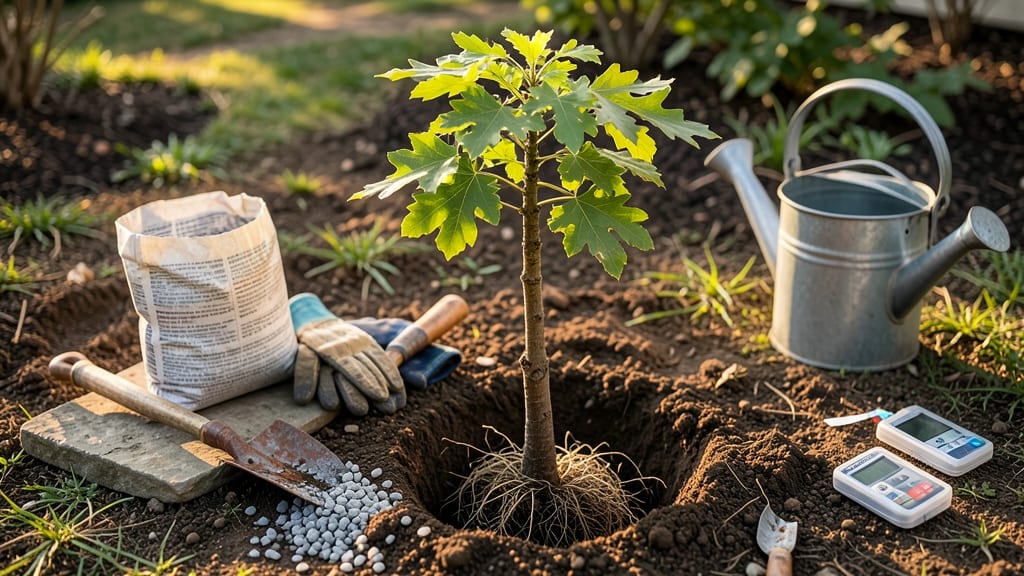
You can plant a tree with ashes in well-draining soil for acid-loving species like azaleas, blueberries, or pines. Spread a thin layer (1-2 inches) in the planting hole, mix it with soil, and avoid overuse to prevent raising soil pH too much.
Wood ashes work best in slightly acidic to neutral soils, where they raise pH levels gradually. 🌱 The key is moderation—too much ash can make the soil too alkaline, harming sensitive plants.
I recommend testing soil pH before applying ashes, especially if your area has clay-heavy soil that retains alkalinity longer. For best results, focus on trees that naturally thrive in slightly acidic conditions, like dogwoods or spruces, and apply ashes only during planting or early spring.
Unlike synthetic fertilizers, wood ashes provide a slow-release boost of potassium and calcium while improving soil structure. This makes them ideal for long-term soil health, particularly in sandy soils that drain too quickly.
Just remember: never use treated wood ashes, as they may contain harmful chemicals that could leach into the soil.
💡 In This Article
- How Wood Ashes Boost Soil pH for Tree Growth
- Best Trees to Plant in Ash-Amended Soil
How wood ashes boost soil pH for tree growth
Wood ashes act as a natural soil amendment by raising pH levels through their alkaline properties. When burned wood cools and breaks down, it releases calcium carbonate and potassium oxide, which neutralize acidic compounds in the soil.
This chemical reaction creates a more basic environment—ideal for trees that prefer slightly alkaline conditions.
For example, a 1-inch layer of wood ashes can raise soil pH by 0.5 to 1.0 points, transforming acidic soil (pH 5.0) into a more balanced 6.0 to 6.5 range—perfect for many ornamental trees.
The effects vary dramatically by soil type. In sandy soils, which drain quickly, ashes dissolve faster and provide a short-term pH boost. Conversely, clay soils hold alkalinity longer, requiring careful monitoring to avoid over-alkalization.
Loamy soils strike a balance, retaining nutrients while allowing gradual pH adjustment. 🌿 The potassium and calcium in ashes also improve soil structure by binding particles together, enhancing water retention and root penetration—critical for young trees establishing themselves.
This process isn't just about pH—it's about nutrient availability. Ashes release 1-2% potassium and 0.5-1% calcium by weight, which become accessible to tree roots over time. Unlike synthetic fertilizers that provide immediate but short-lived nutrients, wood ashes offer a slow-release benefit.
For instance, blueberry bushes (which thrive at pH 4.5-5.5) will show stunted growth if ashes raise pH beyond 6.0, while dogwoods (preferring pH 5.0-6.5) will flourish with a moderate ash application.
Timing matters too—apply ashes in early spring or during planting to avoid leaching during heavy rains. Overapplication can create a pH spike, making soil inhospitable for acid-loving trees. Test soil pH before and after application using a simple soil test kit (available for $10-$20).
For example, a 2-inch layer of ash in a 12-inch planting hole is sufficient for most trees, but monitor results annually.
Consider the long-term impact: while ashes improve soil structure, they don't replace organic matter. Mix them with compost or peat moss (1:3 ratio) to create a balanced growing medium. This combination mimics natural forest floor conditions, where fallen leaves and wood gradually enrich the soil.
For instance, a 5-gallon bucket of compost mixed with 1 cup of wood ashes creates an ideal planting mix for acid-tolerant trees like azaleas or rhododendrons.
What most gardeners overlook is the microbiome effect. The alkaline environment from ashes encourages beneficial bacteria that break down organic matter faster, but it can also suppress mycorrhizal fungi—critical for tree root health.
To mitigate this, pair ash applications with mycorrhizal inoculants (available as powders or granules) to restore fungal balance. This dual approach ensures trees get both the pH boost and the root-supporting fungi they need to thrive.