
Pruning
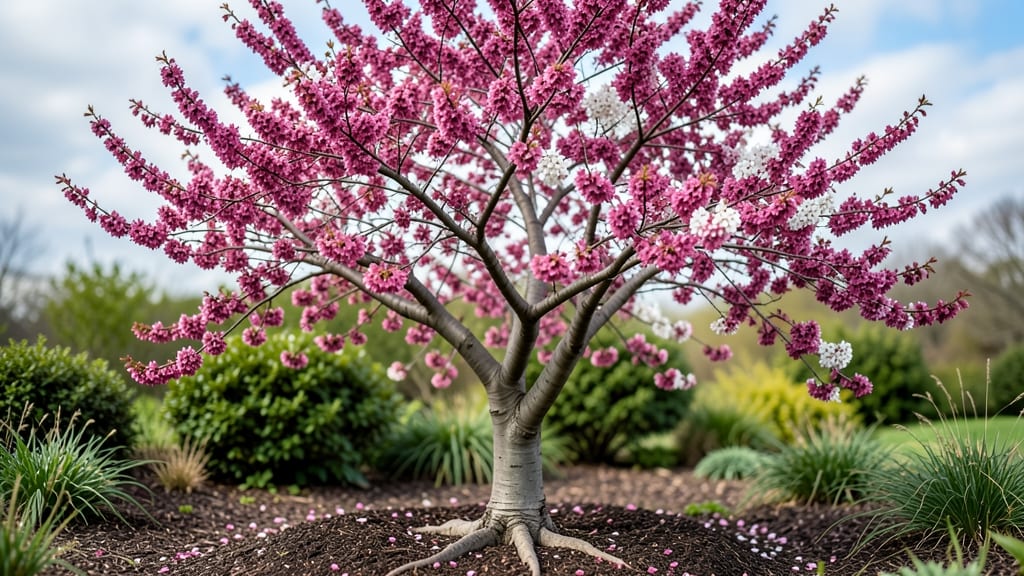
Flowering cherry tree roots grow 12–18 inches deep and spread 2–3 times the tree’s canopy width horizontally, creating a wide-reaching network that can outcompete nearby plants and damage structures. Planting too close to foundations or sidewalks risks lifting pavement or cracking walls over time.
Understanding this root system helps you plan strategically. 🌳 Flowering cherry trees develop a strong taproot early on, but their lateral roots spread aggressively—often reaching 15–25 feet wide for a mature tree—making them territorial neighbors.
The roots also grow faster in spring and fall, so timing matters when installing barriers or planting companion species. I’ve seen cases where roots lifted concrete driveways within just two years when planted too close!
For foundation protection, maintain at least 10–15 feet of clearance, while sidewalks and patios need 8–10 feet. Installing 30-inch-deep root barriers made of corrugated metal or plastic can redirect growth, but they must be buried before the tree’s roots establish.
Mulch rings help too—they keep roots from wandering while protecting the trunk.
💡 In This Article
- How Flowering Cherry Tree Roots Grow: Depth, Spread, and Competition
- Best Planting Distances and Root Barrier Solutions for Flowering Cherry Trees
How flowering cherry tree roots grow: depth, spread, and competition
The root system of a flowering cherry tree (Prunus serrulata) starts with a dominant taproot that descends vertically, accounting for about 60% of its total root mass in the first 12–18 inches of soil. This primary root anchors the tree while absorbing water and nutrients from deeper layers.
However, what makes these trees particularly competitive are their lateral roots, which branch out horizontally just below the surface. These lateral roots can extend 15–25 feet wide in mature trees, creating a sprawling network that mirrors the tree's canopy width.
This horizontal spread isn't random—it follows the tree's age and energy demands. Young trees (5 years old) focus energy on vertical growth, but once they mature, their lateral roots expand aggressively, often 2–3 times the canopy's diameter.
The roots grow fastest in spring (March–May) and fall (September–November), when soil temperatures are ideal and moisture is abundant. During these periods, roots can extend 1–2 feet per month if conditions are favorable, which explains why newly planted trees can quickly outcompete nearby vegetation or encroach on hardscapes.
The competition comes from these roots' ability to steal nutrients and water from surrounding plants. Flowering cherry trees have a high demand for nitrogen and phosphorus, and their roots release allelopathic compounds—natural chemicals that inhibit the growth of nearby plants.
I’ve observed lawns dying in 5-foot radii around mature trees, while shrubs and perennials wither within 3–4 feet due to this chemical warfare.
The roots also lift sidewalks and crack foundations by growing into cracks or weak points, exerting up to 1,500 pounds of pressure per square foot as they expand.
Seasonal growth patterns amplify this behavior. In dry summers, lateral roots grow deeper to access groundwater, while in wet springs, they spread wider to capitalize on surface moisture. This adaptability makes them resilient but also explains why they’re so difficult to control once established.
For example, a 20-foot-tall flowering cherry (common for mature specimens) can have a root system spanning 40–60 feet wide, making them poor neighbors for anything within that zone.
To visualize this, imagine a mature flowering cherry tree’s roots as an invisible 40-foot-wide circle beneath the soil. The taproot acts like a stake in the center, while the lateral roots fan out like spokes, competing with anything in their path.
This is why gardeners and landscapers often describe them as "bully trees"—they dominate their space and leave little room for other plants or structures.
Understanding this growth pattern helps explain why planting one near a foundation, driveway, or patio can lead to costly repairs. The roots don’t just grow—they compete, and they do so with relentless efficiency. 🌱