
Flowers
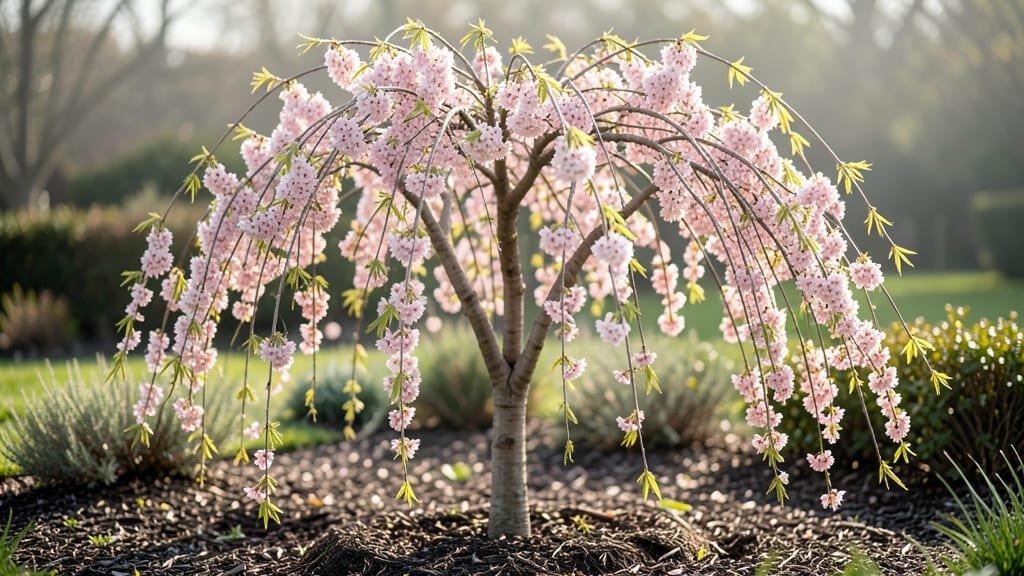
The weeping cherry tree’s pink flowers spill like soft clouds of springtime drama from your garden when you plant it, with its cascading branches. 🌸 I’ve watched mine transform a dull corner into a living centerpiece—its delicate blossoms creating a romantic focal point that lasts for weeks.
The secret to showcasing its beauty lies in placement and companions. Position it near a water feature or patio where you can enjoy its fragrance up close, or anchor it in a mixed border with shrubs that complement its delicate form.
Hostas, ferns, and azaleas create the perfect understory to highlight its graceful silhouette. You’ll love how it evolves through seasons: spring’s blossoms, summer’s lush foliage, and autumn’s fiery red leaves. The tree’s natural weeping habit makes it ideal for small gardens where vertical space matters.
For maximum impact, pair it with spring bulbs like daffodils or tulips at its base. The contrast between its cascading branches and low-growing perennials creates a layered, dreamy effect that feels like a garden designer’s secret.
📚 In This Guide
- What you need
- Instructions
- Tips and common mistakes
- Wrapping up and next steps
What you need
- ● Weeping cherry tree (Prunus serrulata 'Kanzan' or similar cultivar) – Choose a healthy, 1- to 3-year-old sapling (5- to 7-gallon container size) for best establishment.
- ● High-quality potting soil or native soil mix – Ensure it’s well-draining (amend with compost or perlite if needed).
- ● Organic mulch (wood chips or pine straw) – 2-3 inches to retain moisture and suppress weeds.
- ● Balanced fertilizer (10-10-10 or 20-20-20) – 1-2 tablespoons per foot of tree height at planting time.
- ○ Slow-release fertilizer (optional but recommended) – Granular or spikes for seasonal feeding.
- ● Shovel or spade – For digging the planting hole (2-3 times wider than the root ball).
- ● Garden trowel – For loosening roots if necessary.
- ● Watering can or hose with gentle spray nozzle – For thorough watering after planting.
- ● Pruning shears – To trim any damaged branches or shape the canopy lightly.
- ● Garden gloves – Protect your hands from thorns and rough bark.
- ○ Staking kit (optional but helpful for young trees) – Includes 2-3 stakes and tree ties to provide support.
- ● Sunlight access – Full sun (6+ hours daily) for optimal blooming and growth.
- ● Well-draining soil – Cherry trees hate soggy roots! Test your soil’s drainage before planting.
- ● Space to grow – Mature weeping cherries reach 20-30 feet wide; plant at least 15 feet from structures or other trees.
- ● Patience for blooms – Young trees may take 3-5 years to produce their stunning pink flowers!
How to cultivate a stunning weeping cherry tree with pink flowers
Here's how I turn a bare-root weeping cherry into a showstopping springtime centerpiece.
🌱 Step 1: Choose the Perfect Planting Location
Weeping cherries need full sun—at least 6 hours daily—to produce their signature pink blossoms. I always look for spots with morning sun and afternoon shade, especially in hotter climates. The tree's graceful branches will cascade beautifully near patios, ponds, or entryways where you can admire the flowers from multiple angles.
Check your site's drainage first. These trees hate soggy roots. If your soil feels compacted or stays wet after rain, amend with 3-4 inches of compost mixed into the top 12 inches of soil. You'll know you've got it right when water drains through the hole within 30 minutes of watering.
☀️ Step 2: Plant at the Right Time and Depth
Spring is ideal—plant when daytime temperatures stay above 40°F but before buds swell. Dig a hole twice as wide as the root ball but only as deep. The top of the root flare (where roots meet trunk) should sit 2-3 inches above ground level—this prevents water from pooling at the base.
Loosen any circling roots gently with your fingers before placing the tree in the hole. Backfill with native soil, tamping lightly every 6 inches to eliminate air pockets. Water deeply to settle everything, then create a 3-inch-high berm around the base to direct water away from the trunk.
💧 Step 3: Water Deeply and Mulch Properly
Newly planted weeping cherries need 1-2 gallons of water every 3-4 days until roots establish. You'll know it's time when the soil 12 inches down feels damp—stick your finger in to check. Overwatering causes root rot, so always let the top 2 inches dry out between waterings.
Spread 3-4 inches of mulch (wood chips or bark) over the root zone, keeping it 6 inches away from the trunk. This conserves moisture and regulates soil temperature. Refresh the mulch annually—never let it pile up against the trunk where it can trap moisture and invite disease.
✂️ Step 4: Prune for Shape and Flower Health
Prune immediately after planting to remove any broken branches or crossing limbs. I wait until late winter (just before buds swell) for major shaping. Remove no more than 25% of the canopy at once—these trees bloom on old wood, so aggressive cuts reduce next year's flowers.
Focus on opening the center to improve airflow. You'll see where branches compete—these are the ones to thin out. Sterilize your pruners with rubbing alcohol between cuts to prevent spreading disease. After pruning, water deeply to help the tree recover.
🌿 Step 5: Feed and Protect for Long-Term Beauty
Apply a balanced 10-10-10 fertilizer in early spring when buds swell, then again after flowering. Use half the recommended rate the first year to avoid burning tender roots. I always water thoroughly before and after applying fertilizer to help it reach the root zone.
Watch for pests like aphids or scale insects, which love new growth. A strong spray of water usually dislodges them, but for stubborn infestations, I use neem oil applied in the late afternoon when bees aren't active. Your tree will reward you with 3-4 weeks of stunning pink blooms each spring if you keep up this care routine.
Tips & tricks for perfect weeping cherry tree blooms
These little details make all the difference between a pretty tree and a showstopping springtime centerpiece.
Sunlight Secret: I've planted weeping cherries in spots with morning sun and afternoon shade, and the difference is night and day. In hotter climates, the afternoon shade helps prevent stress that can reduce flowering. If your yard has limited sun, consider a location near a south-facing wall that reflects light back onto the tree. The 6 hours of daily sun in Step 1 are non-negotiable for those pink blossoms!
Drainage Test: Before planting, do this simple test: Dig a hole about 12 inches deep and fill it with water. If it drains completely within 30 minutes (as mentioned in Step 1), your soil is perfect. If not, you'll need to amend that area with compost before planting. I've seen soggy soil ruin beautiful trees—don't make that mistake!
Root Care: When loosening circling roots in Step 2, I use my fingers rather than tools to avoid damaging them. Think of it like untangling headphones—gentle pressure works better than force. The 2-3 inches above ground level for the root flare is crucial for preventing water pooling that leads to rot. Mark this spot with a small stake if you're unsure where it should sit.
Watering Wisdom: The 1-2 gallons every 3-4 days in Step 3 might seem like a lot, but new roots need this moisture to establish. I use a rain gauge to track watering—it's more accurate than guessing. When checking soil moisture at 12 inches down, press your finger in firmly. If it feels damp but not soggy, you're golden. Overwatering is the #1 killer of weeping cherries!
Pro Tips for Weeping Cherry Tree Pink Flowers
- These little details make all the difference between a pretty tree and a showstopping springtime centerpiece.
- Sunlight Secret: I've planted weeping cherries in spots with morning sun and afternoon shade, and the difference is night and day.
- Drainage Test: Before planting, do this simple test: Dig a hole about 12 inches deep and fill it with water.
Frequently asked questions
Got questions about nurturing your weeping cherry tree with those stunning pink flowers? You’re not alone! Here are some of the most common queries—and their answers—to help you grow a showstopper in your garden.
When do weeping cherry trees bloom with pink flowers?
Most weeping cherry trees burst into pink flower glory in early to mid-spring (March–April in most U.S. zones), right before or during leaf-out. Timing varies slightly by variety—like ‘Kanzan’ or ‘Shidarezakura’—so check your tree’s label! Cold winters (30–50°F) trigger blooms, so late frosts might delay them. Pro tip: Prune after flowering to avoid cutting off next year’s buds!
Why aren’t my weeping cherry tree flowers pink—or they’re sparse?
Pink flowers might fade to white, turn brown, or appear sparse due to stress. Check these culprits:
- Overwatering/underwatering: Roots need consistent moisture (1–1.5 inches/week).
- Nutrient deficiency: Test soil for low phosphorus (key for blooms) and amend with bone meal.
- Sunlight: These trees need 6+ hours of sun daily—shady spots = fewer flowers.
- Age/pruning: Young trees (under 5 years) or heavy pruning can delay blooms.
Fix it: Fertilize in early spring with a balanced 10-10-10 formula and ensure proper drainage.
Can I grow a weeping cherry tree in a pot? What’s the best container?
Yes! Dwarf varieties like ‘Pendula’ thrive in large containers (20+ gallons) with drainage holes. Use a well-draining potting mix (add perlite or sand) and repot every 2–3 years. Place in full sun and water daily in summer—potted trees dry out faster! For extra drama, choose a glazed ceramic or fiberglass pot to protect roots from temperature swings.
Are weeping cherry tree flowers toxic to pets or kids?
Yes, all parts of the cherry tree—flowers, leaves, and pits—are toxic if ingested. Symptoms in pets/kids include drooling, vomiting, or diarrhea. The pits (seeds) contain cyanide, so keep fallen blossoms and fruit cleared up! If exposure occurs, call your vet or Pet Poison Helpline immediately. Safe swap: Opt for non-toxic alternatives like dogwood or crabapple if you have curious pups.
How do I prune a weeping cherry tree to encourage more pink flowers?
Prune right after flowering (late spring) to avoid removing next year’s buds. Focus on:
- Removing dead, crossing, or crowded branches to improve airflow.
- Thinning out overly dense areas to let sunlight reach inner blooms.
- Avoid heavy topping—this stresses the tree and reduces flowers.
Tool tip: Use sterilized pruners and seal cuts with pruning sealant to prevent disease. For weeping varieties, never prune the main trunk—it disrupts their graceful shape!
What are some pink-flowering alternatives to weeping cherry trees?
If you love pink blooms but need a low-maintenance or smaller option, try these showy stand-ins:
Plant
Pink Flower Highlights
Care Level
Japanese Maple (‘Bloodgood’)
Delicate pink-tinged new leaves in spring; fiery fall color.
Moderate (partial shade, well-drained soil)
Crabapple (‘Royalty’)
Abundant double pink blooms in spring; edible fruit.
Easy (full sun, drought-tolerant once established)
Hydrangea (‘Endless Summer’)
Large pink ombré clusters that rebloom all season.
Low (partial shade, moist soil)
Azalea (‘Girard’s Pink’)
Vibrant pink trumpet flowers in spring; fragrant!
Moderate (acidic soil, dappled shade)
Bonus: Pair any of these with spring bulbs (daffodils, tulips) for a year-round pink parade!
Wrapping up and next steps
The weeping cherry tree’s delicate pink blossoms are nature’s masterpiece—transforming gardens into dreamy, romantic escapes with their graceful arcs and soft fragrance. Whether you’re planting one for shade, aesthetic beauty, or seasonal drama, its care is as rewarding as its bloom.
Now that you’re armed with the right knowledge, why not take the next step?
- 🌱 Visit a local nursery to pick out your own weeping cherry—choose between Prunus subhirtella or Prunus pendula for the perfect fit!
- 📅 Mark your calendar for pruning and seasonal tasks to keep your tree thriving for years.
- 📸 Share your progress—tag us in photos of your blooming beauty! #WeepingCherryLove
Your garden’s springtime drama is just a branch away—let’s grow something magical together! 🌸