
Blooming
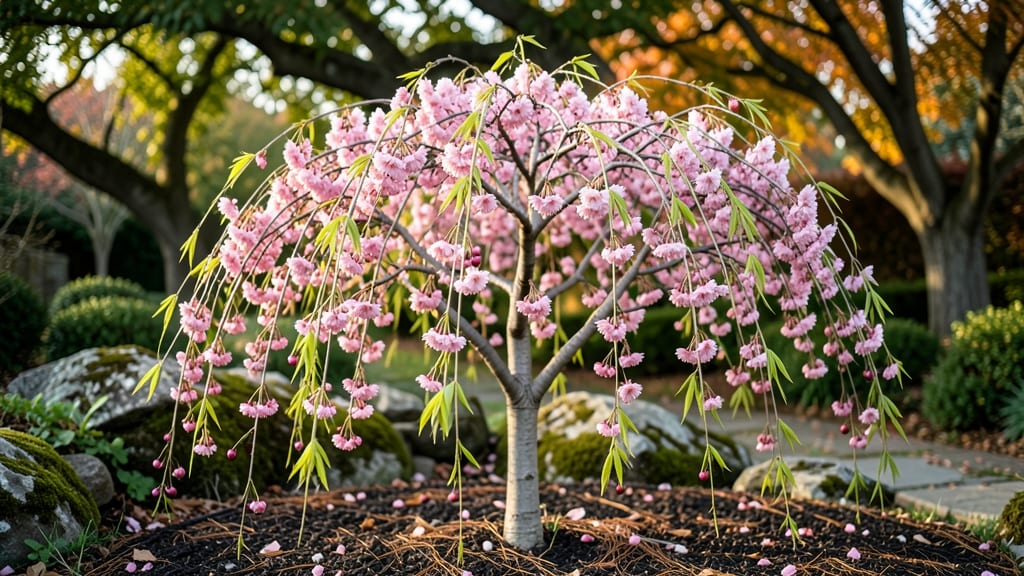
Your weeping cherry tree’s graceful branches need a little post-bloom TLC to stay stunning year-round. ✨ After those showstopping spring flowers fade, the real work begins—pruning to maintain shape, feeding for lush growth, and protecting against summer stress.
I’ve learned the hard way that skipping this step leads to leggy branches and fewer blooms next season.
The key is pruning right after flowering (late May to early June) while new growth is still tender. Use sharp bypass pruners to remove 1/3 of last year’s growth—focus on thinning crowded branches and shaping the canopy.
A light layer of 3-4 inches of mulch keeps roots cool and conserves moisture, which is critical during drought. Fertilize with a balanced 10-10-10 formula to support both foliage and future blooms.
You’ll notice stronger branches by summer and fewer pest issues, like powdery mildew, because the tree stays healthy. Regular checks for borers (look for sawdust-like frass) and proper watering—deep soak once a week—keep it thriving.
By autumn, your tree will be prepped for winter, ready to burst into bloom again next spring.
This method works for both Prunus serrulata and similar varieties, whether in containers or planted in the ground. The secret? Consistency—small adjustments now prevent big problems later. Let’s get your tree looking its best for seasons to come.
📚 In This Guide
- What you need
- Instructions
- Tips and common mistakes
- Wrapping up and next steps
What you need
- ● Pruning shears: Bypass pruners (sharp, clean, and disinfected with rubbing alcohol or bleach solution). Quantity: 1 pair.
- ● Loppers: For thicker branches (1.5"–2" diameter). Quantity: 1 pair.
- ● Hand saw: Pruning saw with fine teeth for stubborn branches. Quantity: 1.
- ● Gloves: Heavy-duty gardening gloves (cut-resistant for safety). Quantity: 1 pair.
- ○ Pruning sealant: Optional but helpful for large cuts (e.g., Tanglefoot Tree Wound Pruning Sealer). Quantity: Small bottle.
- ● Disinfectant: 1-part bleach to 9-parts water (for sterilizing tools between cuts).
- ○ Extension pole: Optional for high branches (3–6 ft).
- ● Weather check: Prune on a dry, overcast day (avoid wind or rain).
- ● Safety glasses: Protect your eyes from debris. Quantity: 1 pair.
- ● Ladder (if needed): Sturdy, non-slip ladder for tall trees. Safety tip: Always have a spotter!
- ● Notebook & pen: To jot down branch notes or pruning plans.
- ● Rake or tarp: For cleanup (leaves, small branches).
- ● 🔥 Sharpen tools first! Dull blades tear bark—use a file or hone for clean cuts.
- ● ✨ Mark cuts: Use chalk or tape to outline branches before pruning for a polished look.
- ● 🌡️ Timing matters: Prune right after blooming (late spring) to avoid sacrificing next year’s flowers!
Step-by-step pruning guide for weeping cherry trees after blooming
Here’s how to maintain your tree’s elegant shape and encourage vibrant blooms next season.
🌿 Step 1: Assess the Tree’s Structure and Identify Dead or Damaged Branches
Start by examining the tree from all sides, looking for branches that are dead, broken, or crossing each other at sharp angles. Dead branches will be brittle and snap easily when bent, while damaged ones may show splits or discolored bark. I like to work on a dry, overcast day—wet branches can be harder to evaluate accurately.
Use clean, sharp pruning shears to make your first cuts. If a branch is thicker than 1 inch, use a pruning saw instead. Remove any branches that rub against others, as friction will eventually wound the tree. This is also the time to thin out overly dense growth to improve airflow, which prevents fungal diseases.
✂️ Step 2: Prune for Shape and Airflow While Preserving the Weeping Form
Weeping cherries rely on their graceful, cascading branches for their beauty, so avoid cutting back too aggressively. Focus on maintaining the natural silhouette by trimming just the tips of branches that have grown too long or leggy. I aim to keep the tree’s overall shape balanced—never let one side become significantly heavier than the other.
When pruning, always cut just outside a bud or branch collar (the swollen area where the branch meets the trunk). This ensures the tree heals properly. For branches that are too thick to cut at the base, make a 3-inch cut above the desired pruning point to reduce stress on the tree. Avoid leaving stubs, as they can invite disease.
☀️ Step 3: Thin Out Overlapping Branches and Encourage New Growth
Next, look for branches that are growing inward or overlapping with others. These compete for sunlight and nutrients, weakening the tree’s overall health. Use your shears to remove about one-third of the branch’s length, cutting just above an outward-facing bud. This redirects energy to healthier, more open growth.
If you notice any suckers (shoots growing from the base or roots), remove them immediately. While they might seem harmless, they drain energy from the main tree. After thinning, step back and admire your work—your tree should now have a more open, airy structure that lets light and air circulate freely.
🪴 Step 4: Clean Up and Apply a Protective Layer
After pruning, gather all the clippings and dispose of them properly. If your tree has signs of disease (like black spots or powdery mildew), sterilize your tools with rubbing alcohol before switching branches. Once the branches are removed, I like to apply a thin layer of tree wound sealant to any large cuts to prevent infection.
Water the tree deeply after pruning to help it recover, especially if you’ve removed a significant amount of foliage. Avoid fertilizing right away—wait until new growth appears in early spring. Keep an eye on the tree over the next few weeks for any signs of stress, like wilting or yellowing leaves, which can indicate over-pruning.
Tips & tricks for pruning weeping cherry trees after blooming
Your weeping cherry tree deserves careful attention after blooming—here’s how to keep it thriving with these essential pruning secrets.
Timing is Everything: Prune right after blooming while the tree still has energy stored from winter. This timing ensures you won’t cut off next year’s flower buds, which form on last year’s growth. I always schedule my pruning for late spring when the tree has finished flowering but before new growth gets too vigorous. This balance prevents stress while maintaining that elegant weeping shape.
Tool Prep Prevents Problems: Sterilize your pruning shears and saw with rubbing alcohol before and after each cut—especially if your tree shows signs of disease. I keep a small bottle of 70% isopropyl alcohol in my toolkit for this purpose. Sharp tools make cleaner cuts that heal faster, so take a minute to sharpen blades if they feel dull. A clean cut at the branch collar (that swollen area where the branch meets the trunk) promotes better healing than a jagged one.
Shape with Purpose: When maintaining that graceful weeping form, focus on trimming just the tips of leggy branches rather than cutting back to old wood. This preserves the tree’s natural silhouette while encouraging new growth in the right places. For thicker branches over 1 inch, make your cut 3 inches above the branch collar to avoid leaving a stub. Think of it like sculpting—you’re refining the tree’s form, not hacking it back.
Post-Pruning Care Matters: After finishing your cuts, water the tree deeply to help it recover, especially if you’ve removed a lot of foliage. I avoid fertilizing right away—wait until you see new growth in early spring. Keep an eye out for signs of stress like wilting or yellowing leaves over the next few weeks. If you notice any large cuts oozing sap, apply a thin layer of tree wound sealant to prevent infection and speed healing.
Pro Tips for Weeping Cherry Tree After Blooming
- Your weeping cherry tree deserves careful attention after blooming—here’s how to keep it thriving with these essential pruning secrets.
- Timing is Everything: Prune right after blooming while the tree still has energy stored from winter.
- Tool Prep Prevents Problems: Sterilize your pruning shears and saw with rubbing alcohol before and after each cut—especially if your tree shows signs of disease.
Frequently asked questions
Got questions about caring for your weeping cherry tree after those stunning blooms fade? You’re not alone! Here are some of the most common queries—plus straightforward answers to keep your tree thriving year-round.
When is the best time to prune a weeping cherry tree after blooming?
Prune your weeping cherry tree right after flowering (late spring to early summer). This timing ensures you don’t accidentally cut off next year’s blossoms while still encouraging healthy growth. Avoid pruning in fall or winter, as cold stress can weaken the tree.
Can I prune too much? What if I cut too many branches?
Yes! Weeping cherries are sensitive to heavy pruning—never remove more than 25% of the canopy in one session. Focus on shaping, thinning dense areas, and removing dead/diseased wood. Over-pruning can stress the tree, leading to fewer blooms or weak growth. When in doubt, prune less!
What if my weeping cherry tree isn’t blooming well after pruning?
Poor blooming often stems from over-pruning or nutrient deficiencies. Ensure your tree gets balanced fertilizer (high in phosphorus for blooms) and full sun (6+ hours daily). If blooms are sparse, check for pests (like borers) or fungal issues (e.g., powdery mildew) and treat early.
Are there alternatives to weeping cherry trees for year-round interest?
Consider Kwanzan cherry (disease-resistant, vibrant blooms), Japanese maple (dramatic foliage + fall color), or ornamental grasses (like Miscanthus) for texture. For evergreen options, try dwarf conifers or boxwood hedges—they add structure without seasonal drama.
Why are the leaves yellowing or dropping after pruning?
Yellowing leaves post-pruning can signal stress, often from over-trimming or underwatering. Ensure the tree gets 1–1.5 inches of water weekly (deeply, not frequently). If yellowing persists, test soil pH (ideal: 6.0–6.5) or check for nutrient deficiencies (e.g., iron chlorosis). Mulch lightly to retain moisture.
Still stumped? Drop your question in the comments—we’re happy to help your weeping cherry shine!
Wrapping up and next steps
The weeping cherry tree’s beauty isn’t just in its blooms—it’s in the care you pour into it after they fade. 🌸 With the right pruning techniques, you’ll nurture a graceful, year-round spectacle that keeps your garden vibrant and full of life.
Remember, patience and consistency are key, so take your time and observe how your tree responds.
Ready to transform your weeping cherry into a showstopper? Start small—pick one section to prune this season, and build from there. Happy gardening! 🌿✨