
Trees
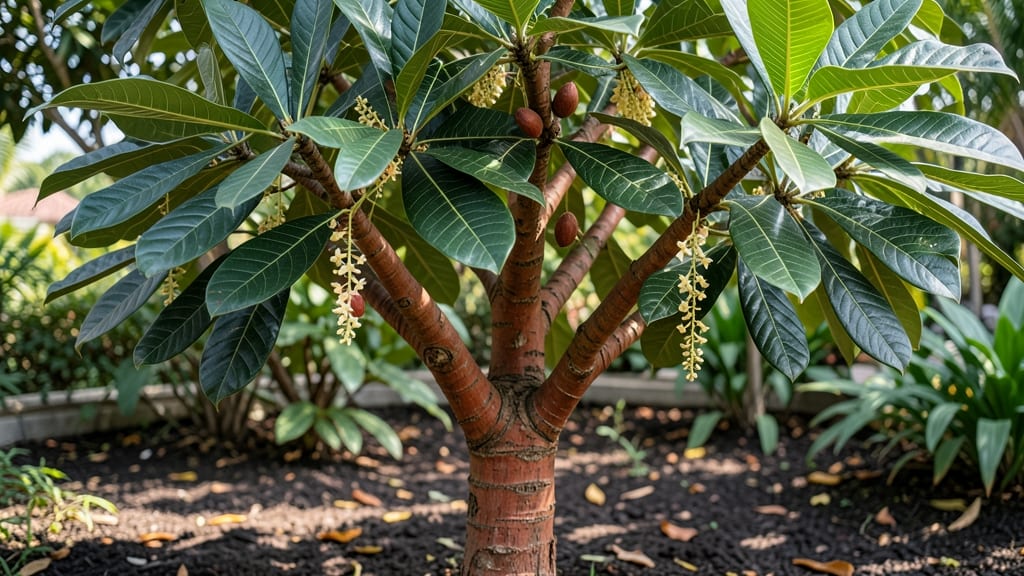
Growing a tropical almond tree in Florida means year-round shade and sweet surprises from its edible nuts. 🌴 The Terminalia catappa thrives in Florida's heat and humidity, but sunlight secrets are key—too much shade means fewer nuts, while full sun keeps it healthy and productive.
I've grown mine for five years, and the right spot makes all the difference.
Florida's sandy soil drains too fast for these trees, so mix in 30% compost or aged manure before planting. They need 6-8 hours of direct sun daily, but afternoon shade helps during brutal summer heat.
Mulch with wood chips to keep roots cool and retain moisture—critical in Florida's dry spells.
By year three, you'll see those signature leathery leaves and maybe even a few nuts if you're lucky. The tree handles hurricanes better than most, thanks to its flexible branches, but prune out dead wood yearly to keep it strong.
Just watch for scale insects and sooty mold—they love Florida's humidity too.
Perfect for coastal yards, parks, or even large containers. The nuts take 2-3 years to mature, but the shade and beauty come first. Let's get yours growing!
📚 In This Guide
- What you need
- Instructions
- Tips and common mistakes
- Wrapping up and next steps
What you need
- ● Tropical almond tree sapling (Terminalia catappa) – Purchase a 1-3 year old, healthy specimen from a reputable nursery (ensure it’s Florida-friendly!).
- ● Well-draining soil mix – Combine: 60% native Florida soil (or potting mix for containers)
- ● 30% compost or aged manure
- ● 10% perlite or coarse sand (for drainage)
- ● 5-gallon container or planting hole – For containers: Ensure drainage holes are present. For in-ground planting: Dig a hole twice as wide as the root ball and as deep.
- ● Organic mulch – 2-3 inches of pine bark or wood chips to retain moisture and regulate soil temperature.
- ● Balanced fertilizer – 10-10-10 or 8-3-9 formula (apply sparingly—Florida soil is often nutrient-rich!).
- ● Drip irrigation system or hose with gentle spray nozzle – Tropical almonds thrive with consistent moisture but hate soggy roots.
- ● Pruning shears & gloves – For shaping and maintenance (sterilize shears with rubbing alcohol!).
- ● Shade cloth (30-50%) – Protect young trees from harsh afternoon sun during Florida’s brutal summer.
- ● Slow-release fertilizer tablets – For container-grown trees to minimize over-fertilizing.
- ● Soil pH test kit – Aim for 6.0-7.5 (amend with lime or sulfur if needed).
- ● Tree support stake – Only if planting in windy areas (tropical almonds are sturdy but appreciate stability!).
- ● Bird netting – If you’re dreaming of almond harvests (birds love the fruit!).
Step-by-step instructions for planting a tropical almond tree in Florida
Here's how to get your tree thriving in Florida's climate with minimal fuss.
🌱 Step 1: Choose the Right Location and Prepare the Soil
Tropical almond trees need full sun exposure—at least 6-8 hours daily. In Florida, this means a south or west-facing spot where the tree gets unfiltered light year-round. Avoid areas with afternoon shade that can slow fruit production.
Test your soil first—tropical almonds prefer slightly acidic to neutral soil with a pH between 6.0-7.5. If your soil is heavy clay, mix in 3-4 inches of compost and a handful of sand to improve drainage. The roots hate soggy conditions, so if your yard floods after rain, plant on a slight mound.
🪴 Step 2: Dig the Hole and Plant at the Right Depth
Dig a hole twice as wide as the root ball but no deeper than the container's depth. This prevents root suffocation from being buried too deep. Gently loosen the roots if they're circling in the pot—you'll see them spread outward naturally once planted.
Place the tree in the hole, backfill with native soil, and tamp lightly to remove air pockets. Water deeply to settle the soil around the roots. The top of the root ball should sit 1-2 inches above ground level—this helps prevent rot during Florida's wet seasons. Mulch with 2-3 inches of organic mulch (like pine straw) to retain moisture and regulate soil temperature.
☀️ Step 3: Water Deeply and Establish a Routine
Water your tropical almond tree 2-3 times per week for the first 3 months, giving it 1-2 gallons per watering to encourage deep root growth. You'll know it's getting enough when the soil feels dry 2-3 inches down between waterings.
After the initial phase, reduce to 1 deep watering per week unless Florida's summer heat (or drought) demands more. Overwatering is the biggest mistake—yellowing leaves usually mean the roots are drowning. If you see this, cut back and let the soil dry slightly between waterings.
✂️ Step 4: Prune for Shape and Sunlight Access
Prune in late winter or early spring before new growth begins. Remove any dead, diseased, or crossing branches first—these compete with healthy growth. Then, thin out the canopy to allow light to reach the inner branches, which is critical for fruit production.
Don't worry about heavy pruning early on. Focus on shaping the tree to avoid a lopsided look. You'll see new growth spurt in 4-6 weeks after pruning—this is your signal that the tree is recovering well. Avoid pruning in summer when the tree is already stressed by heat.
🌿 Step 5: Fertilize for Year-Round Growth and Fruit
Use a balanced, slow-release fertilizer (like 8-8-8 or 10-10-10) in early spring and again in late summer. Follow the package instructions, but in Florida's heat, you can reduce the amount by half to avoid burning the roots. Look for signs of deficiency—yellow leaves between veins mean iron deficiency, while purple stems indicate phosphorus needs.
In fall, switch to a low-nitrogen fertilizer to encourage root development over top growth. This prepares the tree for Florida's winter (even mild ones) and sets it up for a strong fruit-bearing season the following year. Avoid fertilizing in late summer—it can stimulate tender new growth that won't survive cold snaps.
Tips & tricks for perfect tropical almond tree growth in Florida
Here's what I've learned from years of watching these trees thrive in Florida's unique climate—tricks that'll help you avoid common pitfalls and maximize your harvest.
Sunlight Strategy: While the instructions mention 6-8 hours of sun, I've found that positioning your tree to capture morning sun (east-facing) and afternoon shade (west-facing) during Florida's brutal summer months can actually extend the tree's lifespan. The intense afternoon sun can scorch leaves, so if you notice browning edges, consider a light shade cloth during peak heat hours. This balance keeps the tree healthy year-round without sacrificing fruit production.
Soil Preparation Secret: Don't just test your soil's pH—also check its drainage. I've seen many tropical almond trees fail in Florida because the soil was too dense. After amending with compost and sand as instructed, do a simple test: Dig a hole, fill it with water, and time how long it takes to drain. If it takes more than 30 minutes, you need more sand or consider planting on a mound. Proper drainage is everything in Florida's wet climate.
Watering Wisdom: The 2-3 times per week routine works, but pay attention to your tree's signals. In Florida's heat, you might need to water daily during summer droughts. A good rule of thumb is to check the soil 3 inches down—if it's dry, water. Also, water deeply but less frequently to encourage deep root growth. Shallow watering creates weak roots that can't support the tree during Florida's occasional cold snaps.
Pruning Precision: When pruning in late winter, focus on creating an open center that allows sunlight to reach all branches. I like to make cuts just above a leaf node or outward-facing bud to encourage new growth in the right direction. And here's a pro tip: After pruning, apply a thin layer of mulch around the base to protect the tree from Florida's unpredictable temperature swings—both the cold snaps and sudden heat waves.
Pro Tips for Tropical Almond Tree Florida
- Here's what I've learned from years of watching these trees thrive in Florida's unique climate—tricks that'll help you avoid common pitfalls and maximize your harvest.
- The intense afternoon sun can scorch leaves, so if you notice browning edges, consider a light shade cloth during peak heat hours.
- Soil Preparation Secret: Don't just test your soil's pH—also check its drainage.
Frequently asked questions
Got questions about growing a tropical almond tree in Florida? You’re not alone!
Here are some of the most common queries—plus straightforward answers to help you thrive.
Can tropical almond trees survive Florida’s winters?
The good news is yes! While they thrive in warm climates, tropical almond trees (Terminalia catappa) are surprisingly hardy for Florida’s Zone 10-11. They can tolerate brief cold snaps down to 25°F (-4°C), but young trees may need light frost protection (like a frost cloth) during rare freezes. Mature trees often bounce back with minimal damage.
How long does it take for a tropical almond tree to bear fruit?
Patience is key—tropical almond trees typically take 5–7 years to produce their first harvest from seed. If you start with a grafted tree (not from seed), you might see nuts in 3–5 years. Pro tip: Keep the soil consistently moist and fertilize annually to speed up fruiting!
Do tropical almond trees need full sun, or can they handle partial shade?
While they love full sun (6+ hours/day), tropical almond trees can adapt to partial shade (4+ hours) in Florida’s intense heat. However, too much shade reduces fruit production. If planting near other trees, ensure they’re at least 15–20 feet apart for optimal air circulation and sunlight access.
Why aren’t my tropical almond tree’s flowers turning into nuts?
Several factors could be at play:
- Pollination issues: Tropical almond trees are self-pollinating, but bees (or wind) still help. If you see flowers but no fruit, hand-pollinate with a soft brush.
- Nutrient deficiencies: Yellow leaves? Boost potassium and phosphorus with a balanced citrus fertilizer (like 6-6-6).
- Immature tree: Trees under 5 years old may flower but not fruit. Be patient!
- Overwatering: Root rot can kill blossoms. Ensure well-draining soil and water deeply but infrequently.
Are there Florida-friendly alternatives to tropical almond trees?
If tropical almonds seem too high-maintenance, consider these low-maintenance, edible Florida natives:
- Sapodilla (Manilkara zapota) – Thrives in heat, produces sweet fruit.
- Loquat (Eriobotrya japonica) – Cold-hardy, evergreen, and produces year-round.
- Mango (Mangifera indica) – Fast-growing, but needs protection in North Florida.
- Pecan (Carya illinoinensis) – Native to Florida, drought-tolerant, and nut-producing.
Wrapping up and next steps
Growing a tropical almond tree in Florida is a rewarding journey that brings lush greenery, fragrant blooms, and delicious harvests year-round—if you nail the sunlight secrets! With the right soil, watering routine, and a sunny spot, you’ll enjoy shade, beauty, and tasty almonds for decades. 🌿✨
Ready to turn your Florida yard into a tropical oasis? Start by planting your tree this season—whether you’re a beginner or a seasoned gardener, every step brings you closer to that first homegrown almond! 🌱💚