
Flowers
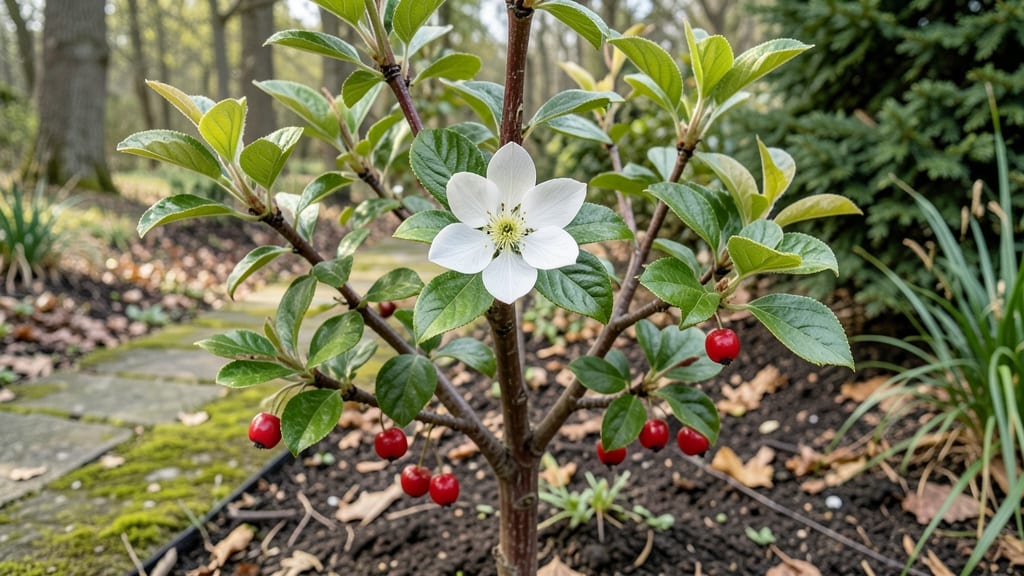
Trees with red berries and white flowers transform your garden into a pollinator paradise year-round. 🌸 I planted a serviceberry years ago, and its spring blooms and fall berries keep my yard vibrant longer than any other tree.
The white flowers attract bees early, while the bright red berries feed birds through winter—plus, they’re edible for humans too. These trees thrive in mixed borders or as focal points, pairing beautifully with hostas, ferns, and ornamental grasses.
In cottage gardens, their layered interest softens edges, while formal gardens benefit from their structured shape. For wildlife-friendly designs, they’re a must—they support bees, butterflies, and birds in one package.
You’ll love how they anchor seasonal color shifts: snowy white blossoms in spring, lush green foliage in summer, fiery berries in fall, and bare branches with lingering berries in winter. The contrast with evergreens or deep purple foliage creates stunning visual drama.
Perfect for small spaces or large landscapes, these trees adapt to sun or partial shade. Here’s how to choose and place yours for maximum impact!
The Science Behind Vibrant Blooms
The stunning combination of red berries and white flowers on certain trees isn’t just a visual treat—it’s a finely tuned survival strategy. Nature packs these plants with clever adaptations to attract pollinators, disperse seeds, and thrive in their ecosystems.
Let’s break down the key reasons why this striking color combo evolves and persists in the wild.
White flowers are nature’s neon signs for bees, butterflies, and hummingbirds. Their bright, reflective petals stand out against green foliage, signaling a reward—often nectar or pollen. But why pair them with red berries?
- Contrast for visibility: Red berries create a high-contrast visual cue, making the tree more noticeable from a distance. Studies show that birds and mammals (like foxes or rodents) are drawn to red hues, which often indicate ripeness and edibility. 🎯
- Two-phase strategy: Some trees, like Cornus mas (dogwood) or Viburnum opulus (snowball bush), produce white flowers in spring to lure pollinators. Later, their red berries serve as a secondary lure for seed dispersers, ensuring the tree’s genetic legacy spreads.
- Ultraviolet (UV) signals: Many pollinators, including bees, see UV patterns on flowers that guide them to nectar. Red berries may also reflect UV light, creating an invisible "map" for foraging insects. 🔍
Red berries aren’t just for show—they’re a seed dispersal powerhouse. Their bright color serves as a warning and an invitation to animals, which play a critical role in spreading seeds far from the parent plant.
- Animal magnetism: Birds, mammals, and even some insects are hardwired to seek out red or orange fruits, as these colors often indicate high sugar or fat content. Once eaten, the seeds pass through the digestive tract unharmed and are deposited in nutrient-rich soil—far from competition.
- Timing is everything: Berries ripen at different times of year (spring, summer, or fall) to align with the active seasons of their primary dispersers. For example, Pyracantha (firethorn) berries stay red through winter, feeding birds when food is scarce. ❄️
- Chemical cues: Beyond color, ripe berries emit volatile organic compounds (VOCs) that signal ripeness to animals. These scents can travel farther than visual cues, ensuring even hidden berries get noticed.
Not all trees with red berries and white flowers thrive in the same conditions. Their color and fruit production are often shaped by local climate, soil quality, and competition with other plants.
| Factor | How It Affects the Tree | Example |
|---|---|---|
| Sunlight exposure | Trees in full sun produce brighter red berries due to higher anthocyanin (pigment) production, which also protects leaves from UV damage. | Arbutus unedo (strawberry tree) |
| Water availability | Drought-stressed trees may delay berry ripening or produce smaller, less vibrant fruits to conserve energy. | Crataegus (hawthorn) |
| Soil nutrients | Poor soil can lead to fewer flowers or berries, as the tree prioritizes root growth over reproduction. | Viburnum dentatum (arrowwood) |
Pro tip: If your tree isn’t producing vibrant berries, check soil pH and fertility—most of these trees prefer slightly acidic to neutral soil (pH 6.0–7.0) and benefit from a balanced fertilizer in early spring. 🌡️
Urban and suburban landscapes unintentionally create ideal conditions for trees with red berries and white flowers. Here’s how:
- Pollinator-friendly gardens: Bees and butterflies thrive in cities with diverse plantings, increasing the chances of successful pollination for these trees.
- Mild winters: Many berry-producing trees (like Ilex verticillata, winterberry) evolved in temperate zones but now thrive in urban heat islands, where winters are less harsh.
- Artificial watering: Regular irrigation in gardens can boost berry production by reducing stress on the tree, leading to more abundant (and colorful) fruit.
Watch out: Some "invasive" species (e.g., Lonicera honeysuckle) exploit these conditions, outcompeting native trees. Always research before planting to protect local ecosystems! 🌍
Revive & Protect Your Blooming Shrubs
If your tree with red berries and white flowers isn’t thriving—or worse, is struggling—don’t panic! With the right care, you can restore its vibrancy and keep it blooming for seasons to come.
Below, we’ve mapped out practical solutions for common issues, from soil problems to pest invasions, along with prevention tips to safeguard your shrub’s health long-term.
If your shrub’s leaves are yellowing, stunted, or berries aren’t forming, it’s likely starving for nutrients—or drowning in poor soil.
🔥 Step 1: Test Your Soil (The Foundation)
- Grab a DIY soil test kit (available at garden centers) or send a sample to your local Cooperative Extension Service for a detailed analysis.
- Look for pH imbalances (ideal range: 5.5–7.0 for most berry-producing shrubs like Pyracantha or Cotoneaster).
- Quick fix: If soil is too acidic, mix in lime (follow package instructions).
For alkaline soil, add sulfur or peat moss.
🍳 Step 2: Feed It Right (Slow & Steady Wins)
- Spring boost: Apply a balanced, slow-release fertilizer (10-10-10 or 20-20-20) in early spring to encourage new growth.
- Berry-focused feed: Switch to a high-phosphorus fertilizer (like 5-10-10) in late spring to support fruit development.
- Organic option: Work compost or aged manure into the top 6 inches of soil for a natural nutrient boost.
🌡️ Pro Tip:
Over-fertilizing can burn roots! Water deeply after applying fertilizer to help nutrients absorb.
Chewed leaves, moldy berries, or wilting branches? Pests and diseases are likely the culprits. Act fast to save your shrub!
🐛 Common Pests & How to Stop Them
| Pest | Signs | Solution |
|---|---|---|
| Spider Mites | Tiny webs, yellow stippling on leaves |
|
| Aphids | Sticky residue (honeydew), curled leaves |
|
| Birds Pecking Berries | Missing or damaged berries |
|
🍄 Disease Prevention & Treatment
- Powdery Mildew (White Fuzzy Coating):
- Fix: Spray with baking soda mix (1 tsp baking soda + 1 quart water + a drop of dish soap).
- Prevent: Ensure good airflow (prune overcrowded branches) and water at the base (not leaves).
- Root Rot (Mushy Stems, Wilting):
- Fix: Dig up the shrub, trim rotted roots, and repot in well-draining soil.
- Prevent: Avoid overwatering—let soil dry slightly between waterings.
Pruning isn’t just for shaping—it’s a health hack to boost airflow, encourage blooms, and remove deadwood.
👨🍳 When & How to Prune
- Best Time: Late winter or early spring (before new growth starts).
- Tools Needed: Clean, sharp bypass pruners or loppers (for thicker branches).
- Steps: 1. Remove dead/diseased branches first (cut at the base).
- Thin out crowded areas to improve airflow (aim for an "open vase" shape).
- Trim back overgrown stems by 1/3 to stimulate bushier growth.
- Shape lightly for aesthetics, but avoid heavy pruning—it can reduce flowering.
⏰ Pro Tip:
If your shrub blooms on old wood (like Pyracantha), prune right after flowering to avoid cutting off next year’s blooms.
Extreme heat, frost, or drought can stress your shrub. Adjust care based on your climate!
🔥 Summer Stress (Wilting or Scorched Leaves)
- Water deeply 2–3 times per week (early morning is best).
- Mulch heavily (2–3 inches of wood chips or straw) to retain moisture.
- Provide shade cloth if temperatures exceed 90°F (32°C).
❄️ Winter Protection (Frost Damage)
- Wrap young shrubs in burlap or frost cloth in harsh winters.
- Avoid pruning in late fall—new growth is vulnerable to frost.
- Water before the first freeze to help roots absorb moisture for winter.
Keep your berry-and-bloom shrub thriving with these easy maintenance habits:
- ✅ Mulch annually (spring) to lock in moisture and nutrients.
- ✅ Monitor for pests weekly—early action prevents outbreaks!
- ✅ Rotate fertilizers (spring for growth, summer for berries).
- ✅ Prune regularly to maintain shape and health.
- ✅ Test soil every 2–3 years to catch deficiencies early.
- ✅ Plant companion flowers (like marigolds) to repel pests naturally.
With these targeted fixes, your red-berried, white-flowering shrub will bounce back stronger—and reward you with year-round color and wildlife-friendly berries! 🌿🐝
Frequently asked questions
Which trees with red berries and white flowers are best for small gardens?
For compact spaces, consider serviceberry (Amelanchier) or dwarf pyracantha. Both offer stunning white spring blooms followed by bright red berries, but stay under 10 feet tall. Cotoneaster varieties like 'Royal Purple' also work well, providing year-round interest with glossy foliage, flowers, and berries.
Do these trees attract wildlife beyond birds?
Trees like dogwood (Cornus mas) and viburnum create pollinator magnets, drawing bees, butterflies, and hummingbirds. The berries also feed mammals like foxes and squirrels. For maximum wildlife value, pair with native perennials like bee balm or coneflowers to create a complete ecosystem.
Can I grow these trees in containers?
Yes, but choose dwarf varieties like serviceberry 'Regent' or pyracantha 'Little Leaf'. Use a 15-gallon container with well-draining potting mix and place in full sun to partial shade. Remember to repot every 2-3 years and fertilize monthly during growing season. Containers dry out faster, so check soil moisture regularly.
Why aren't my berries turning red?
Red berry color develops with proper sunlight and nutrients. Ensure your tree gets at least 6 hours of sun daily and test soil pH (ideal range: 6.0-7.0). Lack of phosphorus can also prevent vibrant color—apply a high-phosphorus fertilizer in late spring. Some varieties need cross-pollination, so plant at least two compatible trees.
Are the berries safe for human consumption?
Most berries from these trees are edible but should be cooked first. Serviceberry berries make excellent jams, while dogwood berries are traditionally used in European preserves. Always identify your tree precisely—some ornamental varieties may be toxic. When in doubt, cook thoroughly and consult local foraging guides.