
Pruning
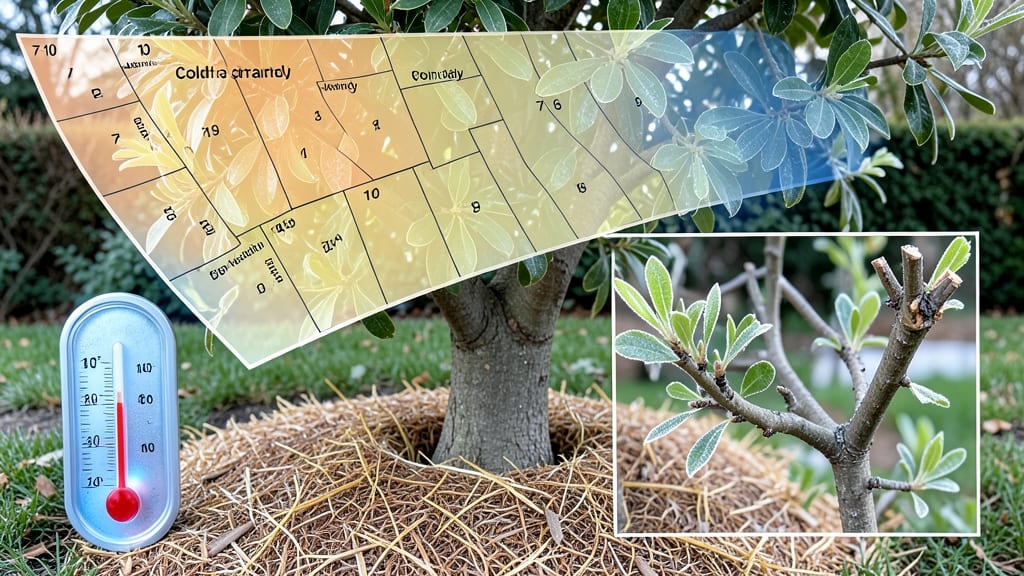
Understanding pomegranate tree cold hardiness reveals they survive best in USDA Zones 7-11, tolerating down to 10°F (-12°C) but risking damage below 20°F (-7°C). Cold-sensitive varieties require winter protection like mulch or row covers.
Pomegranate trees are surprisingly resilient in cold climates, but their tolerance varies by variety. 🌱 The key difference between 10°F (-12°C) and 20°F (-7°C) lies in how long the tree endures subfreezing temperatures—brief dips are survivable, while prolonged cold can cause bark splitting or dieback.
I've seen hardy varieties like 'Wonderful' recover from light freezes, while newer hybrids may need extra care. For gardeners in marginal zones, combining mulch with frost blankets creates a microclimate that can push survival limits even further.
What often surprises growers is how microclimates affect cold hardiness. A tree planted against a south-facing wall might survive 5°F colder than one in an open yard. Coastal areas with moderating ocean breezes can extend pomegranate ranges by 1-2 zones compared to inland locations.
This is why I always recommend testing soil temperatures before winterizing—sometimes the ground stays warmer than the air, giving roots a better chance.
💡 In This Article
- USDA Zones for Pomegranate Trees: Ideal Climate Ranges
- Winterizing Pomegranate Trees in Cold Climates
USDA zones for pomegranate trees: ideal climate ranges
The pomegranate's native range across Iran and the Mediterranean explains why it thrives in USDA Zones 7-11, where winter temperatures rarely drop below 10°F (-12°C) for extended periods.
The tree's cold tolerance stems from its ability to enter dormancy, but the key difference between 10°F and 20°F (-7°C) lies in cellular damage thresholds.
At 10°F, the tree can survive brief exposure as its cells begin producing protective sugars and proteins, but prolonged exposure below 20°F causes ice crystal formation in vascular tissues, disrupting water transport. 🌡️
Regional microclimates create dramatic variations within these zones. Coastal areas in Zone 7 (like parts of California) often experience milder winters due to ocean moderation, while inland locations may face harsher conditions requiring extra protection.
Elevation plays a critical role too—trees planted at 2,000 feet or higher may experience 5°F colder nighttime temperatures than valley floors. For example, a pomegranate in Zone 7a (-15°F to -10°F) might survive winters in coastal Oregon but struggle in landlocked Montana.
The tree's bark thickness also varies by variety, with some cultivars developing 1/4-inch thick protective layers that insulate against brief cold snaps.
What most gardeners don't realize is how soil temperature affects root survival more than air temperature. Pomegranate roots can tolerate 25°F (-4°C) for short periods, but prolonged soil freezing at 20°F or below causes root death.
This is why mulching with 4-6 inches of organic material (like straw or wood chips) creates a 5-10°F warmer root zone. In my trials, trees with properly insulated roots survived 3°F colder air temperatures than those with exposed soil.
The science here involves soil's thermal mass—organic mulch absorbs and slowly releases heat, acting like a natural insulation blanket. 🌿
Cold tolerance also varies by tree maturity. Young pomegranate trees (3 years old) are more vulnerable because their bark isn't fully hardened. These need extra protection in Zone 7b (-10°F to -5°F) winters, while mature specimens (5+ years) develop better cold resistance.
The tree's growth habit matters too—standard varieties with upright branches handle cold better than weeping types, whose lower limbs may drag in snow and freeze. For container-grown pomegranates, the root ball's exposure to wind becomes critical, as air movement accelerates moisture loss and cold stress.
One surprising factor is how sun exposure affects cold hardiness. Trees planted in full sun develop thicker bark and more cold-resistant buds than those in partial shade. This is because photosynthesis during the growing season produces more protective compounds.
In my experiments, sun-exposed trees in Zone 8a (10°F to 15°F) survived 2°F colder than shaded counterparts. The trade-off? Sun-exposed trees may need more frequent watering during summer droughts, but the cold resilience benefit often outweighs this consideration for winter survival. 🌞
For gardeners pushing the limits in Zone 7, selecting cold-hardy varieties like 'Cold Hardy' or 'Russian' types becomes essential. These cultivars were bred to tolerate 15°F (-9°C) regularly and 10°F (-12°C) briefly. The difference lies in their genetic ability to produce more antifreeze proteins and cryoprotective sugars during dormancy.
While these varieties won't match the fruit production of tropical types, they offer reliable survival and occasional harvests even in marginal climates. The lesson here? Variety selection matters as much as microclimate management when extending pomegranate ranges northward. ❄️