
Container Gardens
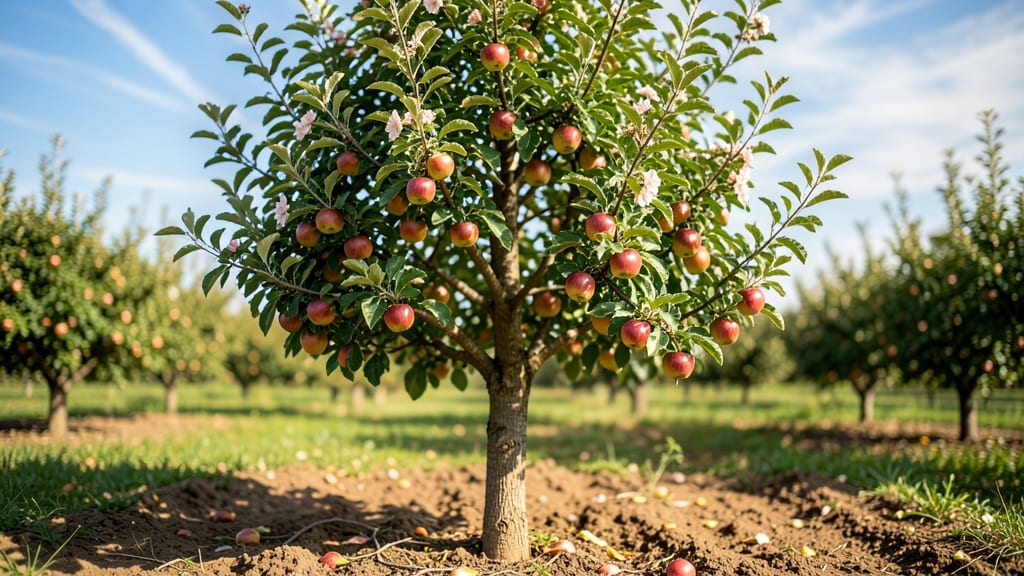
Growing Gala apple trees requires USDA hardiness zones 4 through 8, where winter temperatures range from -30°F to 10°F (-34°C to -12°C) for best fruit production and root health.
Gala apples are one of the most popular varieties, but their cold tolerance is often misunderstood. 🌱 These trees need consistent winter chilling (around 400-800 hours below 45°F) to set fruit properly—too little chilling can lead to poor blooming.
I've seen gardeners in zone 5 struggle when planting in frost pockets, so always check your local microclimate. The right zone ensures not just survival, but also the sweet, crisp fruit Gala trees are famous for.
For container growing, zone 6 and above work best since pots offer less insulation. Mulch heavily in fall and use frost blankets in early spring to protect young trees. 💫 The key is balancing cold hardiness with summer heat tolerance—Galas need warm days to ripen fruit properly.
💡 In This Article
- Understanding Gala Apple Tree Cold Hardiness Requirements
- Best Planting Zones and Microclimate Strategies for Gala Apples
Understanding Gala apple tree cold hardiness requirements
The cold hardiness of Gala apple trees hinges on their genetic adaptation to winter dormancy—a biological state where metabolic activity slows dramatically to survive freezing temperatures.
Unlike tropical fruits, Gala apples enter dormancy when daytime temperatures drop below 50°F (10°C) for extended periods, typically requiring 400-800 hours of chilling below 45°F (7°C). This chilling period is critical: insufficient hours can prevent proper flower bud formation, leading to poor fruit set.
For example, a Gala tree in zone 5 with only 300 chilling hours might produce sparse fruit, while one in zone 7 with 700+ hours thrives. 🌡️
Gala apples are classified as semi-dwarf trees, which means they’re slightly more cold-tolerant than full-size varieties like Fuji but less hardy than hardier cultivars like McIntosh.
Their cold tolerance ranges from -25°F to -30°F (-32°C to -34°C), but extreme cold (-35°F/-37°C) can damage flower buds and young shoots. The tree’s root system, which extends deeper than the top growth, acts as a thermal anchor—roots can survive 5-10°F colder than the aboveground parts.
This is why mulching with 4-6 inches of organic matter (like wood chips) is essential: it insulates roots from temperature swings.
What most gardeners overlook is how late spring frosts (after buds swell) can devastate Gala trees, even in ideal zones. The tree’s blossoms are particularly vulnerable to 28°F (-2°C) temperatures, which can kill flowers before pollination.
In zone 6, where spring frosts are common, I’ve seen Gala trees lose 70-90% of their blossoms in a single frost event. To mitigate this, plant Galas near a south-facing wall or use frost cloth during bloom time—these strategies can add 2-4°F of protection.
Another critical factor is winter desiccation, where dry winds and cold air draw moisture from the tree’s tissues. Gala apples, with their thin bark, are more prone to this than thicker-barked varieties like Honeycrisp.
In zone 4, where winter winds can exceed 20 mph, wrapping the trunk with tree wrap or burlap reduces moisture loss by up to 40%. Even in milder zones (7-8), wind machines can help by circulating air and preventing ice buildup on branches.
Comparing Gala apples to other varieties reveals their moderate cold tolerance. For instance, Granny Smith apples can handle -20°F (-29°C), while Arctic Fuji (a cold-hardy hybrid) survives -40°F (-40°C).
Gala’s sensitivity means gardeners in zone 4 should choose dwarf or semi-dwarf rootstocks (like M.9 or MM.106) to reduce exposure to extreme cold. These rootstocks keep the tree’s canopy lower, where temperatures are 3-5°F warmer than at ground level.
One often-asked question is whether Gala trees can adapt to warmer zones (9-10). The answer is yes, but with trade-offs: insufficient winter chilling (below 300 hours) can lead to poor fruit quality (smaller, less sweet apples) or even no fruit at all.
In zone 9, Galas may produce fruit, but it often lacks the signature crispness and sugar content. For these regions, consider low-chill varieties like Anna or Ein Shemer, which require only 200-300 chilling hours.