
Trees
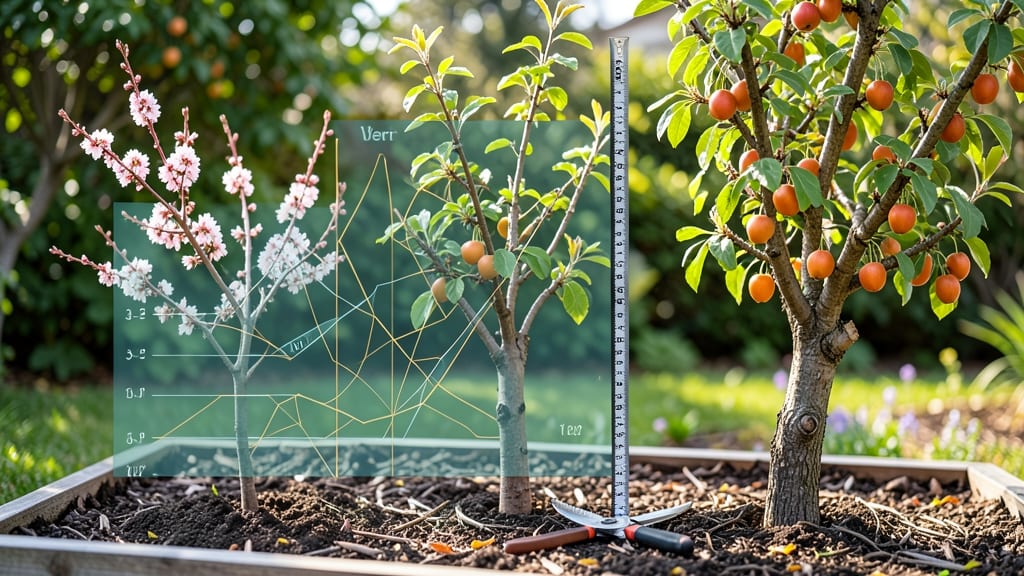
The growth rate of a plum tree 🍑 depends entirely on its variety, care, and climate—but knowing these milestones helps you plan for fruit in just 3–7 years.
Wondering how fast your plum tree will grow—or when you’ll finally taste those juicy fruits? The growth rate of plum trees varies dramatically by variety, climate, and care, but knowing these milestones can help you plan your orchard or backyard harvest like a pro.
Dwarf varieties like Santa Rosa can reach 8–12 feet in just 3 years, while standard types like Stanley may take a decade to hit 20–30 feet. Soil, sunlight, and pruning play huge roles in speeding up—or slowing down—maturity.
In this guide, I’ll break down yearly height milestones, fruiting timelines, and 5 pro tips to maximize growth, so you can enjoy plums sooner than you think.


How long does it take for plum trees to bear fruit?
If you've planted a plum tree hoping for quick rewards, patience is key—but the wait varies dramatically. Most plum trees take 3 to 7 years to bear fruit, depending on their size and growing conditions.
Dwarf varieties often fruit faster, while standard trees may take longer to mature. Understanding these timelines helps set realistic expectations for your orchard or backyard harvest.
The first year focuses on root establishment, so don't expect blossoms or fruit. By year 2 or 3, your tree may produce a few flowers, but these often drop off without setting fruit.
True fruit production typically begins in year 4 or 5 for dwarf varieties, while semi-dwarf and standard trees may take 6 to 7 years to reach full fruiting capacity.
Here’s a quick breakdown of what to expect based on your plum tree’s size category:
| Variety Type | Years to First Fruit | Full Production Age | Mature Height |
|---|---|---|---|
| Dwarf | 3–4 years | 5–6 years | 6–10 ft |
| Semi-Dwarf | 4–5 years | 6–7 years | 12–18 ft |
| Standard | 6–7 years | 8–10 years | 20–30 ft |
Your climate zone plays a huge role in fruiting timelines. Plum trees thrive in USDA zones 5–9, where they experience adequate chill hours (300–1,000 hours below 45°F) to trigger flowering.
In warmer climates, like zone 9 or 10, trees may take longer to fruit or require low-chill varieties like Santa Rosa or Methley to produce reliably.
Soil quality also impacts growth speed. Plum trees prefer well-draining, slightly acidic soil (pH 6.0–6.5) rich in organic matter. If your soil is clay-heavy or alkaline, amend it with compost or sulfur to create ideal conditions.
Poor soil can delay fruiting by 1–2 years as the tree struggles to establish roots.
Pruning techniques can accelerate or delay fruit production. Open-center pruning promotes airflow and sunlight penetration, which encourages earlier flowering. Conversely, over-pruning can stress the tree, pushing back fruiting. Always prune in late winter or early spring before new growth begins.
Watering habits matter too. Young plum trees need deep, consistent watering—about 15–20 gallons per week during the first year. Drought stress can stunt growth and delay fruiting. Once established, plum trees are drought-tolerant, but consistent moisture during flowering and fruiting seasons ensures a better harvest.
Fertilizer choices also influence growth speed. Use a balanced fertilizer (10-10-10) in early spring and again in mid-summer to support root and fruit development. Avoid heavy nitrogen fertilizers, which promote leafy growth at the expense of fruit production.
A light feeding of compost in fall can also boost next year’s harvest.
Patience pays off—once your plum tree reaches full production, it can yield 100–200 pounds of fruit per year, depending on the variety. With the right care, you’ll enjoy homegrown plums in just a few short years! 🍑
Plum tree height growth rate by variety: annual and decadal milestones
Plum trees are stunning additions to any orchard or backyard, but their growth rates can vary wildly depending on the variety. Whether you're dreaming of dwarf plums for containers or standard varieties towering over your fence, understanding these milestones helps you plan your space and patience.
From the first year's 3-5 feet to mature heights of 6-30 feet, each variety follows its own timeline.
Climate, soil quality, and care all influence growth, but the variety itself sets the foundation. Dwarf varieties like Santa Rosa stay compact, while standard types like Stanley reach towering heights.
Let's break down the growth expectations for popular varieties so you can visualize your tree's future—whether it's a 6-foot patio plum or a 30-foot orchard giant.
| Variety | Type | Height at 1 Year | Height at 3 Years | Height at 5 Years | Mature Height |
|---|---|---|---|---|---|
| Santa Rosa | Dwarf | 3-4 ft | 5-7 ft | 6-8 ft | 8-10 ft |
| Methley | Semi-Dwarf | 4-6 ft | 8-10 ft | 10-12 ft | 12-15 ft |
| Stanley | Standard | 5-7 ft | 12-15 ft | 18-22 ft | 20-30 ft |
| Larry Kelley | Semi-Dwarf | 4-5 ft | 7-9 ft | 10-12 ft | 12-16 ft |
| Black Diamond | Standard | 5-6 ft | 10-14 ft | 16-20 ft | 20-25 ft |
If you're growing dwarf varieties like Santa Rosa, you'll enjoy fruit in just 3-4 years and a manageable height of 8-10 feet. These are perfect for container gardening or small backyards.
Meanwhile, standard varieties like Stanley or Black Diamond take longer to mature but reward you with 20-30 feet of stunning height and abundant fruit.
For semi-dwarf varieties like Methley or Larry Kelley, expect a middle-ground growth rate—reaching 12-15 feet at maturity. These are great for small orchards or larger backyards where you want a balance of space and fruit production.
Pruning plays a key role in keeping these varieties in check while maximizing fruit yield.
Remember, these are general guidelines. Your local climate, soil quality, and care routine can accelerate or slow growth. For example, well-draining soil and full sun exposure can push a Santa Rosa to reach 7 feet in just 2 years, while poor drainage or shade may stunt its growth.
Always monitor your tree's progress and adjust care accordingly.
With the right variety and conditions, your plum tree could be bearing fruit in as little as 3 years—or take up to 7 years for standard types. Planning ahead ensures you're ready for its full potential, whether that's a compact patio plum or a towering orchard centerpiece.